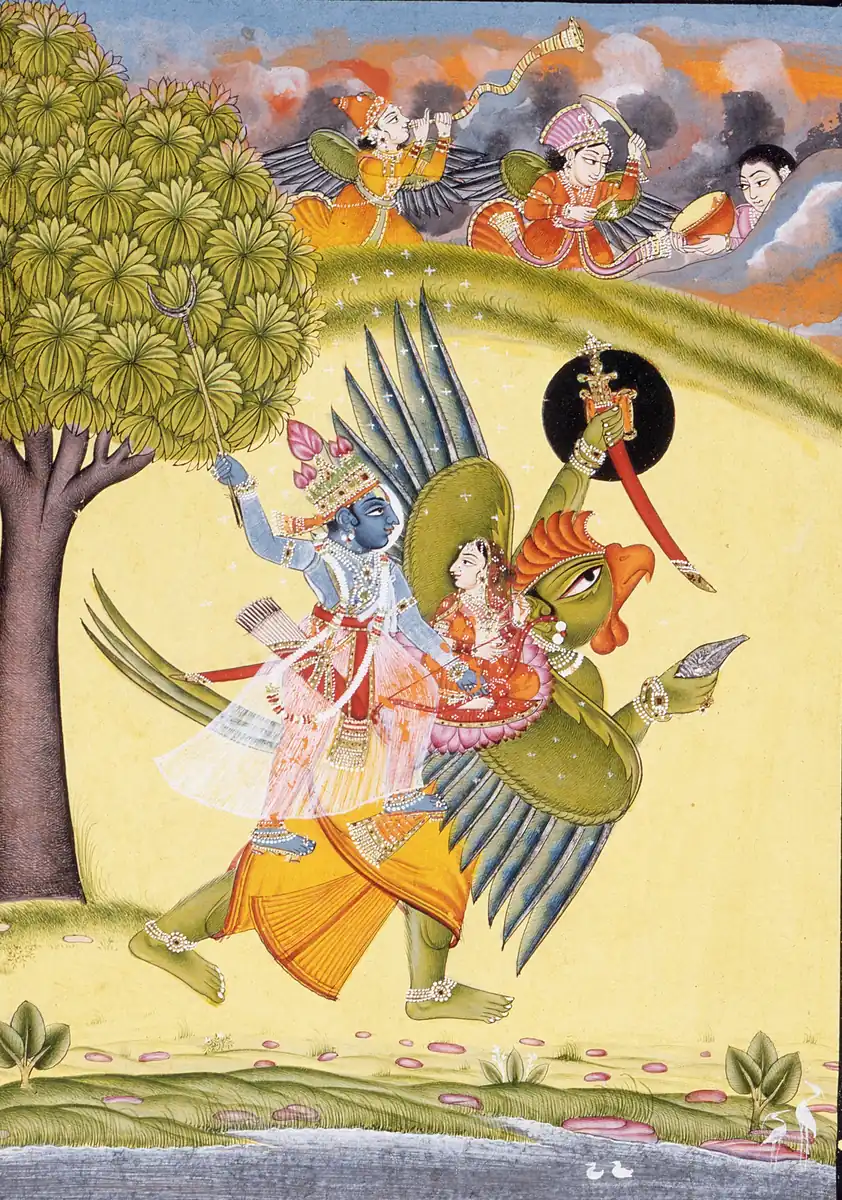
Ashtak · Krishna
Govindashtakam गोविन्दाष्टकम्
Govindashtakam does two things at once.
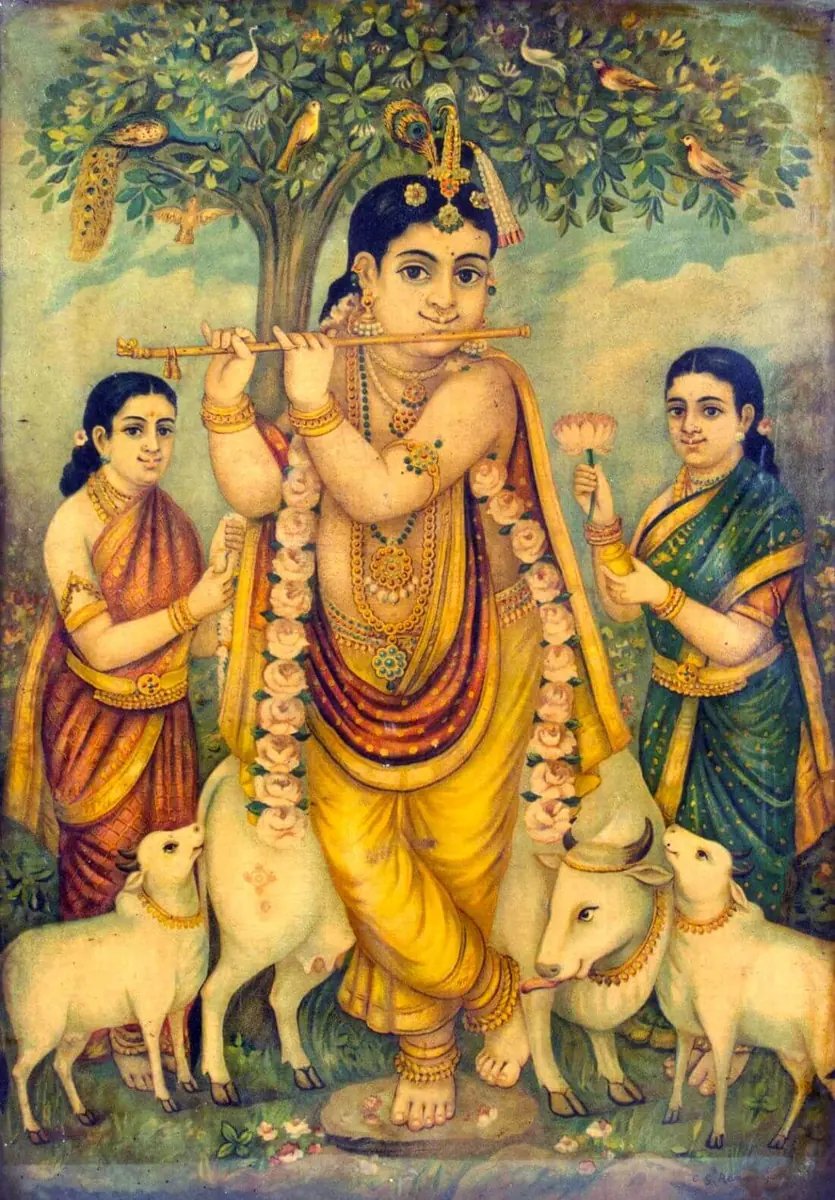
सत्यं ज्ञानमनन्तं नित्यमनाकाशं परमाकाशं
गोष्ठप्राङ्गणरिङ्खणलोलमनायासं परमायासम् ।
मायाकल्पितनानाकारमनाकारं भुवनाकारं
क्ष्मामानाथमनाथं प्रणमत गोविन्दं परमानन्दम् ॥ १ ॥
मृत्स्नामत्सीहेति यशोदाताडनशैशवसन्त्रासं
व्यादितवक्त्रालोकितलोकालोकचतुर्दशलोकालिम् ।
लोकत्रयपुरमूलस्तम्भं लोकालोकमनालोकं
लोकेशं परमेशं प्रणमत गोविन्दं परमानन्दम् ॥ २ ॥
त्रैविष्टपरिपुवीरघ्नं क्षितिभारघ्नं भवरोगघ्नं
कैवल्यं नवनीताहारमनाहारं भुवनाहारम् ।
वैमल्यस्फुटचेतोवृत्तिविशेषाभासमनाभासं
शैवं केवलशान्तं प्रणमत गोविन्दं परमानन्दम् ॥ ३ ॥
गोपालं प्रभुलीलाविग्रहगोपालं कुलगोपालं
गोपीखेलनगोवर्धनधृतिलीलालालितगोपालम् ।
गोभिर्निगदितगोविन्दस्फुटनामानं बहुनामानं
गोधीगोचरदूरं प्रणमत गोविन्दं परमानन्दम् ॥ ४ ॥
गोपीमण्डलगोष्ठीभेदं भेदावस्थमभेदाभं
शश्वद्गोखुरनिर्धूतोद्गतधूलीधूसरसौभाग्यम् ।
श्रद्धाभक्तिगृहीतानन्दमचिन्त्यं चिन्तितसद्भावं
चिन्तामणिमहिमानं प्रणमत गोविन्दं परमानन्दम् ॥ ५ ॥
स्नानव्याकुलयोषिद्वस्त्रमुपादायागमुपारूढं
व्यादित्सन्तीरथ दिग्वस्त्रा दातुमुपाकर्षन्तं ताः ।
निर्धूतद्वयशोकविमोहं बुद्धं बुद्धेरन्तःस्थं
सत्तामात्रशरीरं प्रणमत गोविन्दं परमानन्दम् ॥ ६ ॥
कान्तं कारणकारणमादिमनादिं कालघनाभासं
कालिन्दीगतकालियशिरसि सुनृत्यन्तं मुहुरत्यन्तम् ।
कालं कालकलातीतं कलिताशेषं कलिदोषघ्नं
कालत्रयगतिहेतुं प्रणमत गोविन्दं परमानन्दम् ॥ ७ ॥
बृन्दावनभुवि बृन्दारकगणबृन्दाराधितवन्द्यायां
कुन्दाभामलमन्दस्मेरसुधानन्दं सुमहानन्दम् ।
वन्द्याशेषमहामुनिमानसवन्द्यानन्दपदद्वन्द्वं
नन्द्याशेषगुणाब्धिं प्रणमत गोविन्दं परमानन्दम् ॥ ८ ॥
गोविन्दाष्टकमेतदधीते गोविन्दार्पितचेता यो
गोविन्दाच्युत माधव विष्णो गोकुलनायक कृष्णेति ।
गोविन्दाङ्घ्रिसरोजध्यानसुधाजलधौतसमस्ताघो
गोविन्दं परमानन्दामृतमन्तःस्थं स तमभ्येति ॥ ९ ॥
What it means
Govindashtakam does two things at once. It calls Krishna the unchanging truth, knowledge and the infinite, the sky beyond sky, and in the same breath it shows him as a toddler rolling about in the cowshed yard. Verse two is the mud-eating story, where Yashoda looks into his open mouth and sees all the worlds. Verse four praises Gopala who held up Govardhan, and verse five his body covered with cow-dust and the joy he gives to devotees. Verse six tells of the bathing girls whose clothes he took, and verse seven of him dancing on the serpent Kaliya in the Yamuna. The refrain 'pranamata Govindam paramanandam' asks everyone to bow to Govinda, the highest bliss.
How it is sung
Meant for a quiet morning recital, either standing or sitting in front of an image of Govinda. It is a natural fit for Janmashtami morning. Take care with the long compounds: break them at the ends of words and read in one calm breath per line.
Questions, answered
Is Govindashtakam about Krishna or about Brahman?
Both. The first verse speaks in the language of the Upanishads and the following verses tell Krishna's childhood stories, which is why this text is dear to Advaita and Vaishnava traditions alike.
Why does the verse about the bathing women appear here?
It is the famous episode where Krishna took the clothes of girls bathing in the Yamuna and sat in a tree. The poet reads it as a lesson in letting go of every cover before the Lord.
Who is credited with this ashtakam?
The final line names Shankaracharya. It is a traditional ascription and does not carry a date.