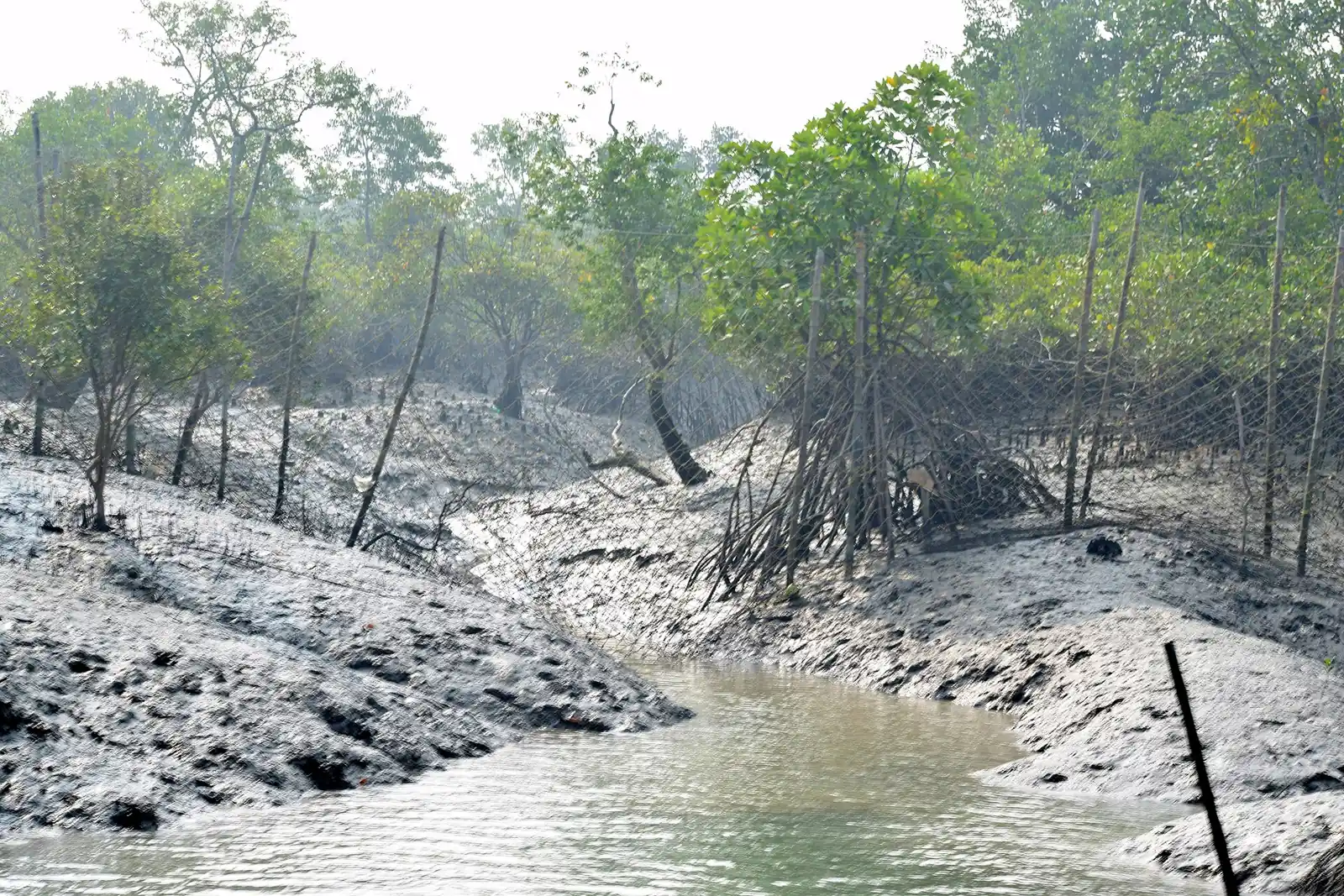
The Sundarbans are the part of this trip that people ask about first, so here is what travellers who have been actually report. Most of them do not see a tiger. Several of the first-hand accounts we read describe fresh pugmarks on the mud, an engine switched off while the boat waited, a deep call somewhere in the trees, and then nothing. What they do describe seeing is a world that looks like no other forest in India: a maze of tidal channels, roots that stand up out of the mud like pencils, spotted deer at the water's edge, crocodiles that look exactly like fallen logs, and red crabs everywhere on the banks.
The reserve's own site calls this the only mangrove ecosystem in the world with tigers, and lists more than three hundred bird species, with migrants arriving in winter. That is why this plan sits in the cooler months and why it spends a full day inside, not a rushed afternoon. One writer's regret, after a trip that took a long route through villages, was that two days felt too short for the area.
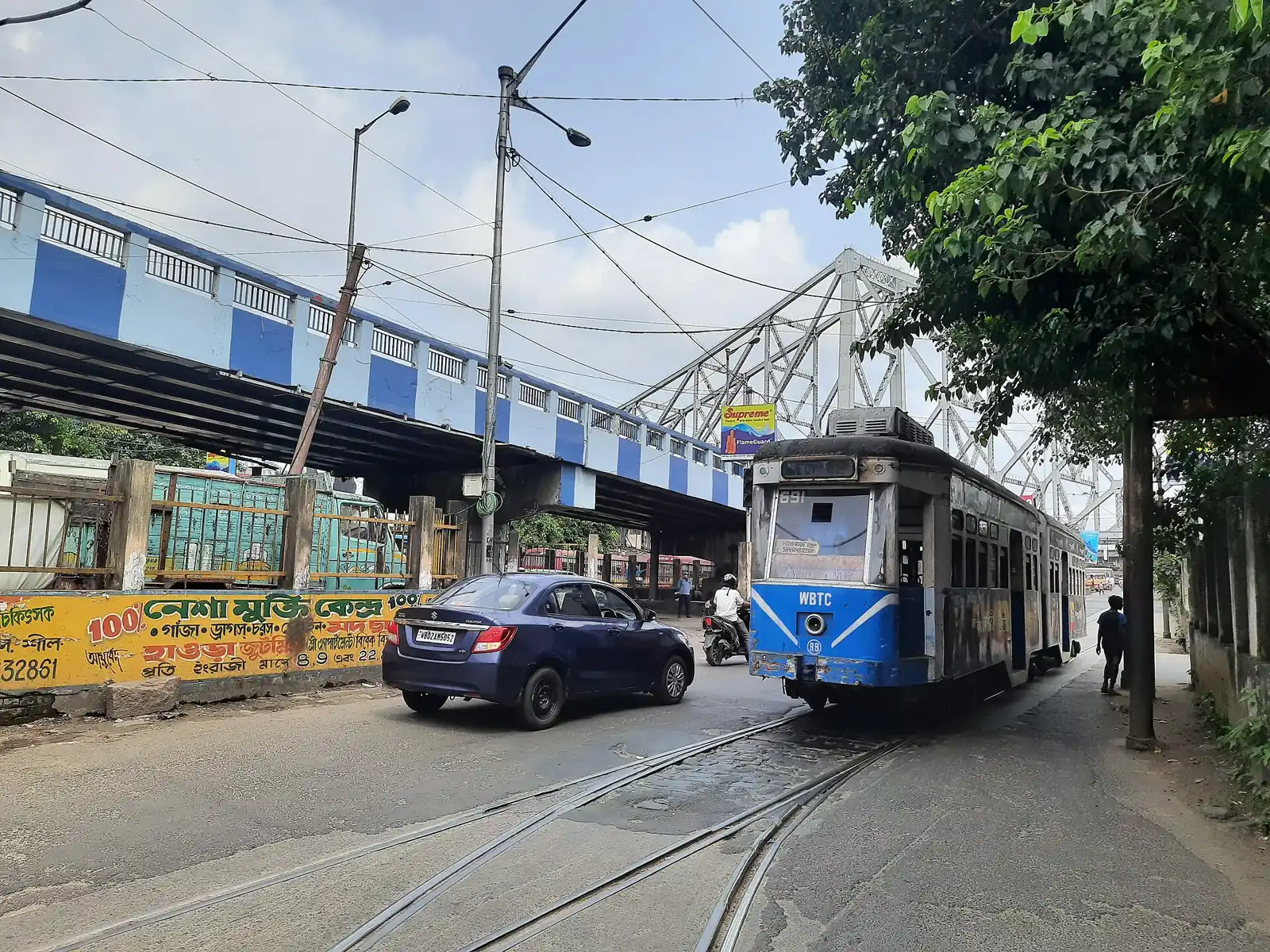
Kolkata frames the trip at both ends. You land into a city that the official tourism page itself calls bustling and chaotic, and you spend the first day at the slow, grand things: a marble memorial, a riverside ghat, a bridge that is better at night. On the last morning you walk the potters' lanes before you head for the airport. It suits couples, small families and anyone who likes water and birds more than hill roads.
From your pickup
Same trip, four starting points. Road times are real driving times; a long drive becomes its own travel day so nobody arrives wrecked.
Day by day
Day 1 · night in Kolkata
Landing in Kolkata: marble, river and a lit bridge
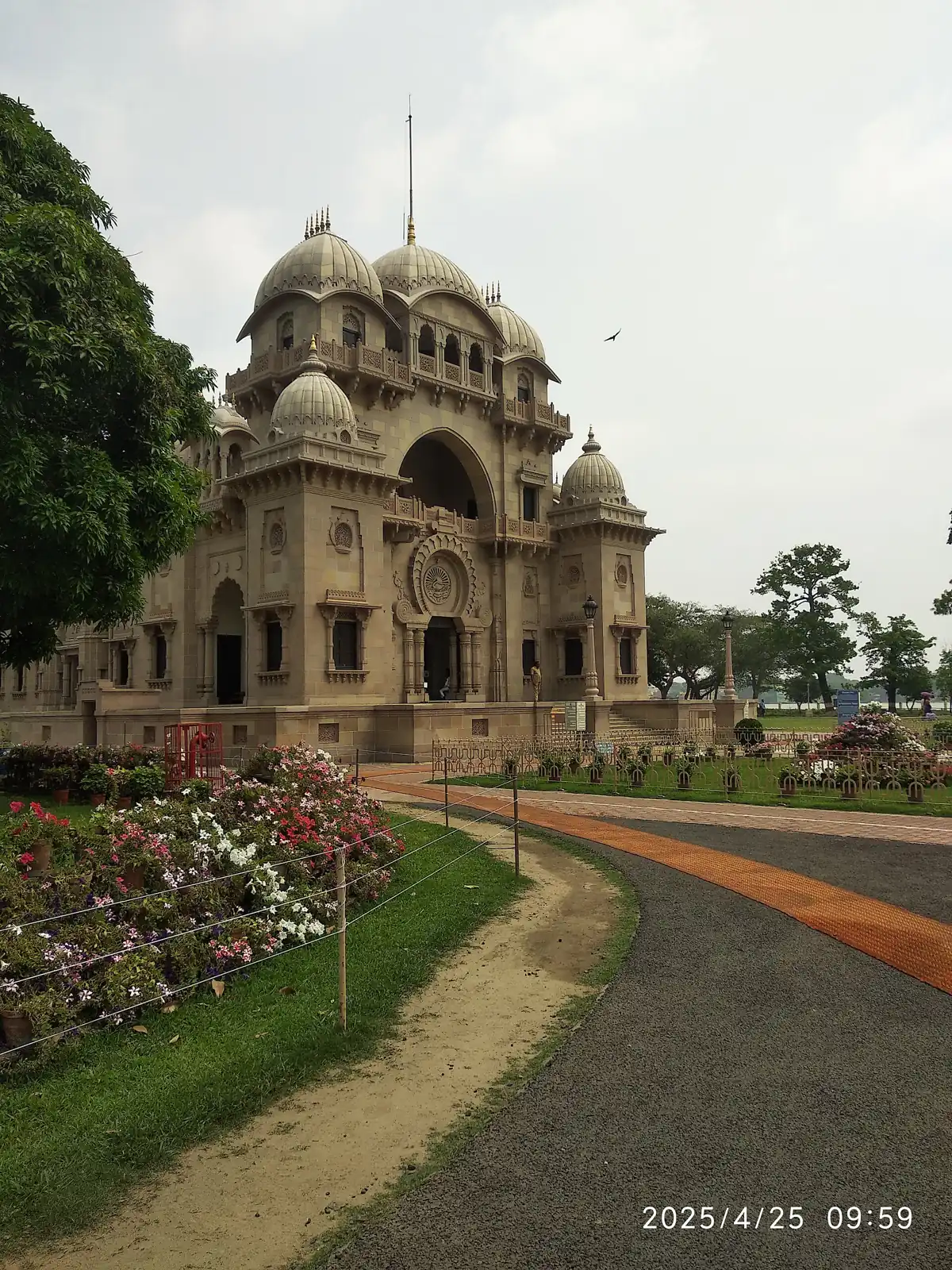
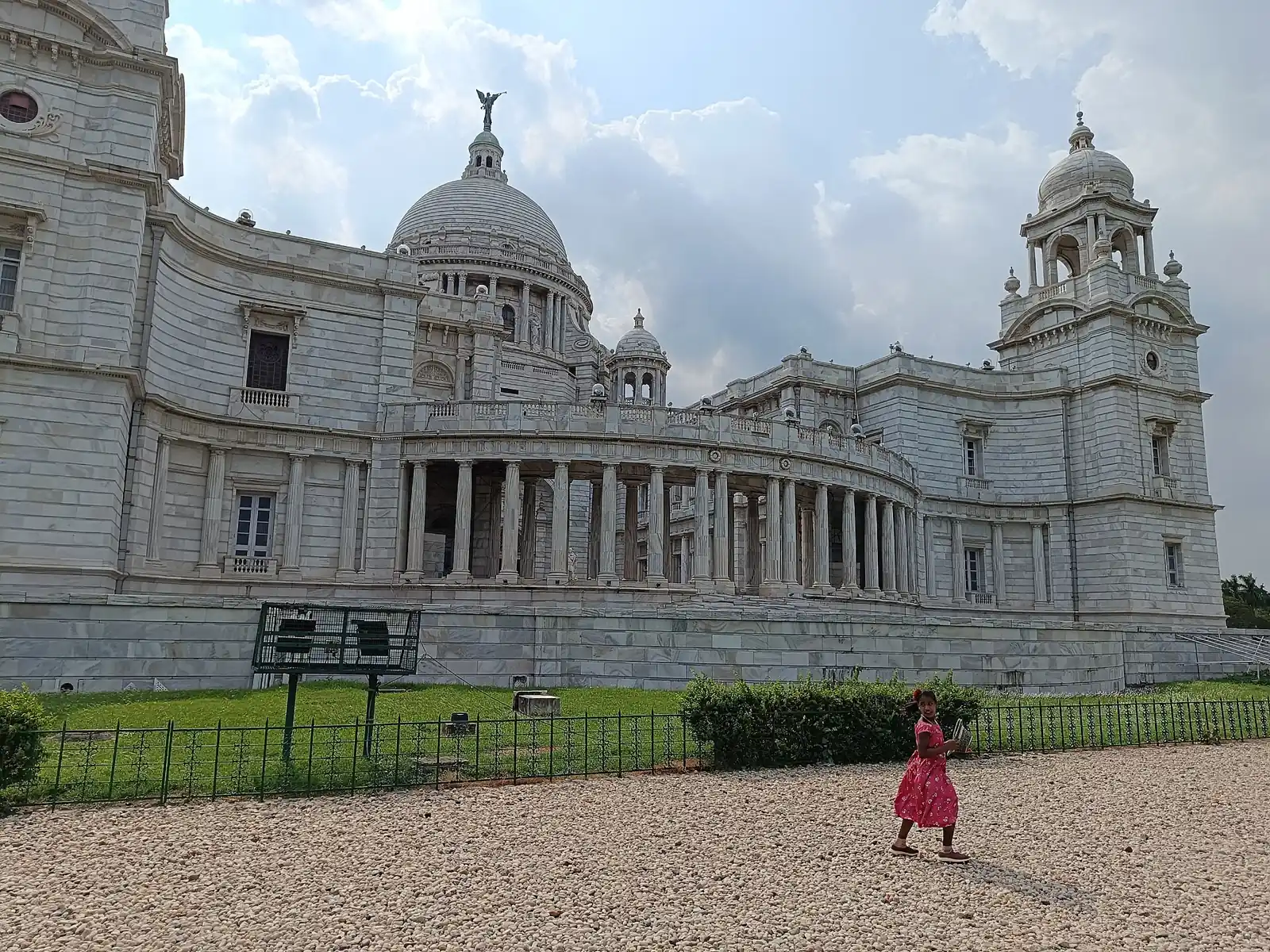
Flights are yours to book. The driver meets you at the airport, and after you drop your bags the afternoon begins at the Victoria Memorial. The official page lists it as open from ten to five with twenty-five galleries, sixty-four acres of gardens and a life-sized diorama of nineteenth-century Chitpur Road. Give it a slow ninety minutes, the Daniell paintings and the Indian National Army objects being two of the galleries worth lingering over. Check for the weekly closing day before you go, because the portal does not list it and some guides mention one.
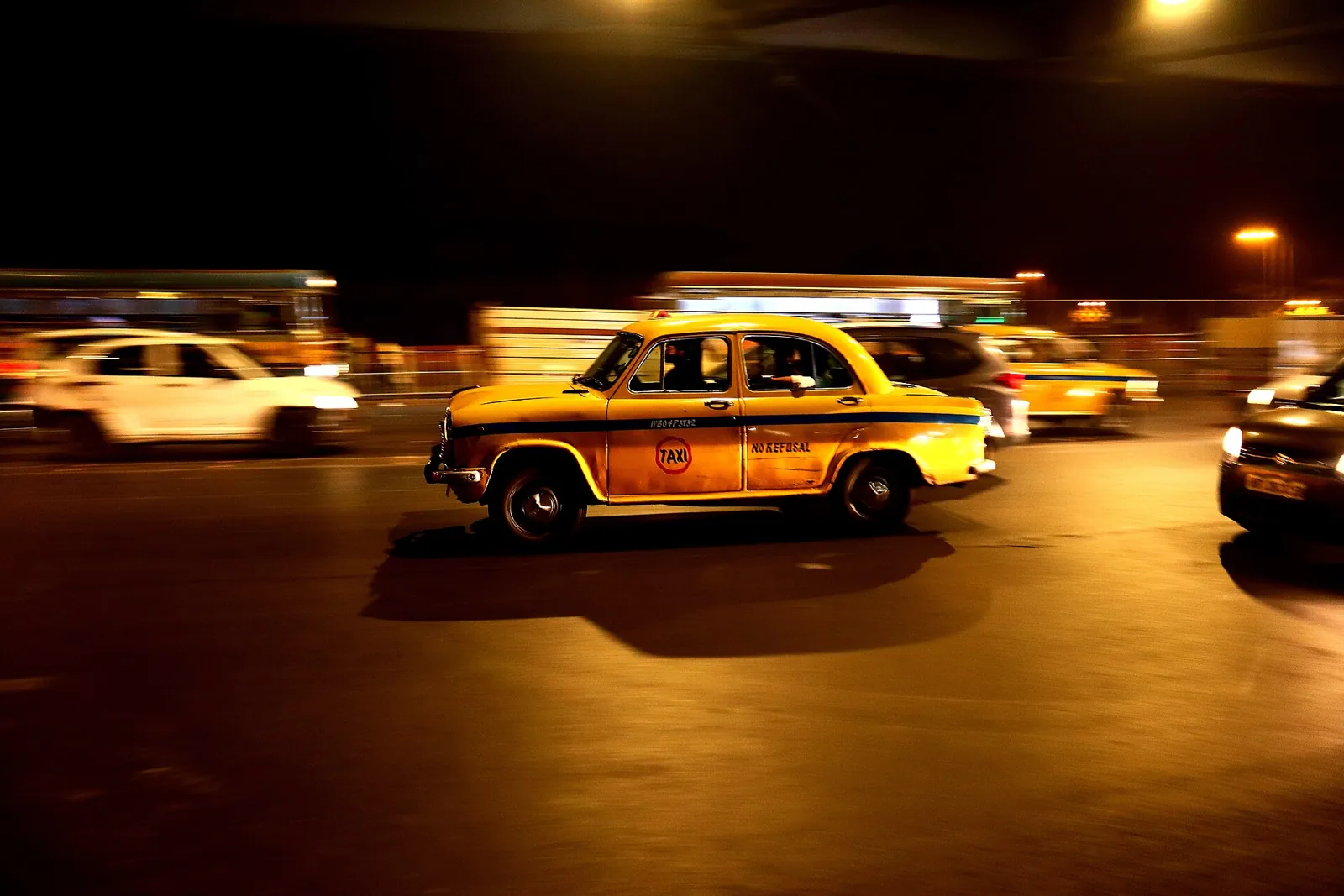
Late afternoon belongs to Prinsep Ghat on the Hooghly. It is a Venetian Gothic landing built in the mid-nineteenth century, open at all hours, with boat rides and food stalls and the long view of Howrah Bridge. Stay for the light going. The bridge, finished in 1943, is the usual end of the day: the portal highlights sunrise and night, when it is lit, and suggests a ferry across from the launch ghat after dusk. Go back to the hotel through the traffic with the windows up. The same page does not exaggerate when it says the city's streets are chaotic.
- Victoria Memorial
- Prinsep Ghat
- Howrah Bridge
Day 2 · night in Sundarbans
Out of the city and onto the launch
Kolkata to Godkhali jetty by road, a morning on the way
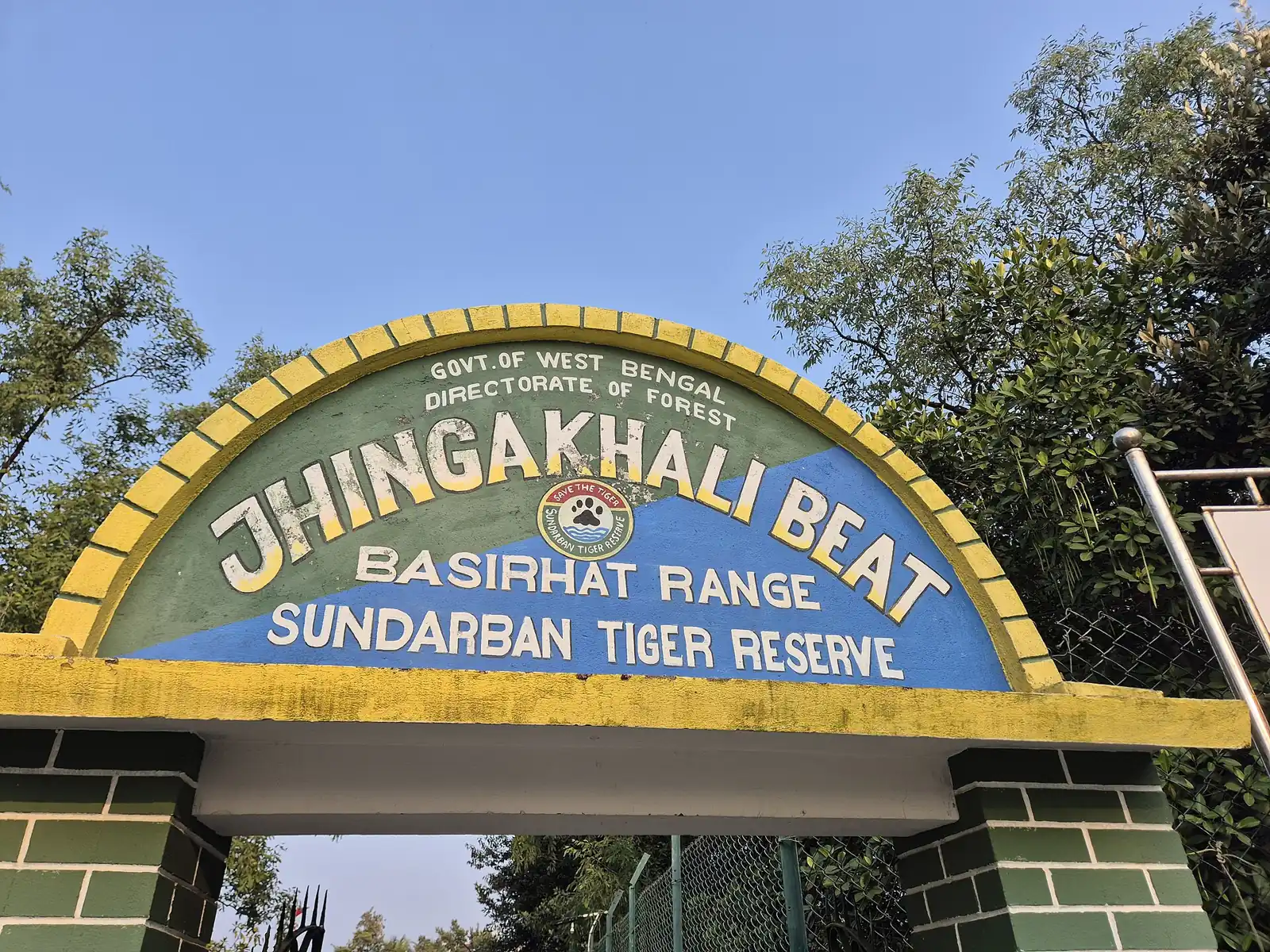
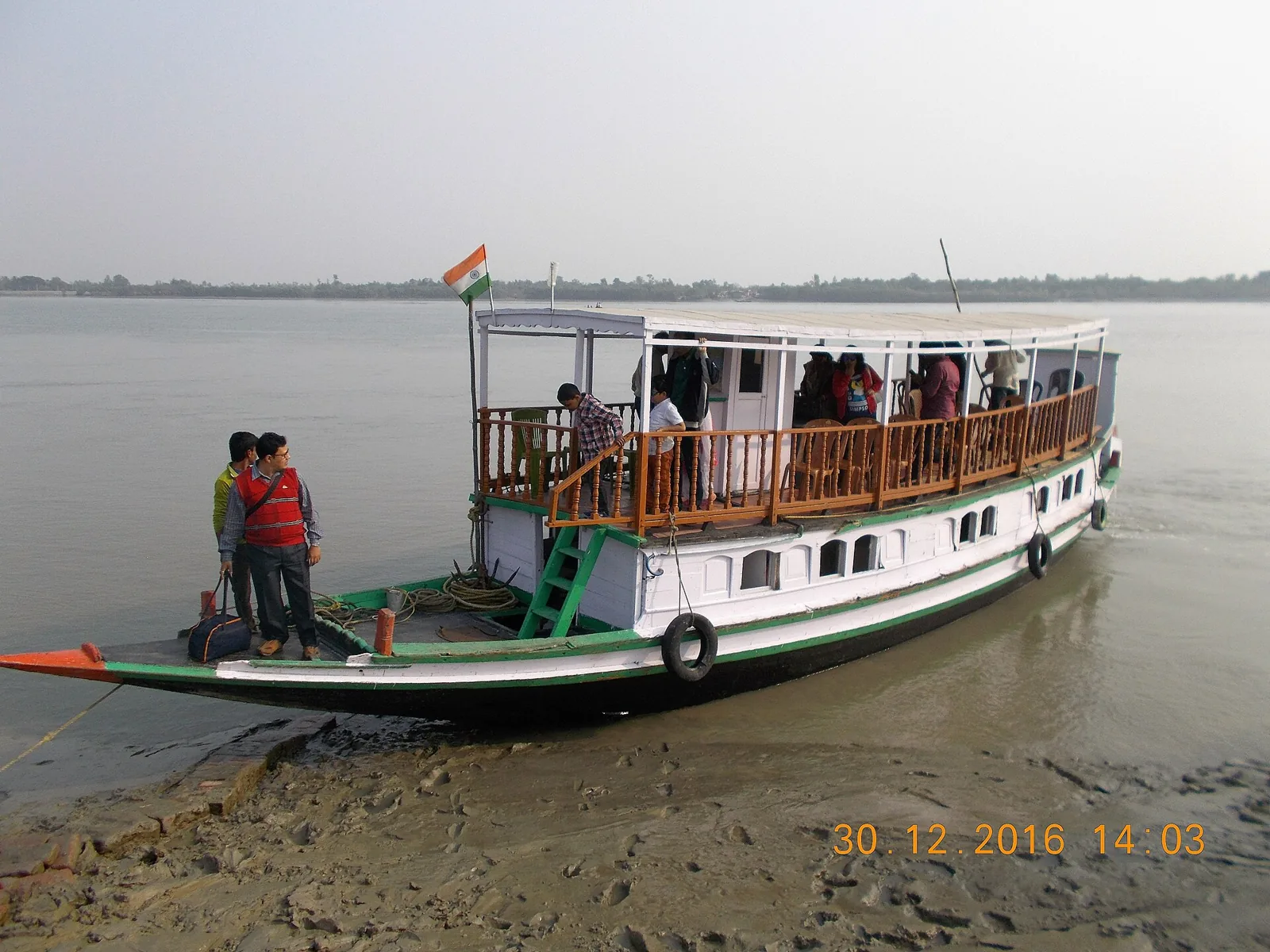
Leave early. A blogger who reached the jetty late says aim to be there by about eight, and a group that took the Canning local from Sealdah tells you not to, writing that the road or a private launch is the better way. By road the driver reaches Godkhali, where private cars are left at the jetty, and you board a registered launch. Entry is only on booked, registered boats, and the site says each carries an eco-guide.
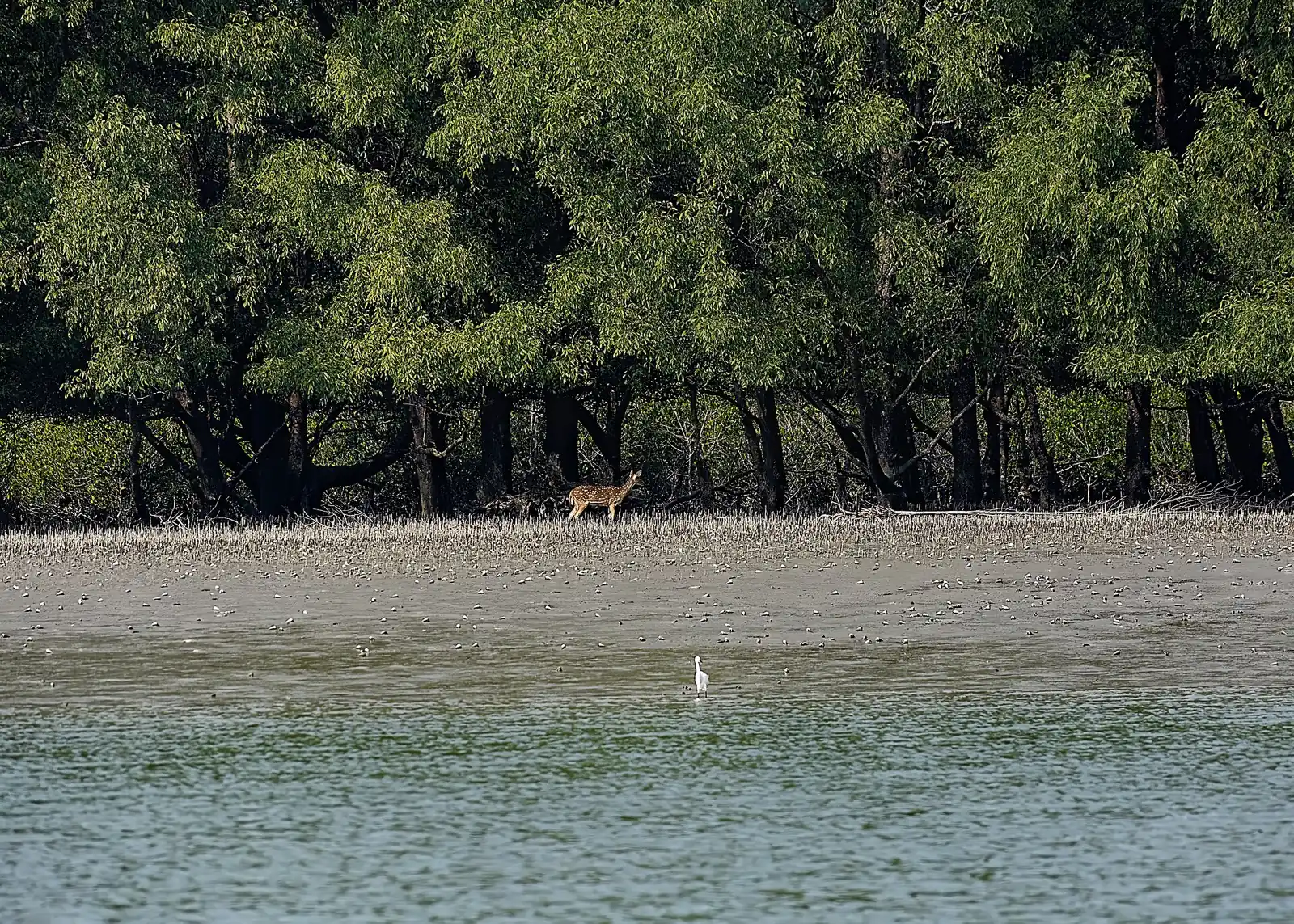
A day-two boat runs through inhabited islands first, then the population thins. One traveller stopped at Gosaba, where a bungalow associated with Tagore still stands, before heading for Sajnekhali. At Sajnekhali the interpretation centre, the turtle and crocodile pond and a watch tower give you a first orientation, and the permit is arranged there or earlier; one writer calls it essential. Late in the afternoon the stop is Sudhanyakhali, a mangrove park with a pond and tower. Deer come to the water at that hour. The path is fenced on every side including the top, a detail two writers noticed, so do not expect to be standing on open ground.
Forest staff ask everyone off before dusk, so plan to be back on the boat by about five. Your night is at a lodge on an inhabited island. Eat the local fish if you can; one writer says to ask your hosts in advance for river fish and prawns.
- Godkhali jetty
- Sajnekhali
- Sudhanyakhali
Day 3 · night in Kolkata
A full day among the channels and back to Kolkata
Return by boat and road, a long evening drive
This is the day to use all the daylight. Depending on tide and the guide's advice the launch heads for Dobanki, where an elevated canopy walk ends at a tower looking over a wide stretch of mangrove, or for Burirdabri, with a cage trail and a mud walk and a tower that looks across the Raimangal to Bangladesh. Netidhopani has the ruins of a temple said to be about four hundred years old, with its own watch tower. You will not do all three; the guide chooses by the tide, and that choice is better than ours.
Tide matters more than anything on this day. At high water large areas flood, and the boat can go into narrow channels; at low water the mud flats are covered in waders and crocodiles. One traveller reports a channel so shallow that he feared the launch would ground. The most careful accounts agree on a few small habits: keep a steady voice, keep hands inside the rails, stay quiet when the engine is cut, and stay on the upper deck for the view.
Spend the last hours of light drifting out. You return to Godkhali, collect the car and drive back to Kolkata for the night. It is a long day; the evening in the city should be only dinner and sleep.
- Dobanki canopy walk
- Burirdabri or Netidhopani
- Return to Kolkata
Day 4 · night in Kolkata
The potters' lanes, then the airport
The final morning is for Kumartuli, the potters' quarter where clay idols for festivals take shape under tarpaulin in narrow lanes. The official city page points to it as a way to meet working Bengali culture. Go late in the morning when the daylight is better for photographs, ask before pointing a camera at a face, and keep your steps off the figures drying in the lane.
If time allows, the Indian Coffee House on College Street, established in 1876 according to the official page, is where students and writers have argued over coffee for generations. You can also finish with Jorasanko Thakur Bari, the Tagore family home now run as a museum. Leave the rest of the day for the drive to Kolkata airport. Book a departure in the afternoon or later; the city's traffic is worse than its map suggests.
- Kumartuli
- College Street
- Jorasanko Thakur Bari
- Kolkata airport
Setting your hopes right about tigers
The reserve describes the tiger as an excellent swimmer that eats fish, crabs, boar and cheetal, and the creeks are wide. People who have been describe pugmarks and a call, and one magazine writer waited with the motor silent. Treat any sighting as a gift. What you will almost certainly see is deer, monkeys, crocodiles, mudskippers, red crabs and a lot of birds, plus a landscape that feels like the edge of the world.
Two writers reported that the Sudhanyakhali walkway is fenced all around and above, and that fresh pugmarks were found just on the other side of the wire. That should tell you how close the animal is and how seriously the guides take the rule about staying on the path.
Rules that will actually affect your day
The forest department's rules bar loud music, plastic, drones, smoking, alcohol, swimming and fishing, and tell visitors to get down only at camps open to tourists. Single-use plastic bottles are not allowed. Bring a refillable steel bottle and keep your wrappers in a bag.
The reserve's site says foreign guests need no special permit; Indian visitors do the entry paperwork. One press writer notes that original government photo ID is needed at the forest office. Carry yours.
What to carry for the water
A hat and sunscreen, a cotton long-sleeved shirt, binoculars if you own a pair, and a light jacket for the early launch when the breeze is cool. A traveller who went in late January describes a cool breeze on the river and a hazy morning. Leave the honey on the shelf: one launch pilot told a writer that honey from the shops was often watered down, and that it is best bought in the right season.
What the price covers
- Car and driver from your pickup to the airport, and again from arrival to departure
- 3 nights in hand-picked stays
- Breakfast and dinner every day
- Local guide at the main sights
- Tolls, parking and fuel
- Flights and trains (we book them with you at the fare of the day)
- Lunches
- Monument tickets, permits and activity fees
- Personal shopping
Questions people ask
Will we see a tiger in the Sundarbans?
Probably not, and the trip reports say so plainly. Writers describe fresh pugmarks, a distant call and long waits with the engine off. Expect deer, crocodiles, monkeys, birds and the mangrove itself, and count a tiger as luck.
Do I need a permit, and who arranges it?
Entry to the tiger reserve needs permission through the forest offices, and the reserve admits visitors only on registered, pre-booked boats. We handle the booking as part of the trip; you only need to carry original photo ID.
Which months are best for the mangroves?
November to March is the cooler stretch, and migrant birds arrive in winter, the reserve lists. One writer advises late winter, when the sun is still strong by day. Check with us before choosing the hot months.
Is it safe with small children or older parents?
The boats are covered launches with an upper deck and railing, and the days are slow. The long drive and the boarding from a muddy jetty are the hard parts. Tell us about mobility so we can pick the easiest sections.
Can I start this trip from Jaipur or Agra?
Yes, the page lets you choose any of the four pickup points. Our car takes you to your departure airport, and a driver meets you when you land in Kolkata and stays through the four days. Timings for each pickup show before you book.
Why not do the Sundarbans as a day trip from Kolkata?
Some people do. One blogger who arrived late at the jetty advises an early start.A night on the island leaves a full day on the water.
- Victoria Memorial timings and weekly closing day: the official page lists ten to five and no closures, some guides mention a Monday closing
- Sundarban Tiger Reserve entry permission, boat registration and any new rules: reserve phone 03218-255280 per its website
- Which watch towers and walks are open on the day; tide and the guide decide
- Howrah Bridge ferry and Prinsep Ghat boat timings after dusk
 7 days
 4 days
 4 days