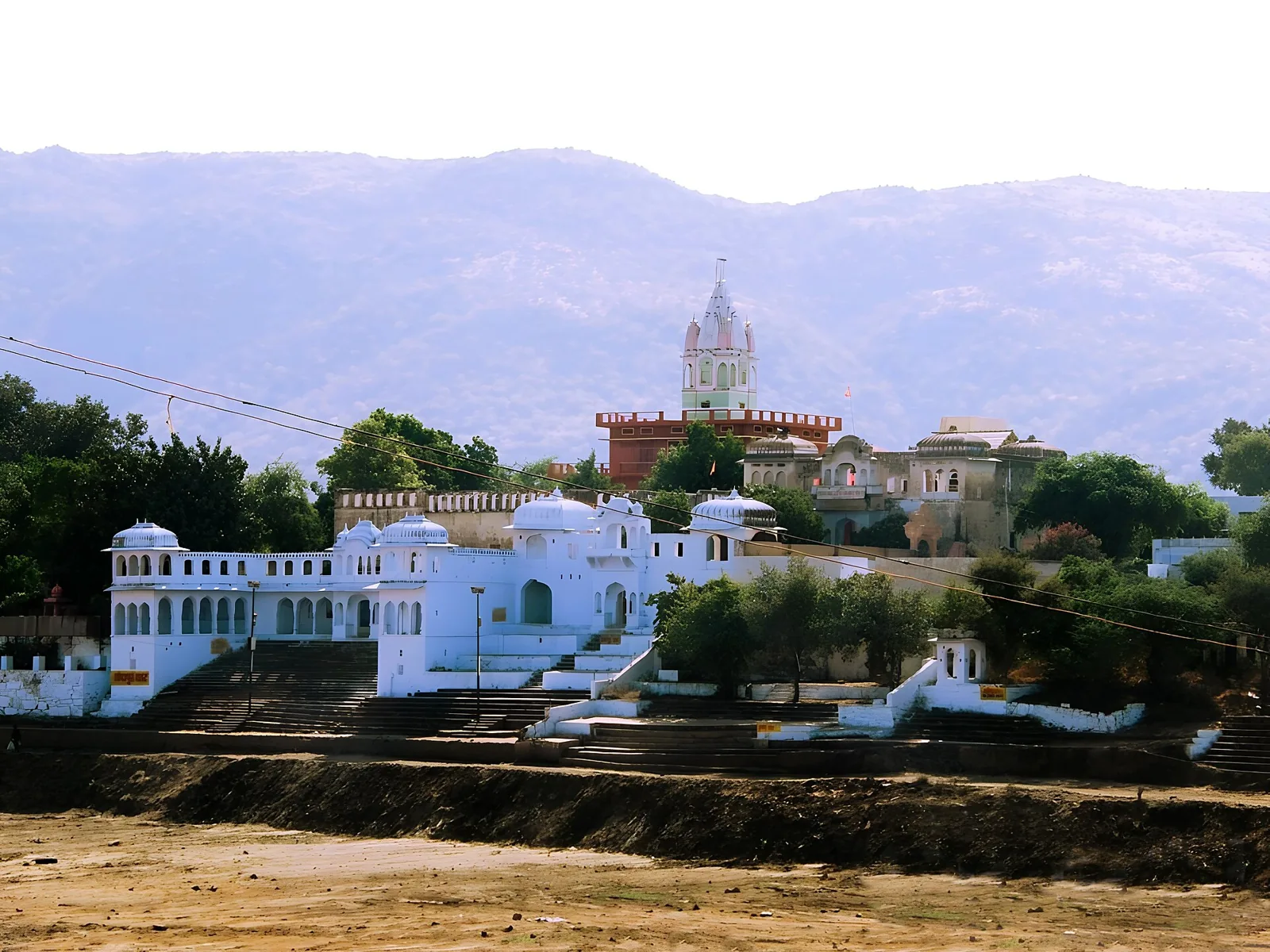
Ajmer and Pushkar sit about fifteen kilometres apart with a low Aravalli ridge between them, and they could hardly be more different. Ajmer is a working city with multiplexes, traffic and one of the busiest Sufi shrines in the country. Pushkar is a small lake town of white ghats, temples and cafes, where the loudest thing at dusk is the drumming for aarti.
Most people squeeze both into a rushed day from Jaipur. Trip reports from those who did that say the same thing afterwards: they spent the day in the car and the queue, and left the lake just as the light turned good. Three days lets you do Ajmer on foot and early, cross the ridge after lunch, and give Pushkar a full evening and a full morning.
This suits families, couples and older parents who want a slow, spiritual trip without a hard physical load. It does not suit anyone who wants a quiet Ajmer: the lanes around the dargah are crowded at any hour, and you should plan on that rather than fight it.
From your pickup
Same trip, four starting points. Road times are real driving times; a long drive becomes its own travel day so nobody arrives wrecked.
Day by day
Day 1 · night in Ajmer
Dargah lanes, the old mosque and a lake at sunset
Within Ajmer, short city drives
Start at the dargah of Khwaja Moinuddin Chishti before the day heats up. Entry is free, heads are covered for everyone (a scarf, dupatta or a long handkerchief is enough), and cameras are better left in the car, since the shrine bans pictures. People who go on weekdays describe the crowd as heavy but strangely peaceful, and say you simply move with it instead of pushing. Shopkeepers in the bazaar outside will offer to sell you a chadar or flowers and walk you in; accept only if you want to, and a polite refusal works. Beggars sometimes follow you, and the usual advice in trip reports is to keep walking.
Your guide will take the sequence through the gates: Nizam Gate, the drum house at the Shahjahani Gate, the big Buland Darwaza. Give this part about two hours, and stop for kadi kachori and chai in the Dargah Bazar afterwards. A local-favourite kachori stall and a clean cafe near the centre are both mentioned by people who ate their way through the city.
Late morning belongs to the old mosque, around 400 metres from the dargah. It is calmer than anything you have just seen. The seven-arch screen has a different pattern in every arch, calligraphy runs in bands across the front, and on the pillars you can still make out older Hindu and Jain carving. One visitor found the grounds poorly kept, with litter, so go for the stone, not for the lawn.
The afternoon is slow on purpose. After a late lunch, drive out to Anasagar for the five marble baradaris built under Shah Jahan. Several writers say it is at its best near sunset with a cool breeze off the water, and quieter than its reputation suggests. Dinner is at your stay.
- Ajmer Sharif Dargah
- Adhai Din Ka Jhonpra
- Dargah Bazar
- Anasagar Lake
- Daulat Bagh
Day 2 · night in Pushkar
Taragarh view, then over the ridge to Pushkar
Ajmer to Pushkar, about 15 km, around half an hour
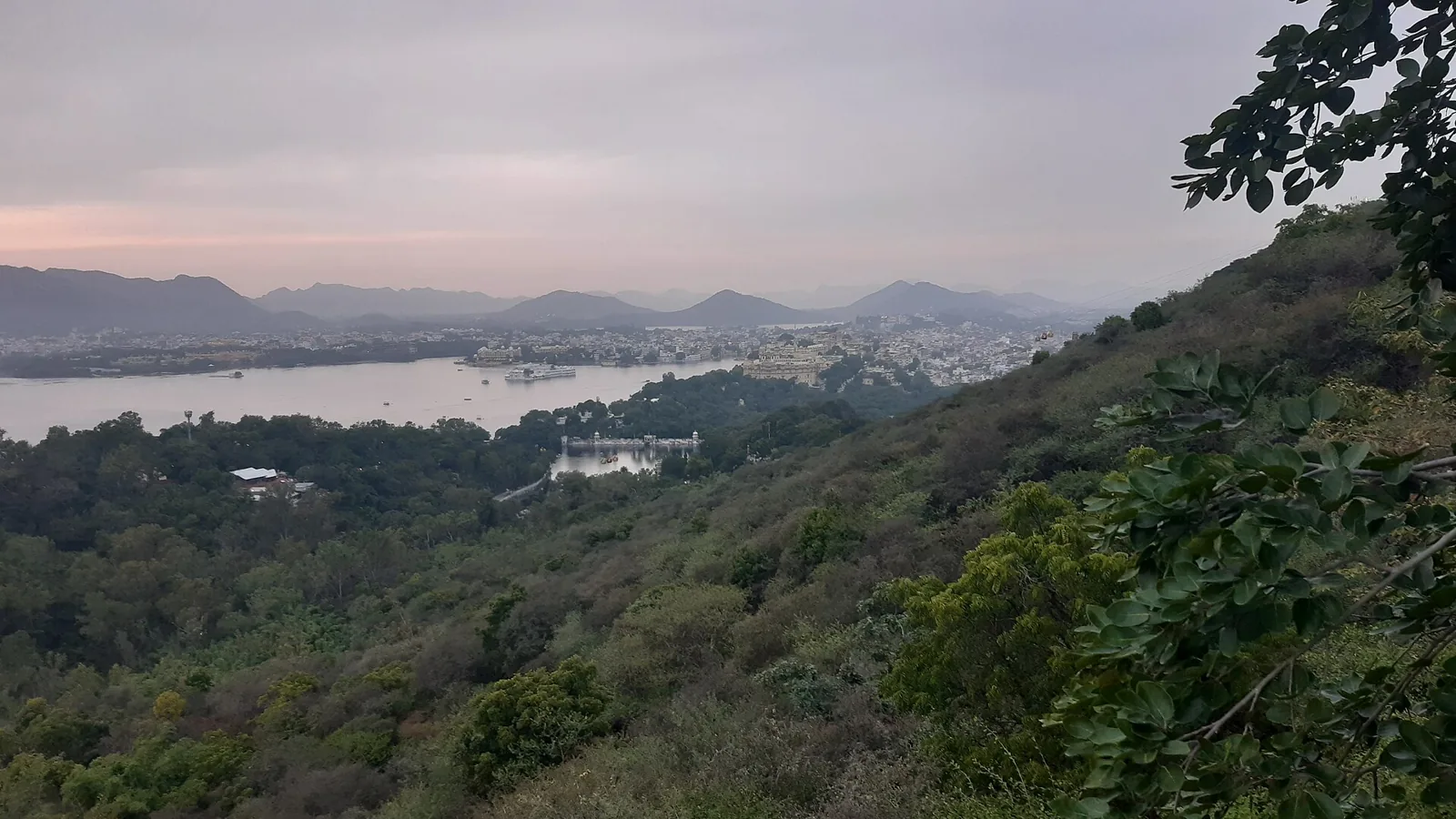
Spend the first half of the day on the hill. Taragarh Fort is crumbling and nobody pretends otherwise, but the view over Ajmer and Anasagar is the reason to climb, and the Bhim Burj cannon is worth ten minutes. Writers who walked up from the old mosque report roughly ninety minutes on foot; with a car and driver you skip that and save your legs for tomorrow. Check that the Akbar fort museum is open before you plan around it, since at least one visitor found it shut.
If you want one more Ajmer stop, Soniji ki Nasiyan is the Jain temple whose plain front hides a gilded hall upstairs. Only Jains enter the main temple, but the hall of golden figures is open to all, and it takes less than an hour.
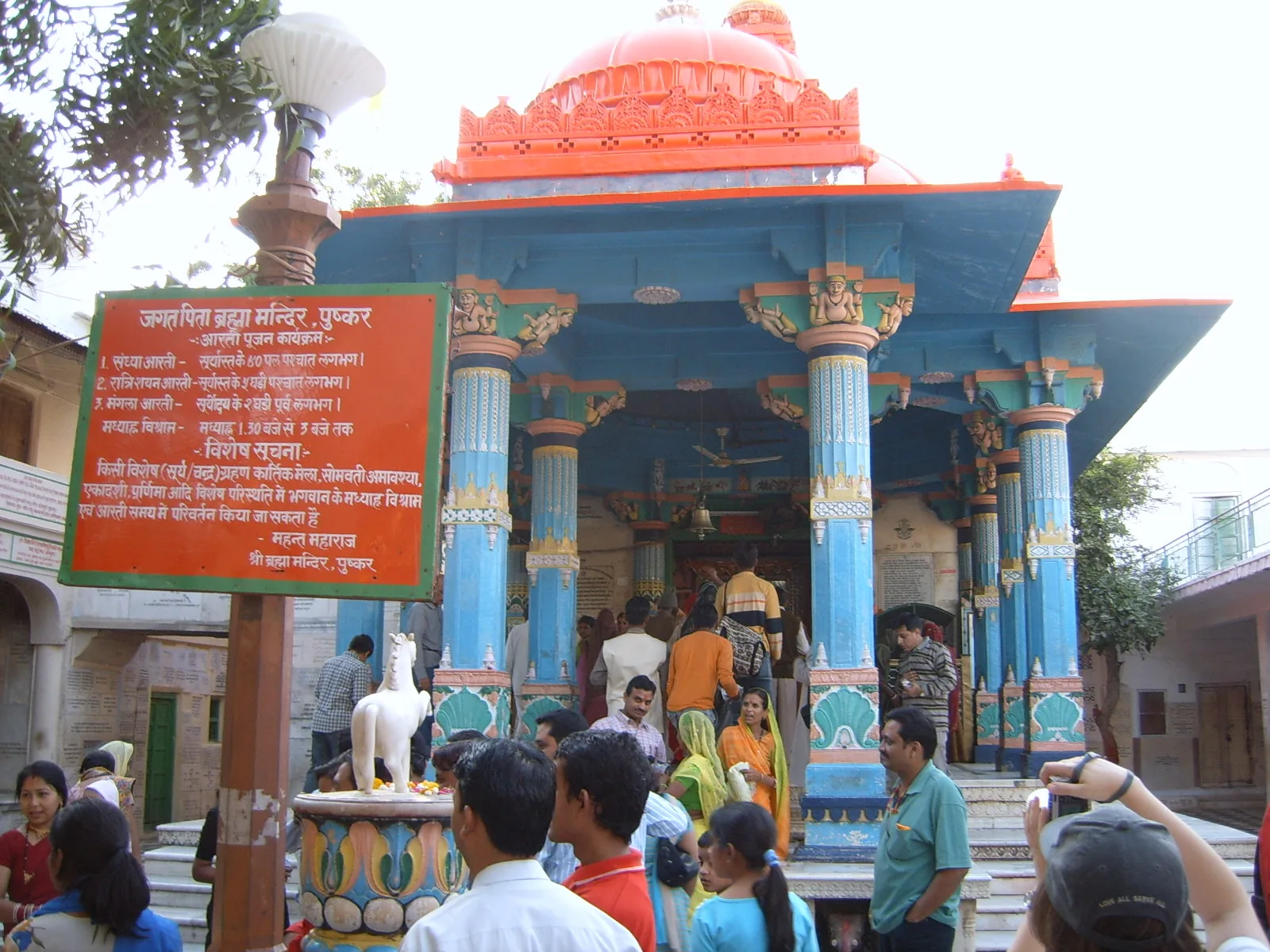
After lunch the road climbs over Nag Pahar and drops into Pushkar in about half an hour. Walk down to the lake and shoes come off at the edge, as they do for everyone. There is no shade on the ghats and the concrete heats up, so go in the cooler hours. Stay for the evening aarti near Jaipur Ghat, around twenty to thirty minutes. In winter it starts earlier, so ask your guide for the exact slot on the day.
After that, walk the main bazaar: embroidered cloth, silver, leather bags, rose products. Haggling is expected. Pushkar is officially alcohol-free, and the practical advice from people who stayed a week is to stick to lassi, falafel and thali.
- Taragarh Fort
- Soniji ki Nasiyan
- Pushkar Lake
- Jaipur Ghat aarti
- Pushkar Bazaar
Day 3 · night in Pushkar
Brahma temple, Savitri hill and a slow last evening
Within Pushkar, mostly on foot
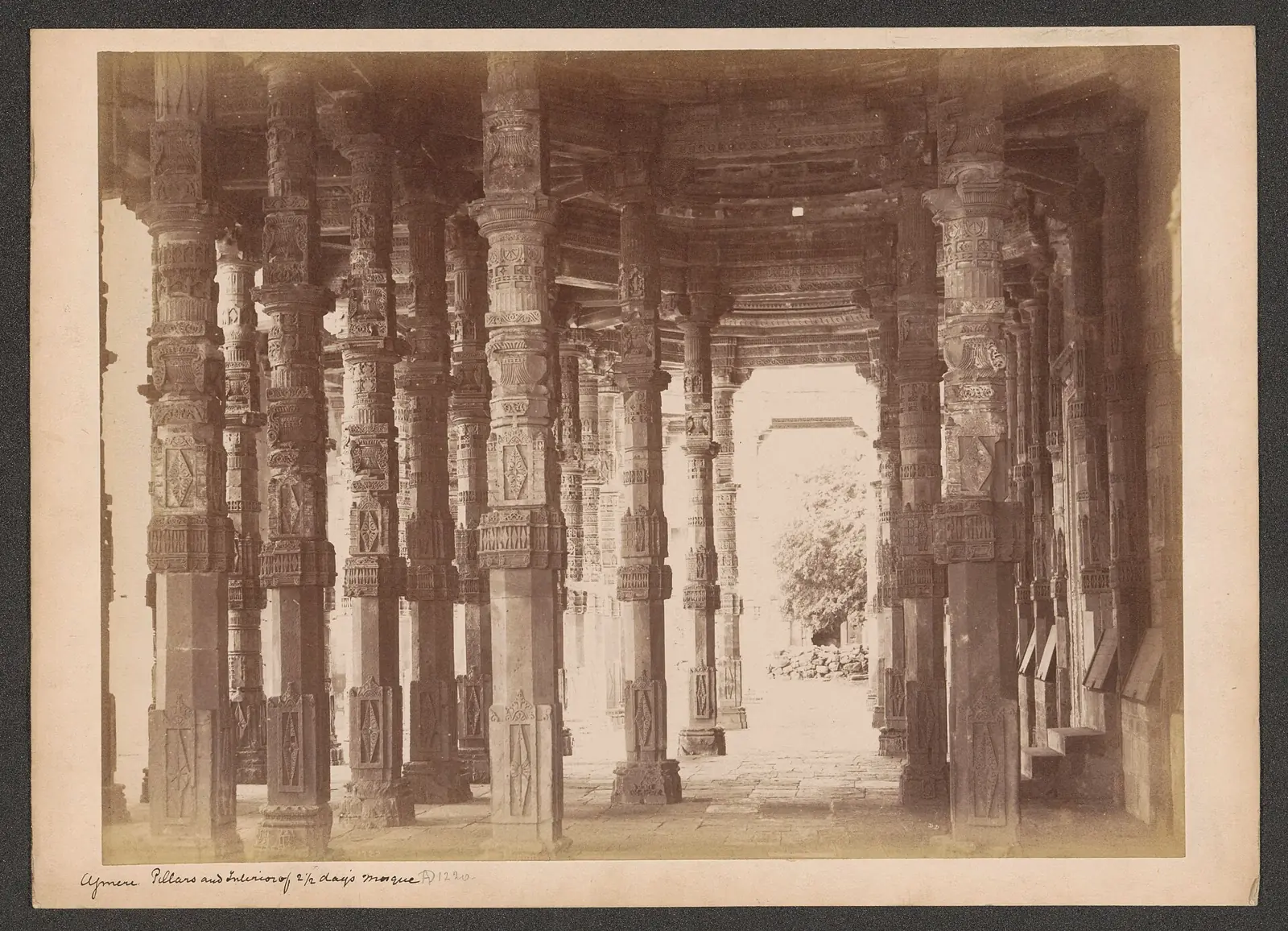
Go early to the Brahma temple, one of very few dedicated to Brahma, with a red spire and a swan on top. Phones and cameras go into a locker near the entrance and you take a key. Pujaris will offer you puja before you reach the sanctum. A family with a toddler said the best answer is a firm, friendly no and keep moving; give a donation if you wish, to the place, not to a stranger who approaches you.
Then the ghats in morning light, when families bathe and the lake feels like a village pond, not a tourist stop. Flower sellers by the water get insistent if you linger: a calm no and a step away ends it. Ask your guide about the quieter sunrise corners, and for breakfast try one of the lakeside cafes. Writers are blunt that the coffee is mostly instant, so have chai.
Savitri temple stands on the ridge behind. The stairs number somewhere near a thousand and take roughly forty-five minutes at an ordinary pace. There is also a ropeway, but one writer called it slow with hot cars and stopping often, and another found it closed on the day. Whichever you choose, go for the late-afternoon light, not noon.
If you have energy after, Pap Mochani is a smaller hill behind the Marwar bus stand with a ten to fifteen minute scramble and fewer people. Dinner on a roof overlooking the lake is the traditional way to end it. A bonfire evening is an option in winter.
- Brahma Temple
- Pushkar ghats
- Savitri Mata Temple
- Pap Mochani Temple
Picking the month
October to March is the comfortable window, and nearly every account we read says the same. Summer afternoons on the lake ghats are punishing, and one writer who arrived in August after floods found the dargah lanes muddy and littered.
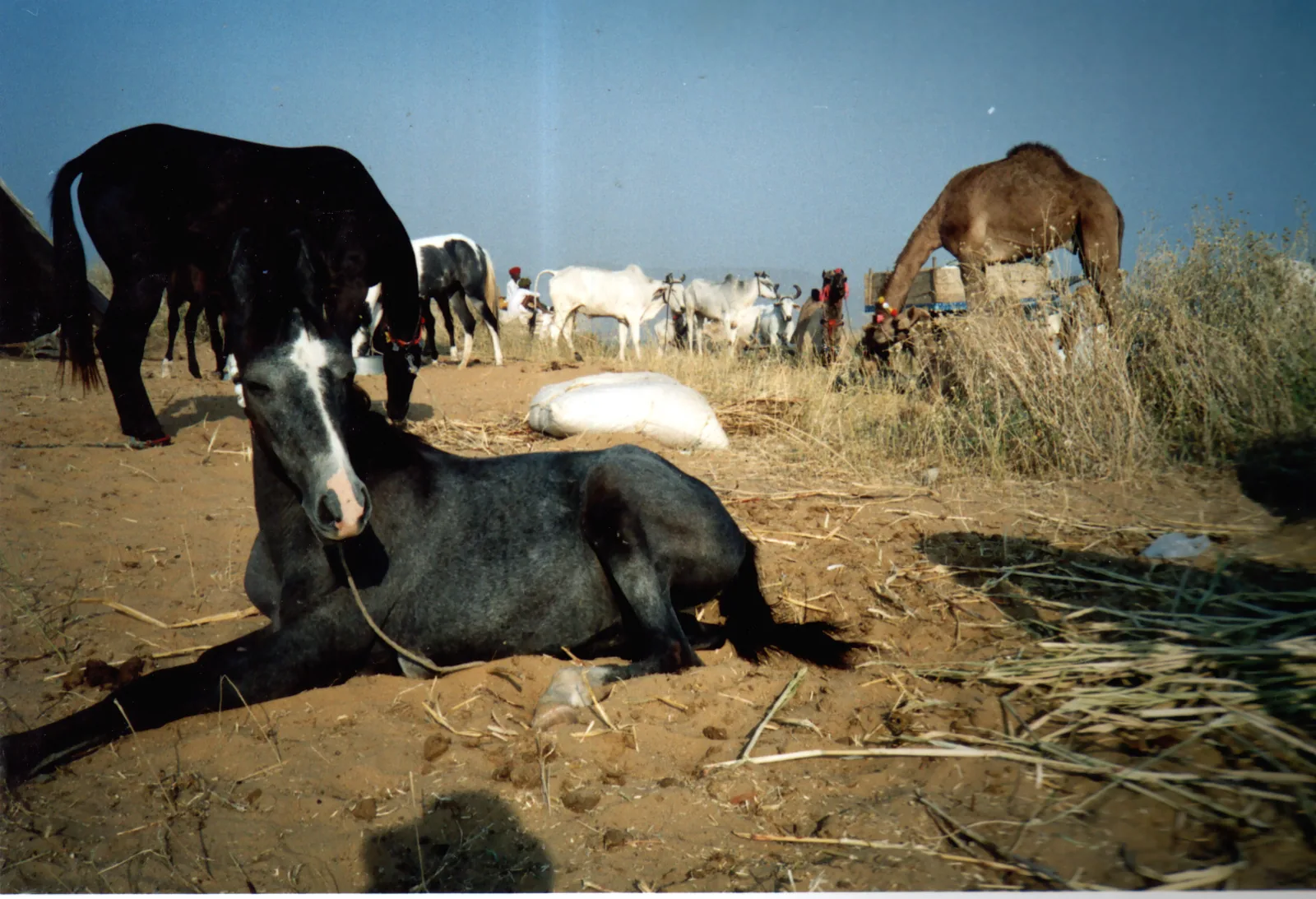
Two dates change everything. The Pushkar camel fair gathers around Kartik Purnima, and in 2026 the fair is listed for 17 to 24 November: rooms and roads fill and every viewpoint gets crowded. The annual Urs at the dargah, in the Islamic month of Rajab, packs the dargah beyond anything on a normal day. Both are wonderful if you want them, and a poor choice if you want calm.
What people regret
The most repeated regret is trying to do both towns from Jaipur in one day, leaving at nine, reaching Ajmer in nearly four hours and seeing Pushkar by afternoon with the sun already low. The second is carrying a camera into a shrine that bans it. The third is buying every chadar and garland a shopkeeper suggests.
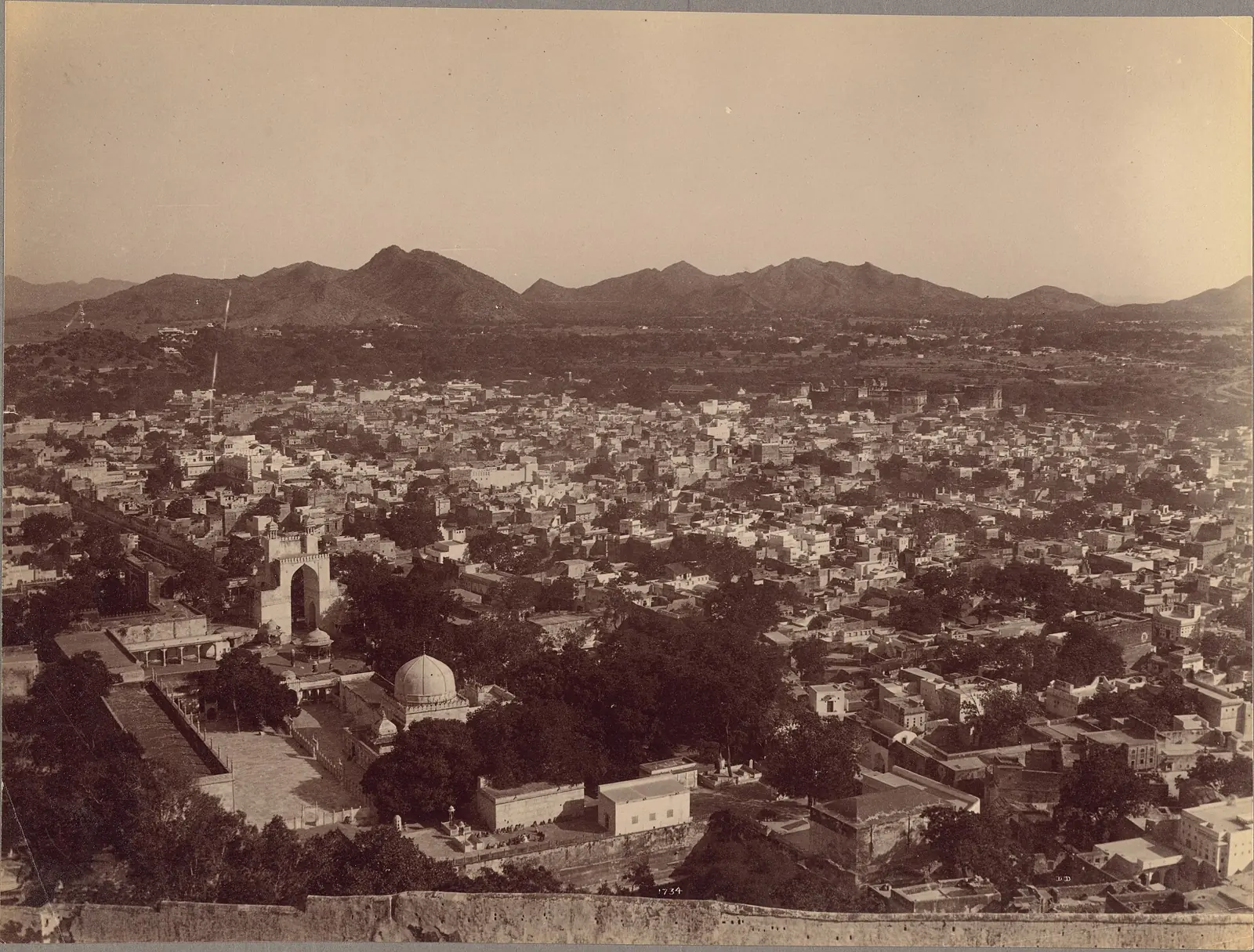
On the reverse side, the thing people say they would repeat is the stop at the old mosque with the arched screen, the one quiet place in Ajmer.
Older parents and slow knees
The dargah lanes are uneven and crowded, and the driver can bring the car as close as it is allowed to go; one family advised asking the driver to park nearer to the gate. Skip the Savitri stairs if knees are an issue and consider the ropeway, though it may close or run slowly. Taragarh is best done by car. Pushkar ghats have steps and no shade, so carry water and a hat.
Laladham's car and driver stay with you from pickup to the end, which matters most on day 2, when you move between towns with luggage.
What the price covers
- One car and driver from your pickup to the final drop
- 4 nights in hand-picked stays
- Breakfast and dinner every day
- Local guide at the main sights
- Tolls, parking and fuel
- Lunches
- Monument tickets, permits and activity fees
- Personal shopping
Questions people ask
Is Ajmer Sharif open to visitors of every faith?
Yes, entry is free and open to all. Cover your head, remove your shoes, and leave your camera in the car. Expect to shuffle along with the crowd.
How much of Pushkar can I see in the evening?
Walk the lake, watch the aarti at Jaipur Ghat, and eat in the bazaar. The temples and the Savitri hill are better in the morning and late afternoon.
Can we start from Jaipur or Delhi?
Yes. Laladham picks up from Delhi airport, Agra, Mathura or Jaipur, and the drive to Ajmer is its own travel day, so your three days here stay for the towns. From Jaipur, Ajmer is about 130 km.
Is Pushkar alcohol-free?
Officially yes, and some menus still serve it quietly. Travellers who spent a week there recommend skipping it; bhang lassi, also sold openly, is stronger than most people expect.
Do we need to climb to the Savitri temple?
No. There is a ropeway, but reports say it can be slow or shut, so the stairs are the dependable route if you are fit. Go late afternoon, not noon.
What should we wear and carry?
A scarf or cap for the dargah, easy-to-remove shoes, a hat and water for the ghats, and a small amount of cash for shops and offerings.
- Pushkar camel fair dates and programme (listed 17 to 24 November 2026 by Incredible India), confirm with Rajasthan Tourism
- Brahma temple and dargah opening hours and entry rules
- Ropeway timings at Savitri hill, one writer found it closed
- Aarti start time, which shifts between summer and winter
- Whether the Akbar fort museum in Ajmer is open
 5 days
 5 days
 8 days