Kurukshetra is a modest Haryana town that carries one of the largest stories in the country. This is the field where, in the Mahabharata, the Pandavas and Kauravas fought, and where Krishna is said to have spoken the Gita to Arjuna. What you see today is not a battlefield. It is a handful of water tanks, small temples and a banyan, spread across the town and its edges, which people stitch together on a rented day.
Writers who have gone are candid about the gaps. One travel writer who drove down from Patiala reached Jyotisar in the evening for the light and sound show, found nobody there and no sign of it, and called the visit very disappointing. A couple who went on Mahashivratri got the opposite, packed fairgrounds and a sea of people. Both accounts point the same way: the hour and the day of the year decide whether the town feels meaningful or merely scattered.
That is why this plan gives it two days instead of one rushed circuit. Day one is the town itself, in an order that keeps you clear of the worst crowds. Day two goes west to Pehowa, a river-side town of temples, where families come to offer rites for departed relatives. Both days suit parents and grandparents, and anyone who wants the Gita to be more than a name on a signboard.
From your pickup
Same trip, four starting points. Road times are real driving times; a long drive becomes its own travel day so nobody arrives wrecked.
Day by day
Day 1 · night in Kurukshetra
The tank, the banyan and the arrows of Bhishma
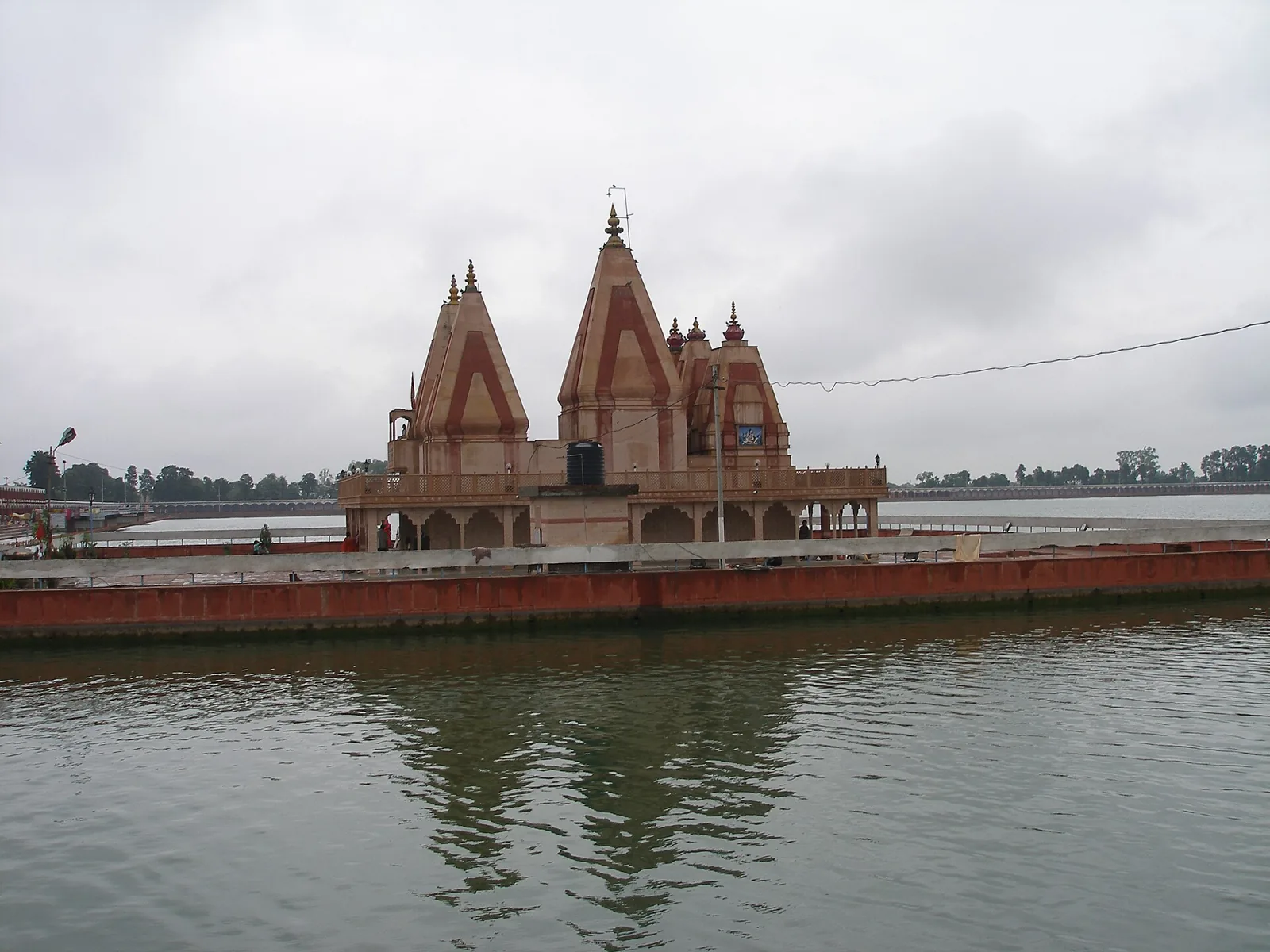
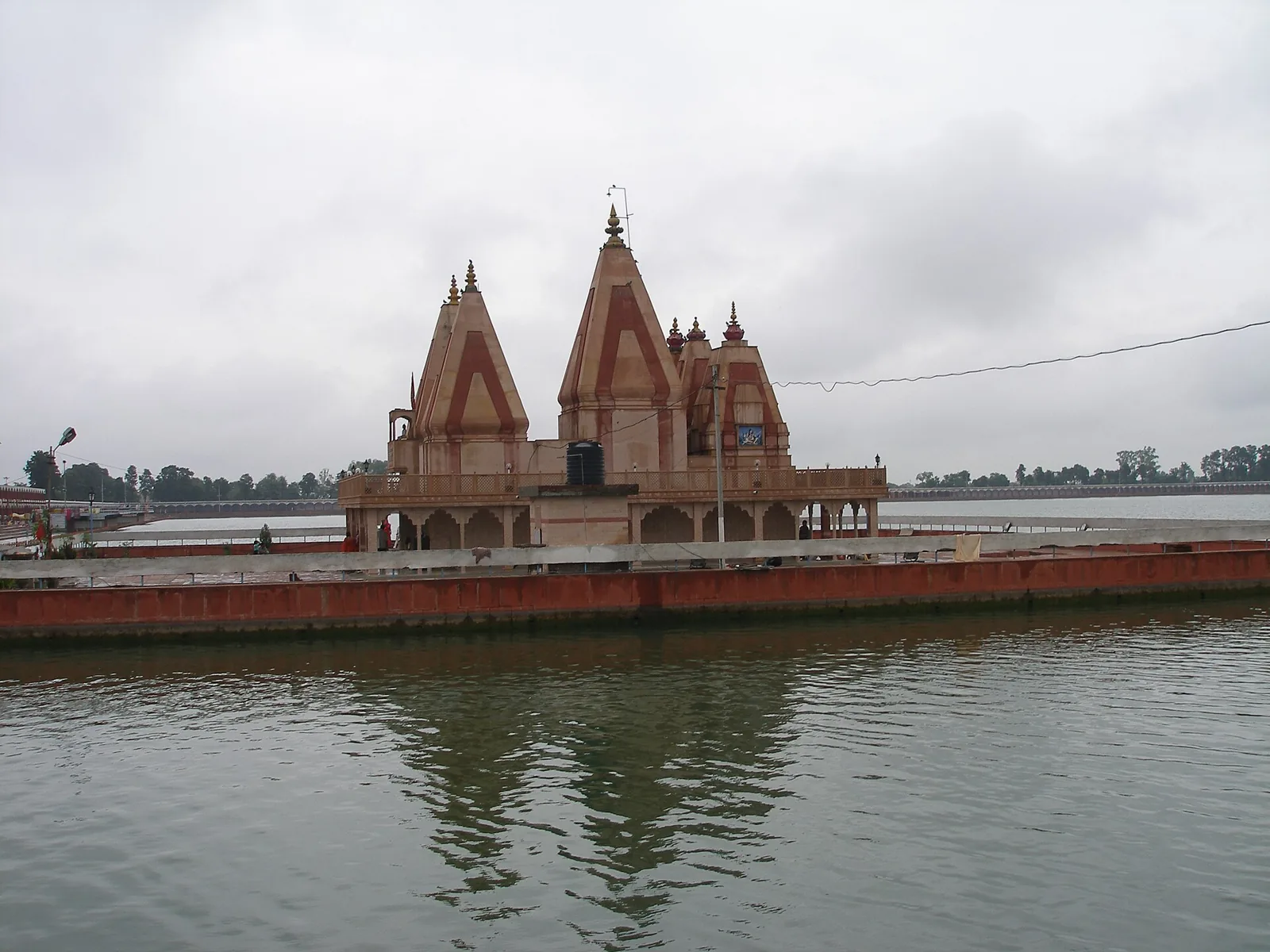
Start with Brahma Sarovar in the first light, as it opens at six. The tank is huge, about 3,600 feet long and 1,500 feet wide by the tourism board's figures, with ghats on every side and a black stone chariot of Krishna and Arjuna on an island in the middle. A couple who stopped in July said the clear water and the proper ghats were the surprise. Another writer found it clean but strangely empty and short on atmosphere when she went. Morning, with a few early walkers, is the better version. One of the blogs also warns that priests may press you for a puja, so decide beforehand what you are comfortable with.
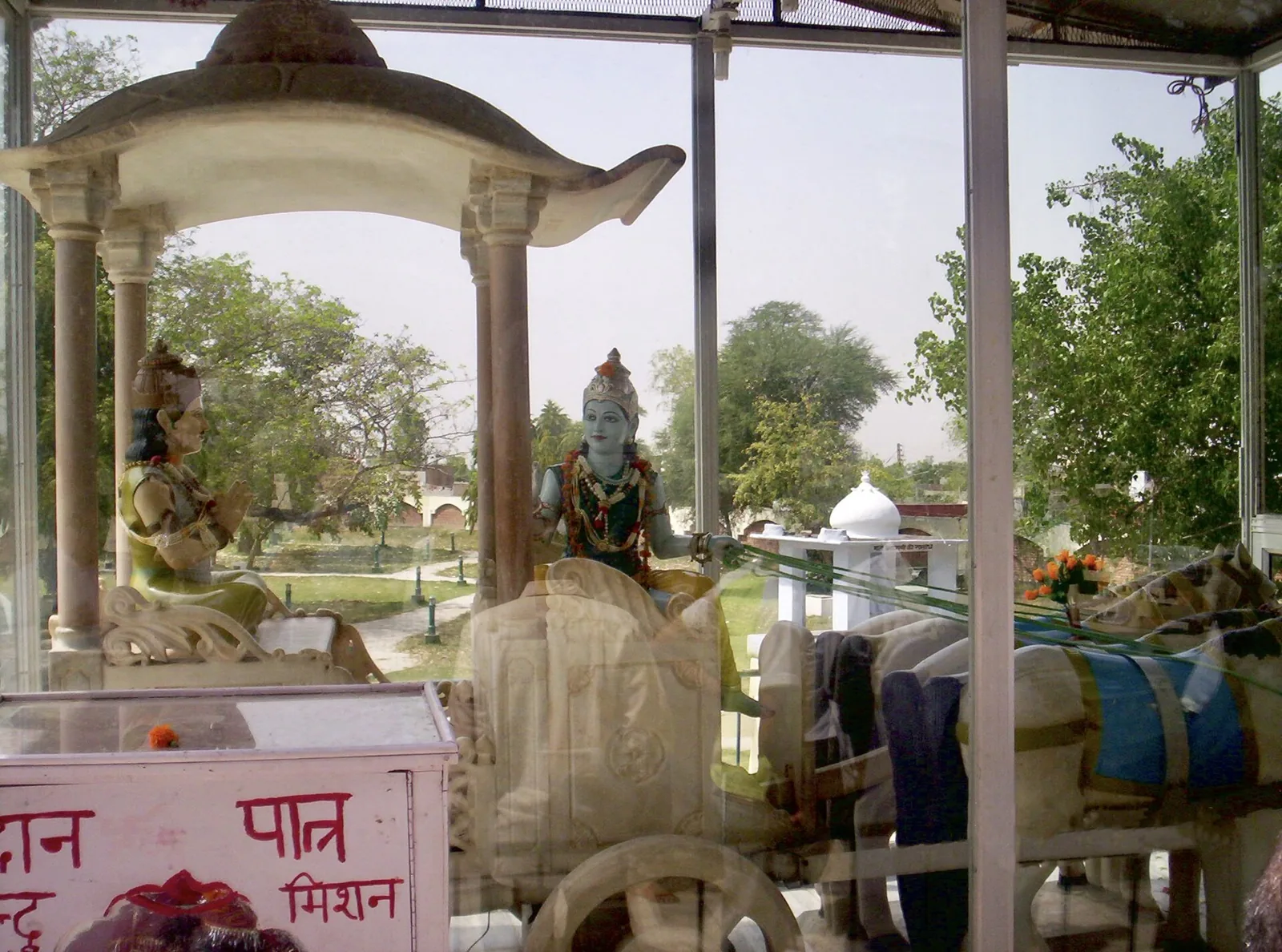
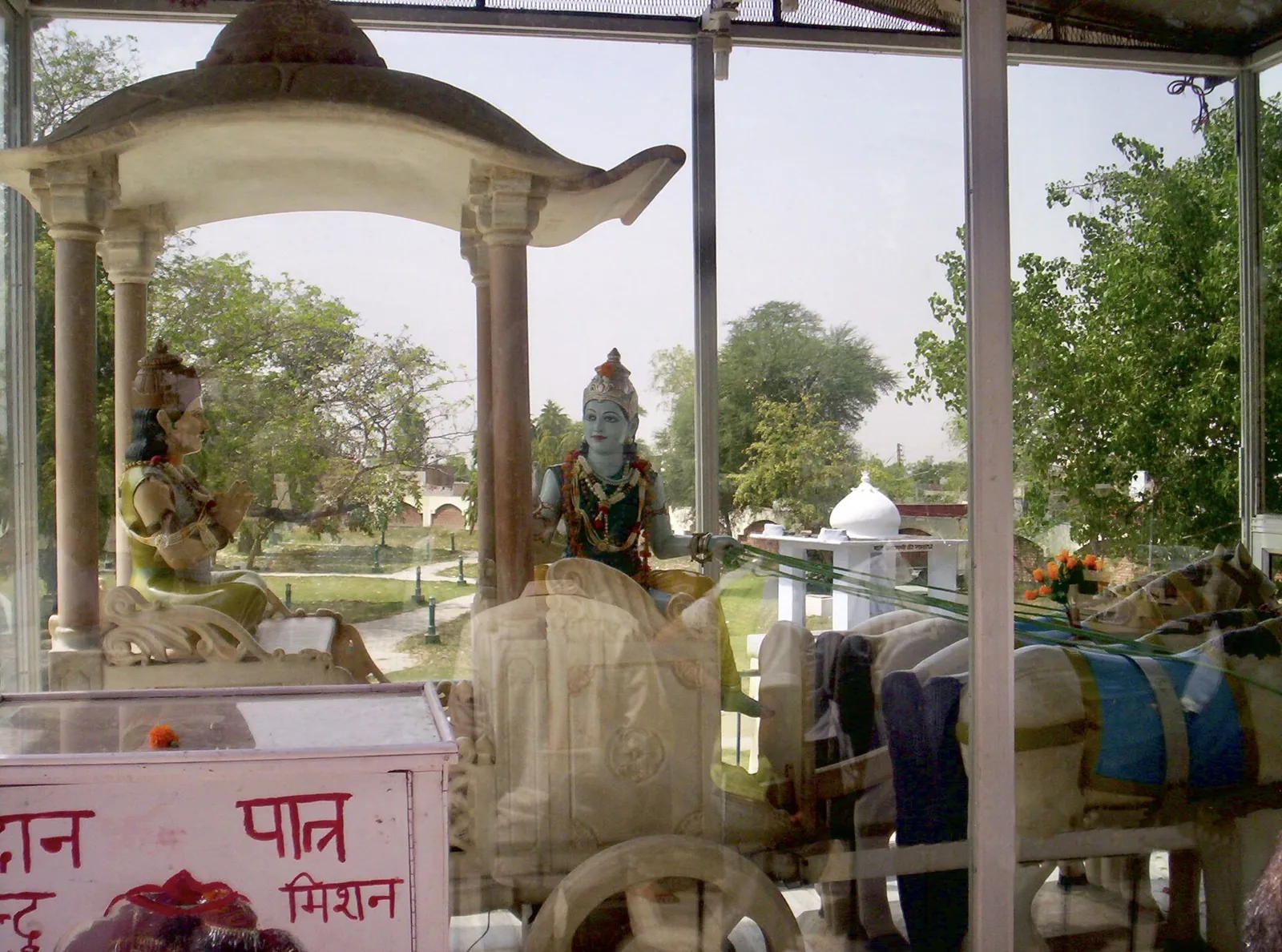
From the tank go to Jyotisar, a few minutes away, to see the banyan that tradition ties to the Gita. It is claimed to be three thousand years old, which one visitor found hard to believe, though the same writer called it a good place to sit and picture the battle. There is a small pond, an old Shiva lingam and a tableau of the chariot behind glass. Go in daylight; evenings are unreliable, as the Patiala writer found.
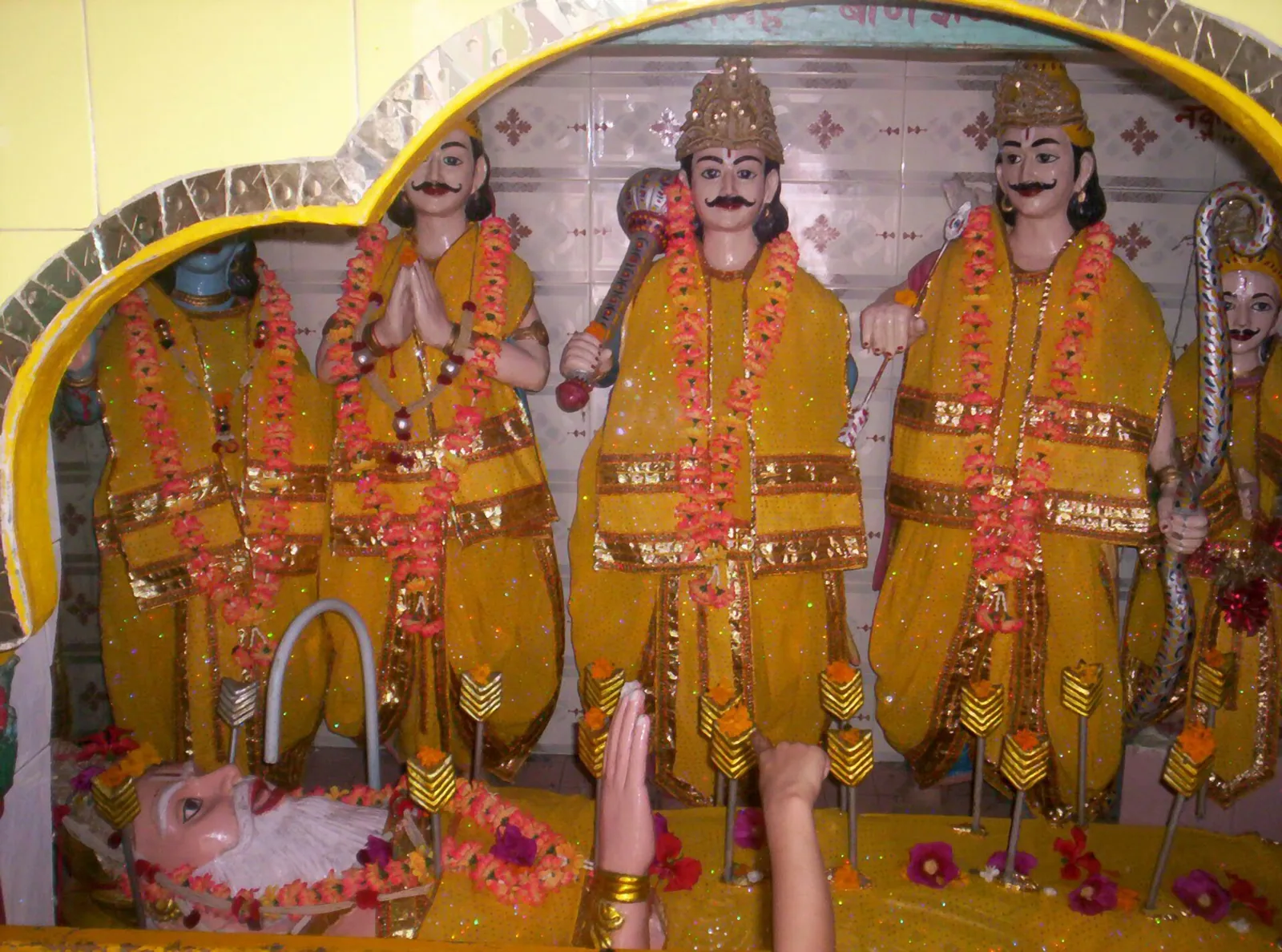
On the way back, stop at Narkatari for Bhishma Kund, a small pond where legend says Arjuna's arrow brought water for the dying Bhishma. A bright little shrine beside it shows him lying on his bed of arrows. A big Hanuman statue and a Barbarik temple stand close by, according to one visitor's route.
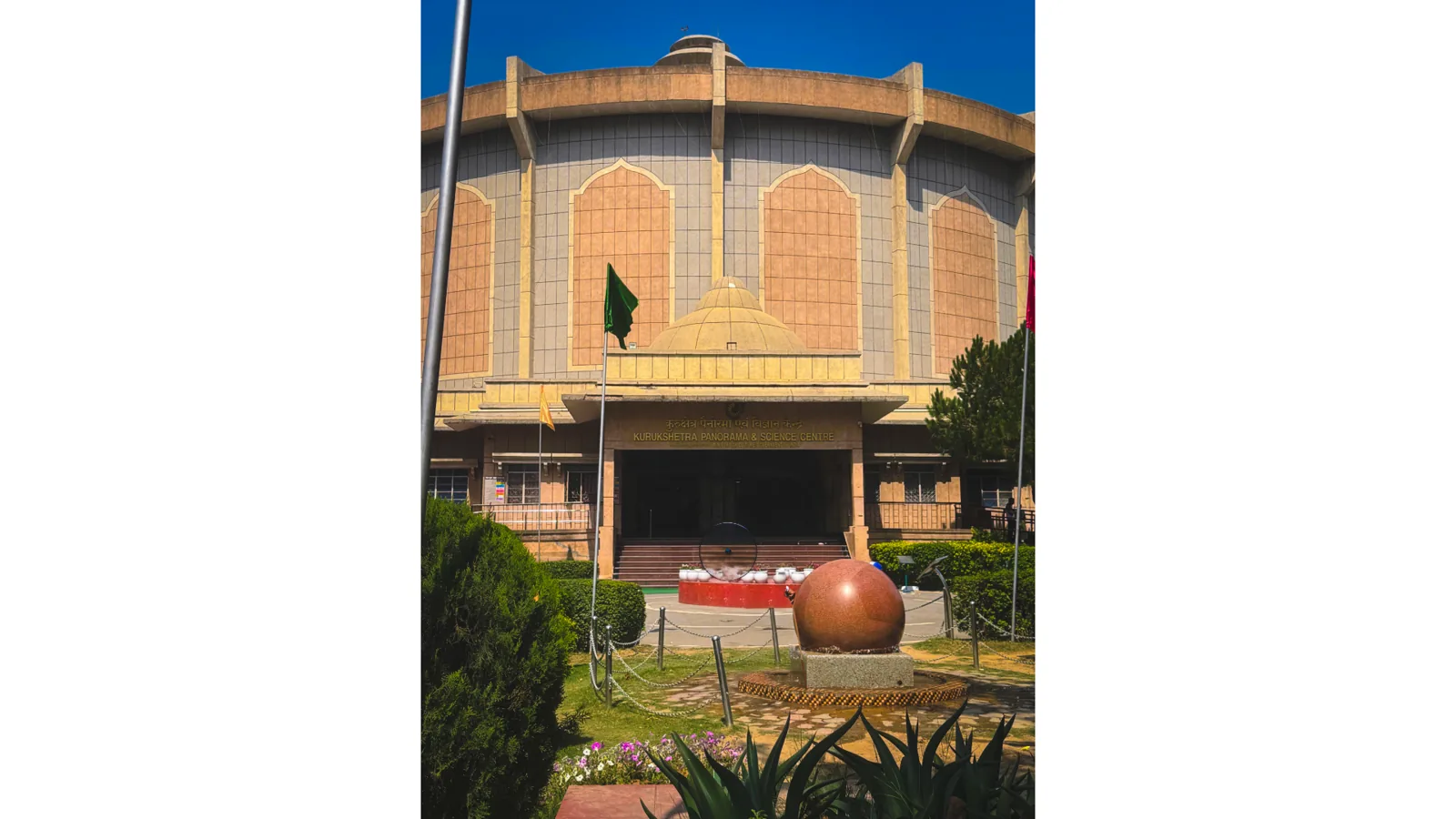
After lunch, Bhadrakali is a Shakti Peeth, where legend drops Sati's right ankle into a well, and a white marble lotus marks it. People offer miniature horses when a wish is granted. Saturdays are busy. Finish with Sannihit Sarovar and the three small temples near it in the last daylight, rather than after dark, which is when one visitor reached it and could hardly see it. The Panorama and Science Centre, with its tall painted Mahabharata walls, is the choice for children and for rainy or very hot hours, and it closes at six.
- Brahma Sarovar
- Jyotisar
- Bhishma Kund
- Narkatari
- Bhadrakali Temple
- Sannihit Sarovar
- Panorama and Science Centre
Day 2 · night in Kurukshetra
West to Pehowa, and a slow return
Kurukshetra to Pehowa, about 27 km west
Pehowa sits on what was once a channel of the Saraswati, and its tank, Saraswati Tirth, is one of the places where families perform pind daan and tarpan, the offerings of rice balls and water for ancestors. Tradition says the town is named for King Prithu, who is believed to have performed shraddha for his father here. It is a working place of ritual, not a sight to tick off, and the people you meet are mostly relatives of someone who has died. Dress simply, keep your voice low and do not photograph rites without asking.
Come in the morning. A short walk shows the tank, an ancient temple with an old archway and eroded wall paintings, and a few other shrines. A recent dig by Kurukshetra University uncovered an old bathing ghat of twelve stairs next to the Arunai temple, which fits the story that the river once flowed here. Local priests keep family records, and visitors who want rites arranged usually go through them. Meat and animal slaughter are banned within the town limits.
If you want to be here for the big fair, Chetar Chaudas falls in March or April, with the 2025 edition held in late March, and draws lakhs of people, according to the Kurukshetra Development Board. Otherwise it is quiet. Pitru Paksha and Amavasya are the other busy periods.
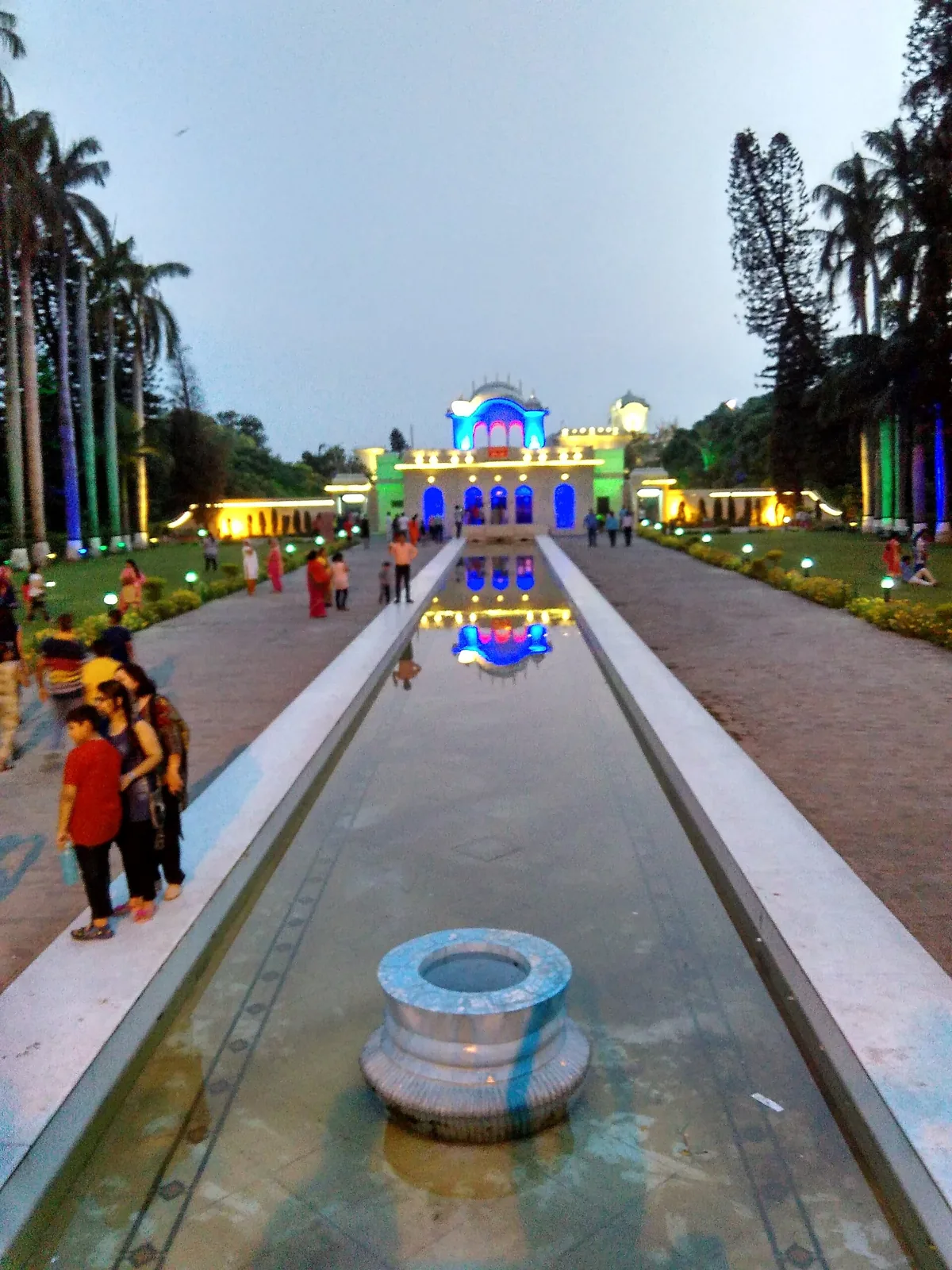
Return to Kurukshetra by early afternoon. If you have energy, stop at the Sheikh Chilli tomb, a Mughal period mausoleum in a garden, or take an unhurried hour at the Sri Krishna Museum, which one traveller says needs at least that. End the day at Brahma Sarovar for the evening aarti around six, which the Mahashivratri couple put at about six in the evening.
- Pehowa
- Saraswati Tirth
- Arunai Temple
- Sheikh Chilli Tomb
- Sri Krishna Museum
Getting the season right
From October to March the daytime range is mild, and the tourism board advises avoiding April to June, when May highs reach about 46 degrees. Summer visitors wrote mostly about hats and water, winter visitors mostly about the sights.
Another factor is the calendar. In December 2026 the Tribune reports the 11th International Gita Mahotsav at Brahma Sarovar from 5 to 25 December, with the main cultural programmes on 14 to 20 December and some events at Jyotisar. The tank is lively then, and rooms are harder to get. Solar eclipses and Amavasya also bring crowds to the tank.
What the town does not give you
Guides are scarce and signboards are the main source of information, according to one writer who went, and good restaurants are hard to find. Hotels in the town are modest, which is why many people use Chandigarh as a base. We build the day around a driver and a plan, so you are not left waiting for autos at the edge of a fair.
Food needs thought too. A couple on Mahashivratri could not find a lunch place without onion and garlic, and many fair stalls sold things mixed with bhang, so ask before you taste anything unfamiliar.
- A hat and a bottle of water, as shade is thin
- Easy-to-remove shoes for temples
- A light scarf or dupatta
- Small change for offerings
For older travellers
Almost everything is level and close to a parking spot. The exception is the stairs at a few temples, which one visitor said elderly relatives need extra time for. Take the day slowly and skip the Panorama if energy is low.
What the price covers
- One car and driver from your pickup to the final drop
- 1 night in hand-picked stays
- Breakfast and dinner every day
- Local guide at the main sights
- Tolls, parking and fuel
- Lunches
- Monument tickets, permits and activity fees
- Personal shopping
Questions people ask
Can Kurukshetra be done in one day?
Nine hours covered the main religious sites for one couple who went by train from Delhi. That works, but it leaves no time for Pehowa or for lingering at the tank, which is why we plan two.
Is Pehowa open to all visitors?
Yes. It is an active place of ancestral rites, so treat it as a place of worship. Ask before photographing and let any family doing a ritual have space.
What is special about Jyotisar?
Tradition holds it is where Krishna taught the Gita. The banyan, the pond and the chariot tableau are what you see. Visitors who went in daylight liked it; one who went in the evening found no show running.
When is the best time of day for Brahma Sarovar?
Early morning and the hour around the evening aarti. The tank is open from six in the morning to eight at night, per the tourism listing.
Can we start from Delhi or Jaipur?
Yes. Pickup is at Delhi airport, Agra, Mathura or Jaipur, and for Kurukshetra the drive from Delhi is added as a separate leg before the two days here. Laladham's driver stays with you throughout.
Which month should I avoid?
The hot months, April to June, are hard going. Also be cautious on Mahashivratri, eclipse days and Amavasya, which fill the town.
Are there any accommodation worries?
Rooms are plentiful but basic. Some travellers choose Chandigarh instead. We arrange a stay that is clean and near the town.
- Brahma Sarovar is listed 6:00 to 20:00 and the Panorama 9:00 to 18:00 on Incredible India; Bhadrakali is 6:00 to 20:00 in summer and 6:15 to 19:30 in winter
- Gita Mahotsav 2026 dates, 5 to 25 December (main cultural programmes 14 to 20 December), as reported by the Tribune on 5 October 2026; confirm before booking
- Chetar Chaudas fair dates at Pehowa move each year (2025: 27 to 29 March)
- Jyotisar evening light and sound show: one traveller found it not running, so ask before planning around it
 4 days
 3 days
 3 days