Hampi is the kind of place where a two day visit leaves people quietly annoyed with themselves. Tony Wheeler, the Lonely Planet founder, wrote after exactly two days that another day or two would have worked well, and the state tourism board itself suggests about three. The ruins are spread over thousands of hectares of boulders and banana fields, and the real pleasure is a slow walk between them, not a drive-by tick list.
This plan gives you three full days. The first starts with the drive from Hubballi airport and ends on a rock at golden hour. The second is the big one: Vittala, the royal enclosure, and optionally a sunrise climb. The third is a lighter morning at the water's edge before the road back to the airport. Your driver stays with you throughout, which matters because the heat, not the distance, decides how much a person can do between eleven and three.
It suits couples, parents travelling with grown children, and teenagers who can handle a few climbs. A summer visit is the wrong call, since the season runs October to February and hotter months can touch forty degrees. Flights are your own to book into Hubballi, and day one starts on landing.
From your pickup
Same trip, four starting points. Road times are real driving times; a long drive becomes its own travel day so nobody arrives wrecked.
Day by day
Day 1 · night in Hampi
Airport, a long road and a hilltop at dusk
Hubballi airport to Hampi, about 150 km, close to three hours with tea
Your driver waits outside arrivals and you head east on a road that goes from city sprawl to open farmland and then, suddenly, to boulders stacked like a child's blocks. Sources disagree on the figure, from a little over two hours to nearly three and a half, so plan on three and fill the gap with a stop for tea.
If you reach Hampi by mid afternoon, start at the Virupaksha temple and the old bazaar street leading to it. The gopuram is over fifty metres tall, there is a big Nandi at the end of the bazaar, and the temple elephant is a favourite with children. One 2008 walking guide suggests buying bananas at the entrance to feed her. Take your time in the courtyard rather than rushing through.
Evenings in Hampi are quiet. Most guesthouses are small and the lanes near the bazaar empty out early, so a short walk by the river steps after dinner is the main entertainment. Stone paths are uneven, and a small torch helps. Keep a water bottle with you from the very first hour, because the dry air takes more out of you than the walking does.
For the evening pick a hill. Hemakuta is a short climb with stone steps and a cluster of small temples, and it is the usual sunset choice; a traveller who went after rain called the steps slippery, so wear shoes with grip. Dinner is a simple South Indian thali near the bazaar.
- Virupaksha Temple
- Hampi Bazaar
- Hemakuta Hill
Day 2 · night in Hampi
The stone chariot and the royal quarter
Decide the night before whether you want the Matanga sunrise. Accounts are split. One group started at five, walked fifteen minutes to the foot, and said the path was steep, narrow and a bit frightening; another found a gate locked on their shortcut and waited for the gatekeeper, then watched the sun rise late behind cloud, though they were rewarded with tea at the top. A third climbed on the final afternoon instead, which avoids the dark. Go with a guide in the dark, or save it for late afternoon.
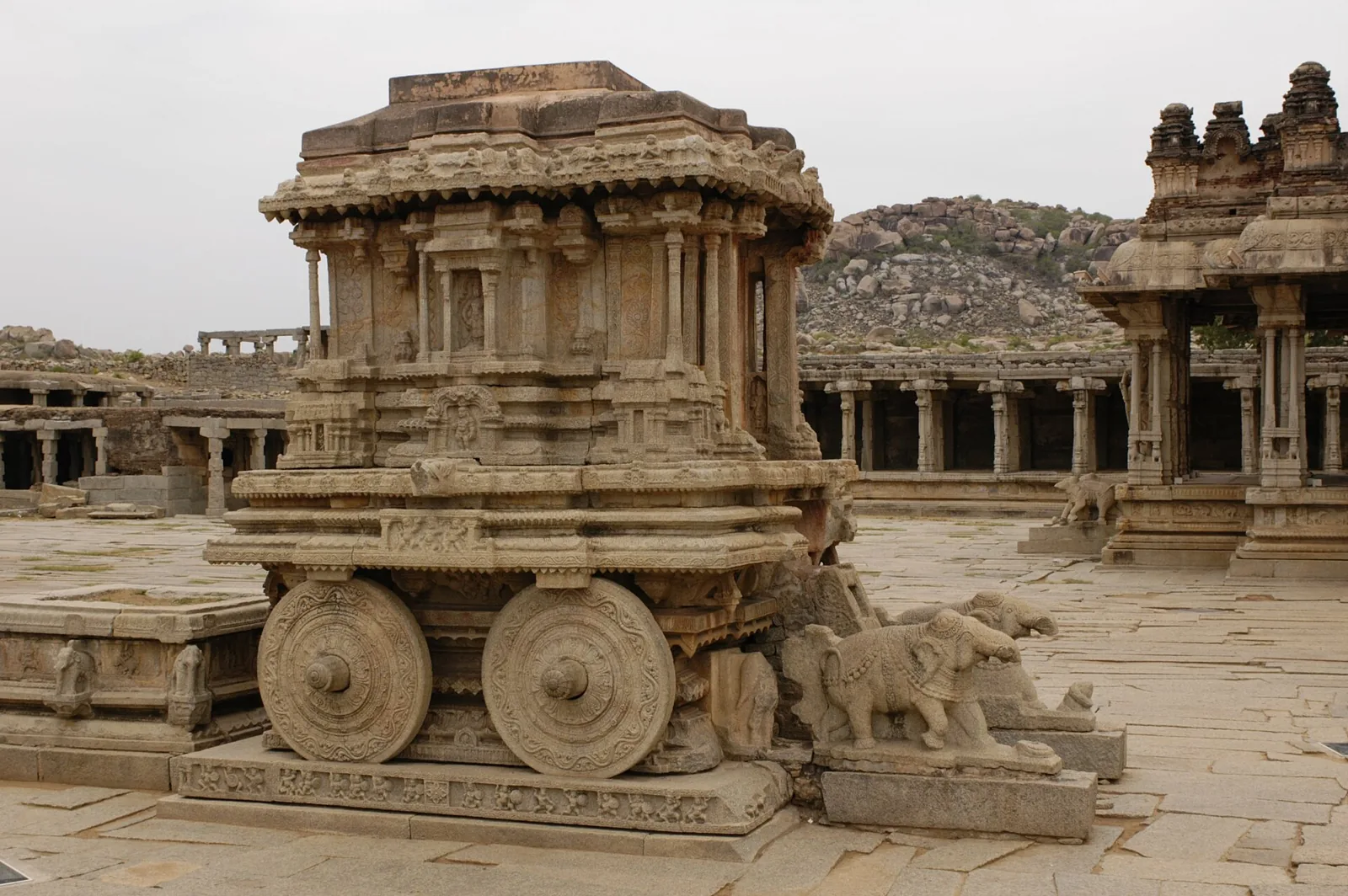
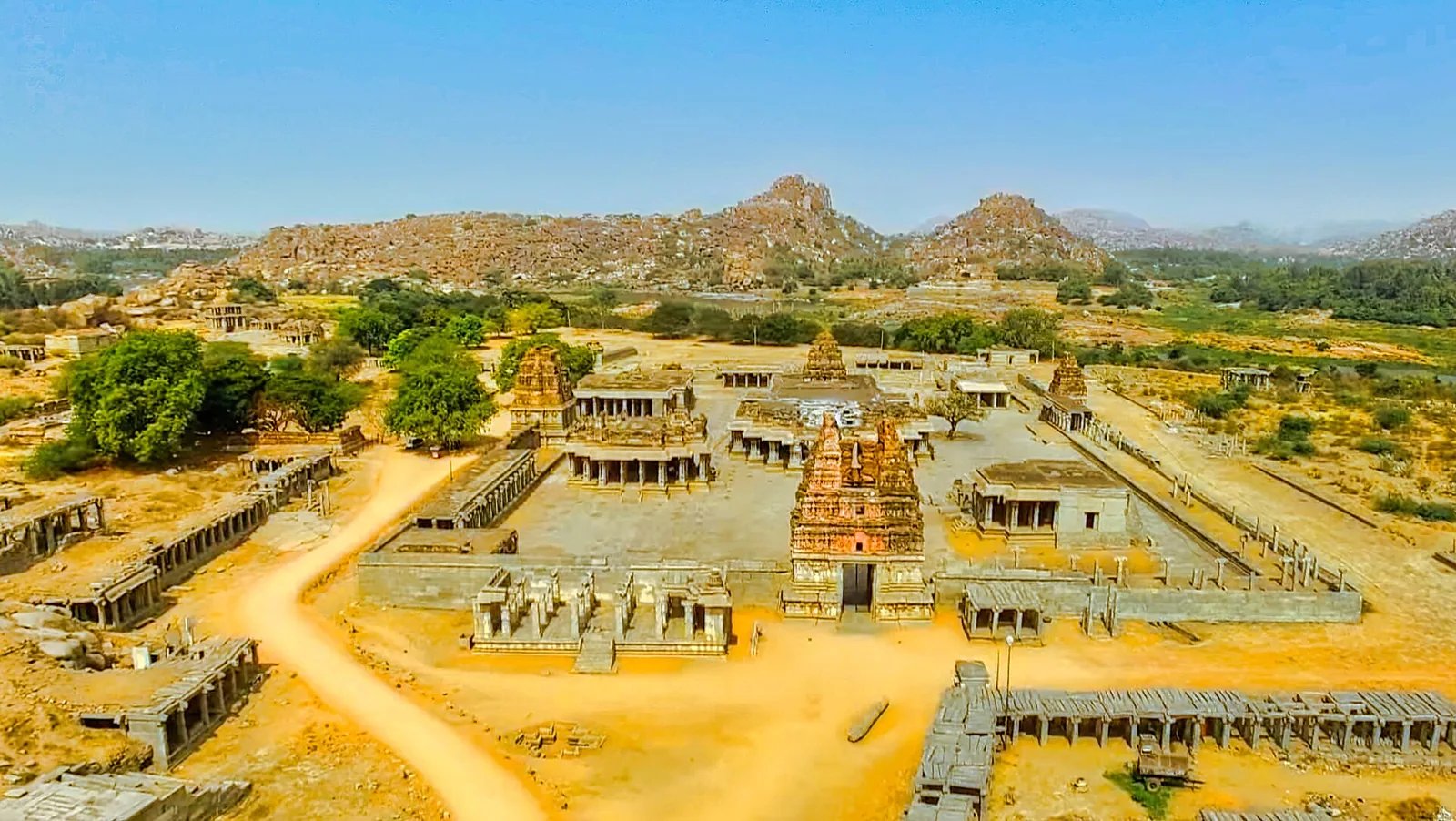
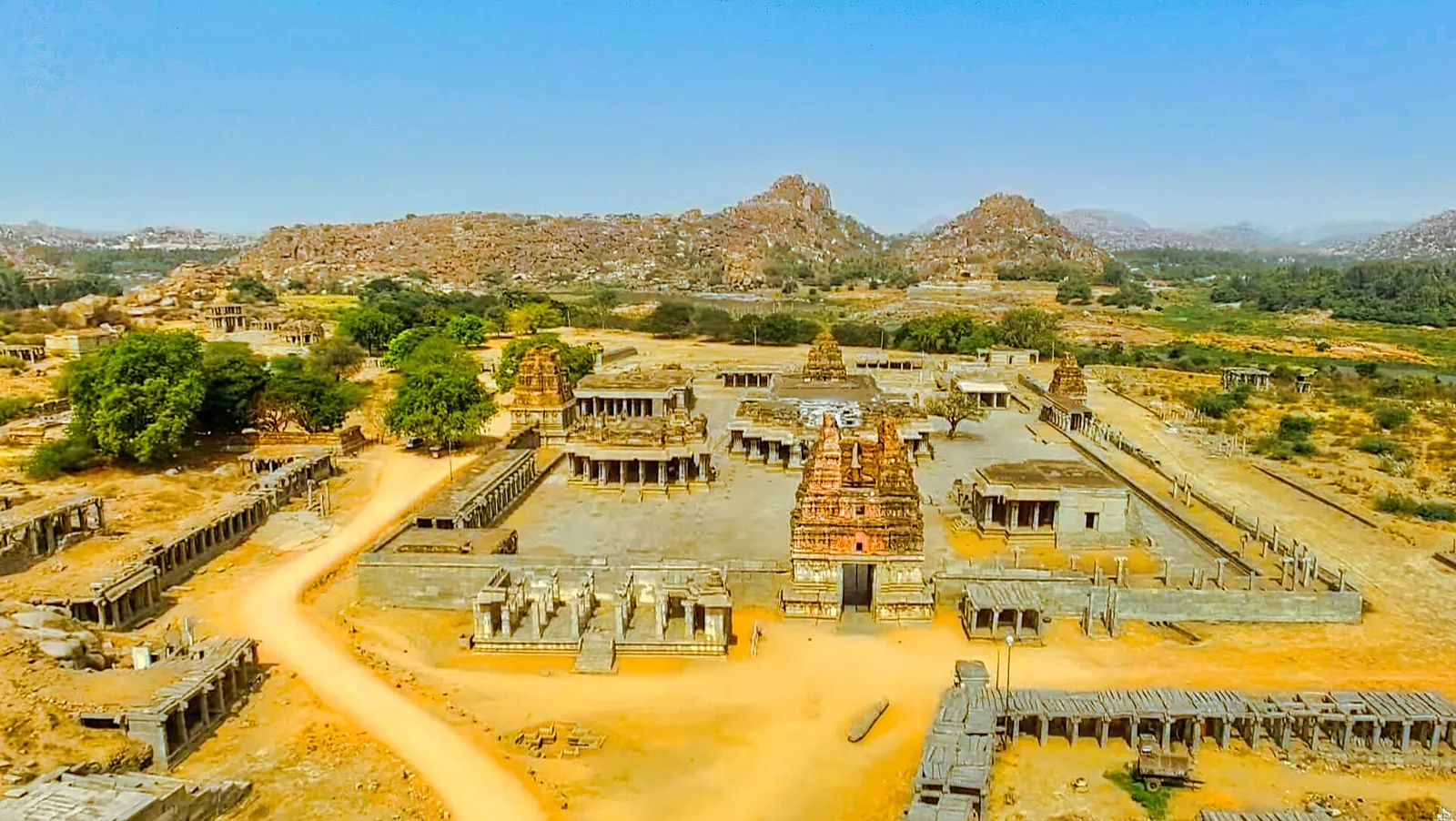
Whichever you choose, be at the Vittala complex early, since the national tourism guide and a press itinerary both say to start the day there before the heat and the groups. The stone chariot, carved from a single granite slab, is the picture everyone knows. The pillared halls beside it have the famous musical pillars; touching them is not allowed. People who made the river crossing by coracle to arrive said it was costly for four but worthwhile because the boatman reached places hard to walk to.
Midday goes to the Zenana Enclosure and the old palace zone: the Lotus Mahal, the eleven domed chambers of the Elephant Stables, the Queen's Bath and the Hazara Rama temple with its carved Ramayana panels. A cyclist who did this stretch described the ride back through green fields as the best part. Lunch, then a rest in the shade, because stone holds heat long after noon.
A practical order that works well is Vittala first, then the royal group by car, and only then lunch. The distance between the two clusters is small, but the walk between ruins in direct sun is not. A hat, sunglasses and a cloth to sit on matter more than camera gear. If you are tired by four, skip the evening climb entirely and let the last light find you at the courtyard of Virupaksha instead, where you can sit on cool stone and let the day end.
- Vittala Temple
- Stone Chariot
- Lotus Mahal
- Elephant Stables
- Queen's Bath
- Hazara Rama Temple
- Matanga Hill (optional)
Day 3 · night in Hubballi
The river side and the road back
Hampi to Hubballi airport, the same road in reverse, about three hours
Today is lighter. A coracle ride across the Tungabhadra is the usual start: round wicker boats, paddled by local rowers, a method Wheeler described crossing with a bicycle on board. The far side is Anegundi, an older settlement with banana lanes, a quiet pace and the Anjaneya hill, which is a climb for those who still have energy. There are no big queues here, which is why some visitors prefer it to the main ruins. Ask your driver for a quiet landing, since several boats work the same crossing and the water level changes by season.
If you have time before leaving, Malyavanta hill is the other sunset option, and one writer called it the only motorable hill in Hampi and a calm place. It is better for older relatives who do not want steps. A visit to Daroji bear sanctuary is possible on the way, but the same blogger saw no bears when arriving at two thirty, and jeep rides ran only between four and six, so it does not fit a flight day.
Leave Hampi by early afternoon for an evening flight. If your flight is in the morning, the plan shifts one night to Hubballi, and we need to know when you book. The car and driver finish at the airport.
- Coracle crossing
- Anegundi
- Anjaneya Hill
- Malyavanta Hill
- Hubballi airport
Why the season matters so much
October to February is the window every official page agrees on. Summers can reach forty degrees or more, and stone ruins hold heat. In the cool months, early starts are comfortable, and by mid afternoon the light turns gold. If you must go in March or later, move your sightseeing to the first and last hours of the day and sleep at midday.
Tickets, hours and the small print
The national tourism page and the state board both list monuments without prices or hours. The press itinerary says the site is open every day but that museums and some monuments are ticketed with fixed hours. That is why the checklist below carries so much weight, and why our driver confirms hours on the day.
Getting here from Bengaluru instead
Bengaluru is around 340 km away, and many people reach Hosapete, the station about twelve kilometres from Hampi, by overnight rail. We do not run that route in this plan, because the trip starts in Hubballi. If you prefer to fly into Bengaluru and travel in on your own, tell us and we can still arrange the days in Hampi.
What people say they would change
Reading the trip notes, three regrets recur. Starting the hill climbs without checking that the gates are open and the light is right. Booking onward transport through a small shop and then waiting hours for it, as one traveller reported about a bus to Hospet. And arriving at the sanctuary or the ruins at the wrong hour. None of these are problems when a driver is looking after the clock for you, which is the real benefit of this plan.
What the price covers
- Car and driver from your pickup to the airport, and again from arrival to departure
- 2 nights in hand-picked stays
- Breakfast and dinner every day
- Local guide at the main sights
- Tolls, parking and fuel
- Flights and trains (we book them with you at the fare of the day)
- Lunches
- Monument tickets, permits and activity fees
- Personal shopping
Questions people ask
Is three days enough for Hampi?
For a first visit, yes. People who did two days said they wanted more, and three lets you do Vittala early, the royal quarter at a gentle pace and one sunset without rushing.
Is the Matanga sunrise climb safe?
It is steep and slippery in spots, and travellers describe a dark climb as uncomfortable. A guide helps, and the late afternoon climb is easier for most families.
What is the best time of day for Vittala?
Morning, soon after opening. Both the tourism guide and the press itinerary tell visitors to start early here, before heat and crowds build.
From which of the four cities can we set off?
Delhi airport, Agra, Mathura and Jaipur all work. One of our cars takes you to the airport you fly from, and when you touch down at Hubballi, a driver is already waiting for the Hampi road.
Do we have to cross the river by coracle?
No, but it is the nicest way to see the far bank. The ride is short, and travellers have mentioned small pavilions that boats can reach and legs cannot.
Is Hampi suitable for older parents?
Largely yes, because the car goes close to the main complexes. Skip the hill climbs, and use Malyavanta for a sunset with fewer steps.
- Opening hours and ticket rules at Vittala and the museums; sources give none
- Coracle crossing rates and which landings are in use
- Road time between Hubballi and Hampi; accounts range from about two and a half to three and a half hours
- Access to Matanga and Hemakuta hills and any gate timings
 4 days
 3 days
 4 days