The route below is built from the national tourism board's two day plan, a heritage foundation's walking order and a magazine's ground notes, then rearranged so you are never standing in the open at noon.
Before you start: how Hampi is laid out
The nearest station is Hosapete (Hospet), about 13 km away, the Vijayanagara airport is about 38 km off and Hubli about 143 km. Most of Day 1 sits within walking range of each other, while the second day asks for wheels, since the gaps between temples stretch to several kilometres.
Scooters and autos cover the longer hops. Cash helps at the small stalls and for coracle fares. Come between October and February if you can, and the plan below still works in summer if you honour the early start.
Day 1 morning: Vittala before anyone else
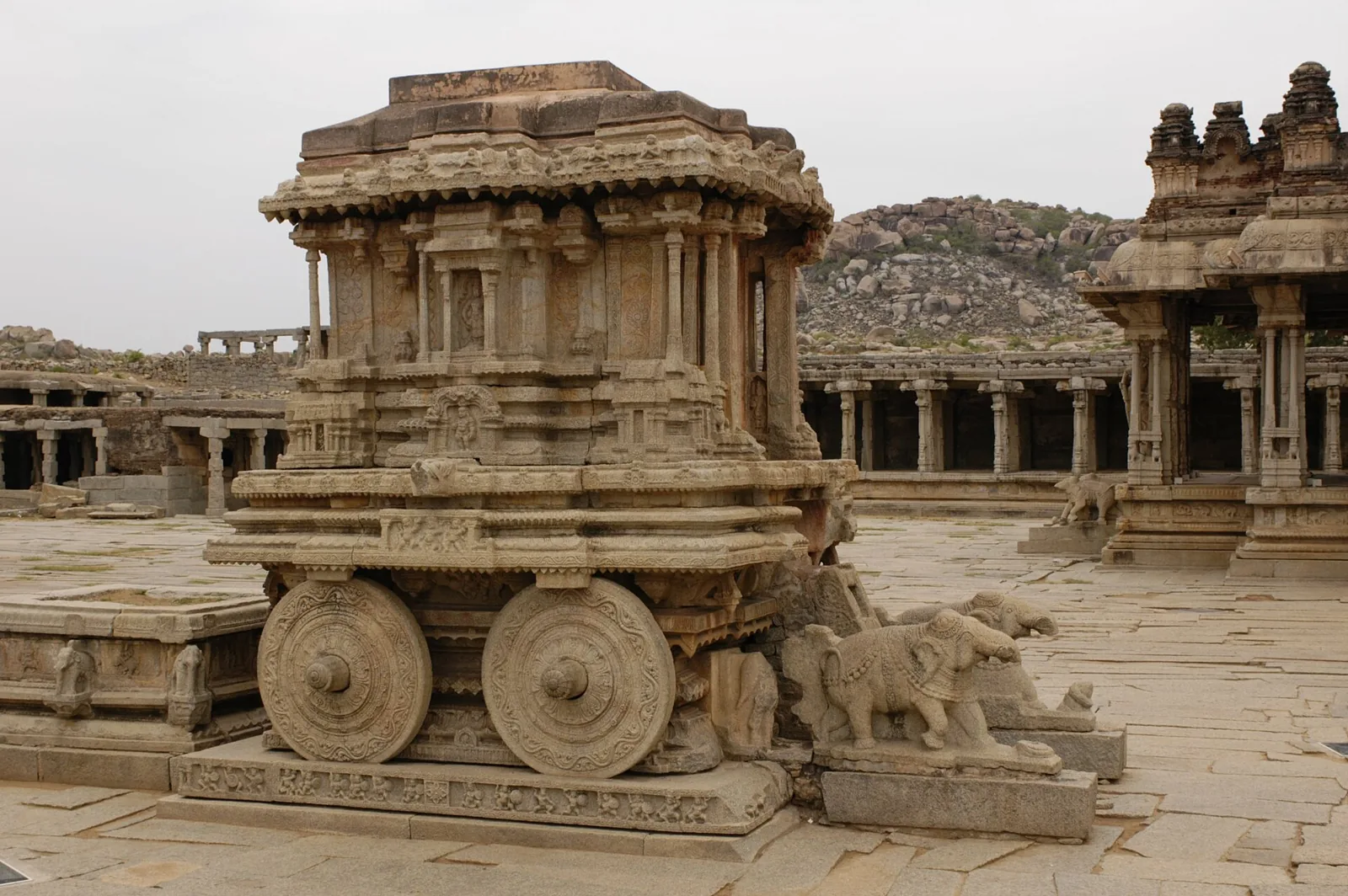
Reach the Vitthala complex as the gates open. The stone chariot in the courtyard is the shot everyone wants, the very one printed on the fifty rupee note. Cut out of one granite slab, it has wheels the magazine notes described as rotating. The pillared hall beside it is known for tones that ring out when the columns are struck.
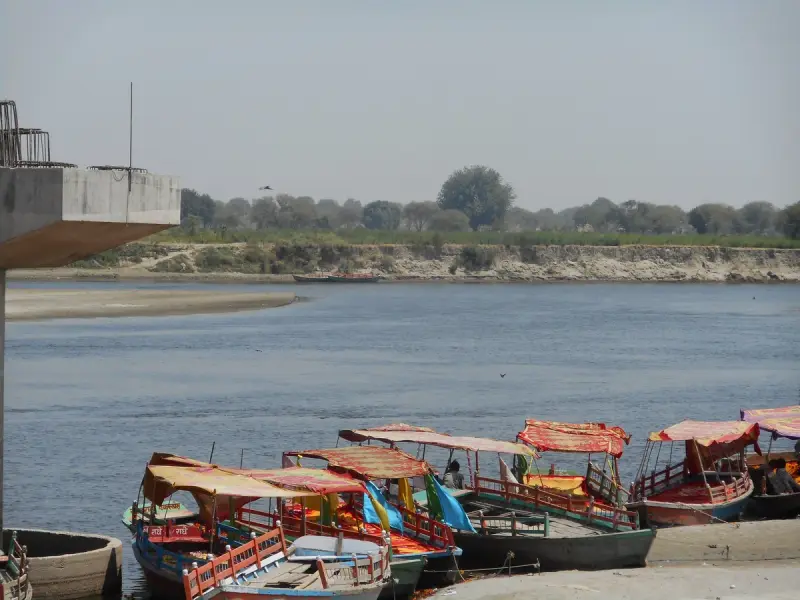
Do not rush back by the road. Walk the riverside path beside the Tungabhadra towards the village, the way the heritage foundation's route does, and you pass the Krishna temple and the Narasimha monolith on foot. The magazine puts the riverside Kampa Bhupa's Path at roughly 2 km between the Bazaar and Vittala, so count on a slow, shaded-by-boulders hour.
Day 1 afternoon: the royal quarter, under a roof
The Zenana Enclosure is where the ladies of the court lived, and it is the right place for the warm hours. The Lotus Mahal, with its layered arches, is the postcard, and the long Elephant Stables next door are eleven domed chambers joined by a passage, which keeps you out of direct sun for stretches.
Eat before you go in. The national plan has you eating dosas and bisi bele bath at lunch, and the magazine names Mango Tree near the old bus stand at Kamalapur for a south Indian thali and mango lassi.
Day 1 evening: Hemakuta, then the river
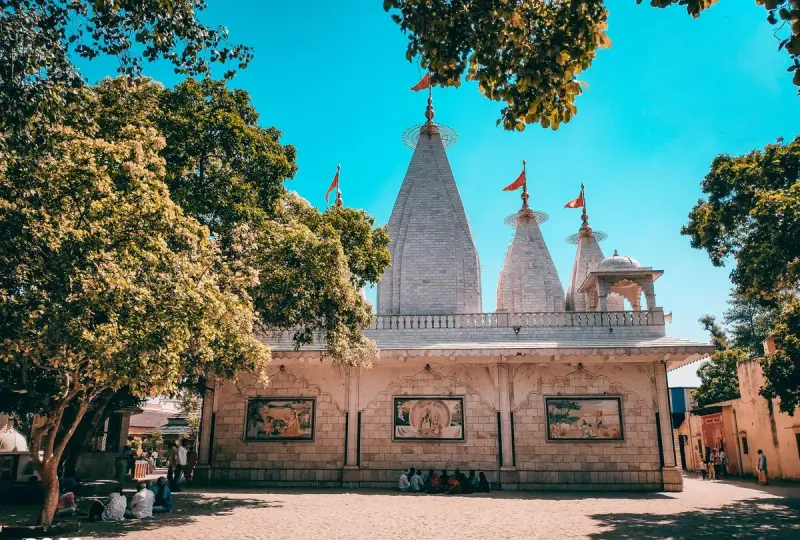
Come back to Virupaksha at the end of the afternoon. The temple's gopuram is over 50 m tall, and behind it stand two monolithic Ganesha figures. Climb Hemakuta Hill above for the sunset, which is the order the foundation uses, and watch the light turn the boulders orange.
The same plan ends its first day with a coracle crossing at sunset. Ask about rates and the launch point before you step in, and treat the basket boat as a slow, spinning ride rather than a ferry.
Day 2 morning: Queens' Bath and the palace zone
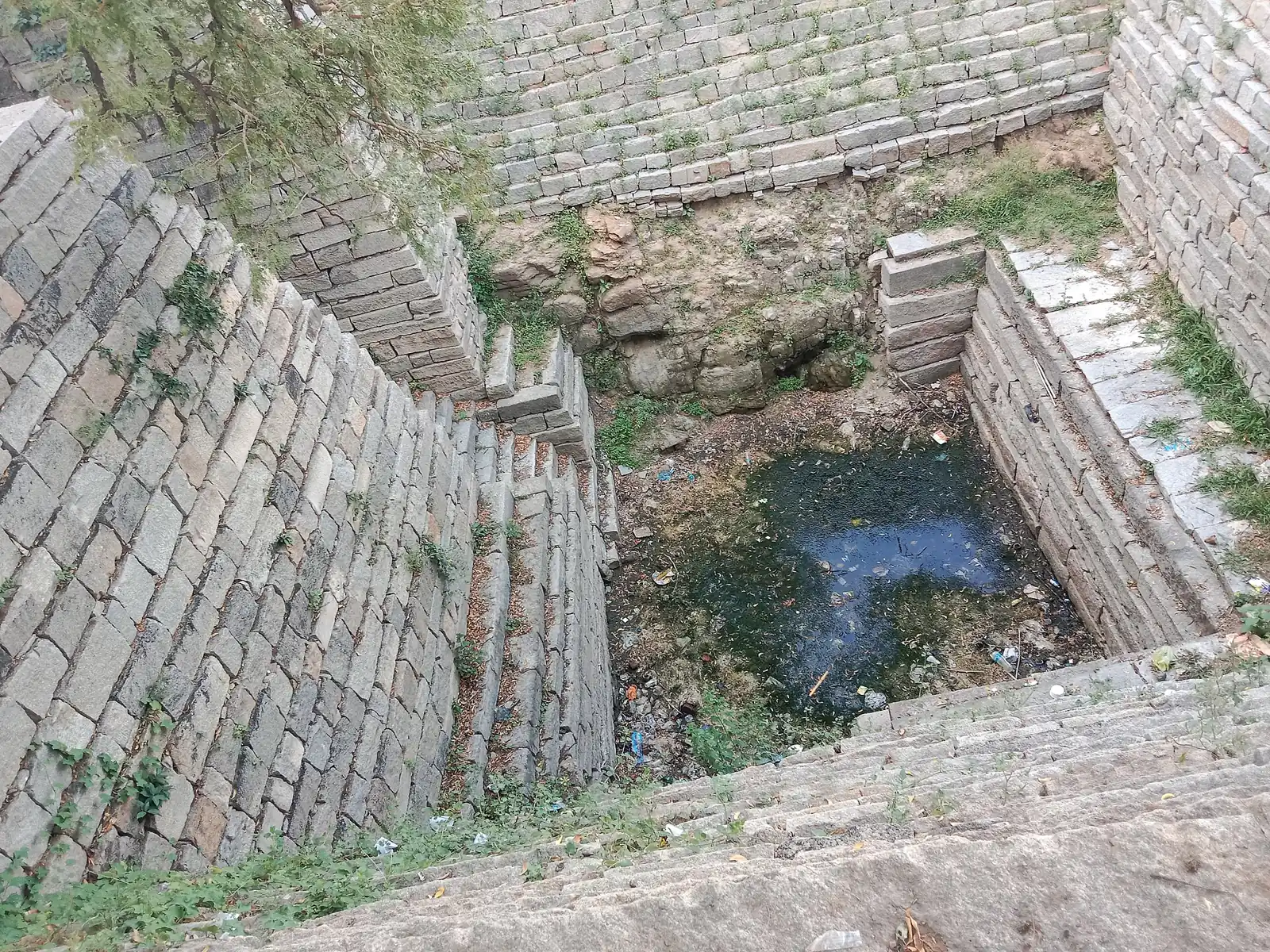
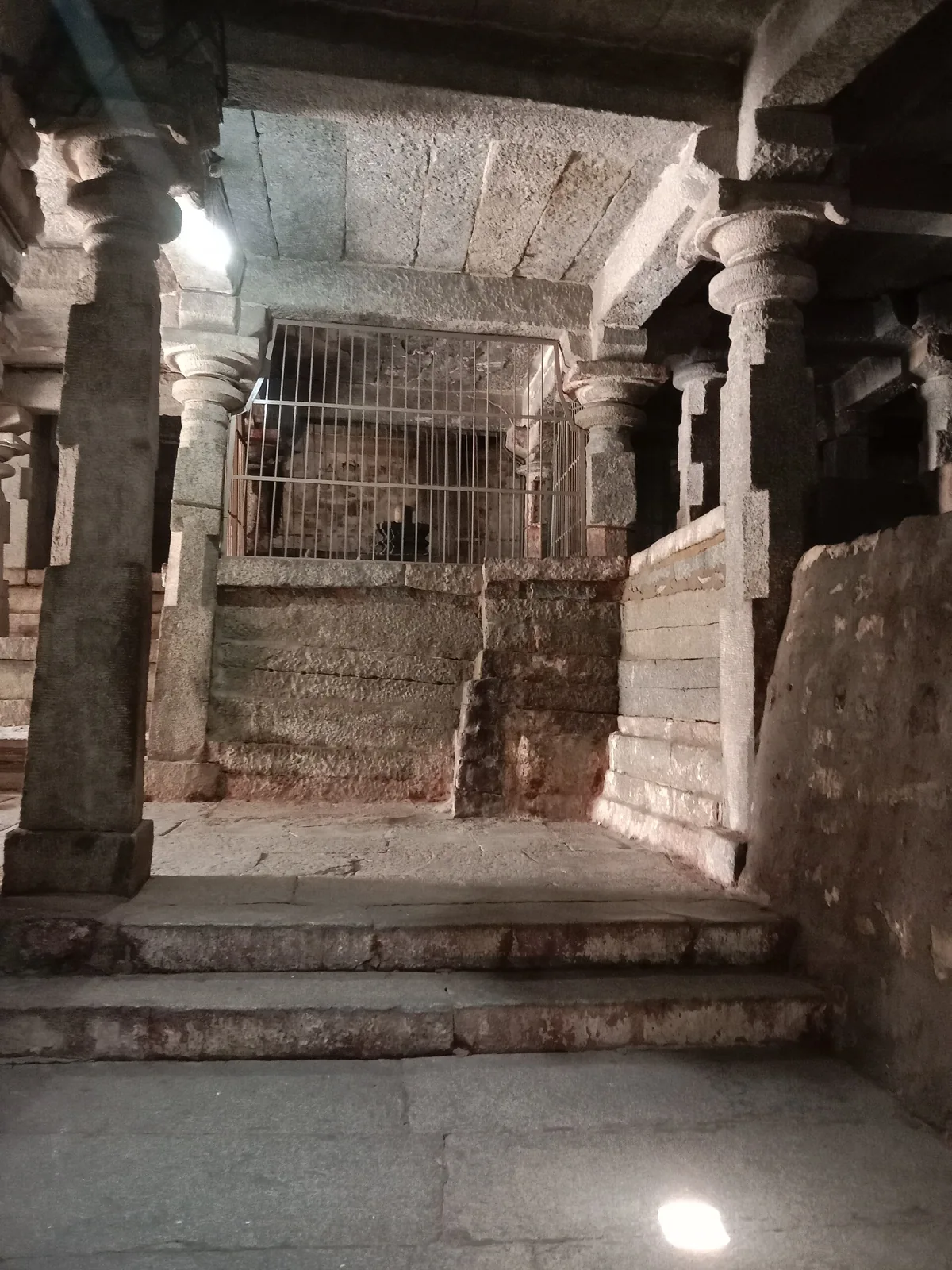
Start in the palace zone while the day is still cool. The Queens' Bath is a large stepped pool with a central platform and balconies, a place that looks plain from outside and reveals its scale only when you walk in. The heritage foundation adds the throne platform and the excavated features around it, followed by the Ramachandra temple.
Hazara Rama, covered with Ramayana panels, is a few kilometres from the previous stop in the board's order, so it suits a scooter, and it rewards ten slow minutes of reading the carved walls. The tourism board lists it for the second morning, along with Achyutaraya, a Vijayanagara temple of Vishnu as Tiruvengalanatha, and the Lakshmi Narasimha figure, seated on a seven-headed serpent.
Day 2 afternoon: the big stones and the bears
After lunch the tourism board's route turns to the monoliths. Badavilinga is a Shiva lingam of about 3 metres, said to be the largest in Hampi, and Sasivekaalu Ganesha is a monolith too. Both are quick stops that you can do between sips of water.
If you have an hour and a vehicle, Daroji Sloth Bear Sanctuary is the plan's wildlife stop. Anegundi is older than Hampi itself, and its valleys and rocks make a quieter end to the trip. On the way back, the Archaeological Museum at Kamalapura keeps sculptures recovered from the ruins, especially Veerabhadra, Bhairava and Bhikshatana-murthi.
What is overrated, and what to skip
Skip trying to see everything. With 1,600 or so monuments in the wider zone, a two day plan means leaving whole valleys unvisited. Pick the sites with a story over the ones with a number. If your legs tire, drop Hazara Rama or the sanctuary, not Vittala.
The optional third morning, a coracle ride and Anegondi shopping followed by a sunset from Malyavanta Hill, is a gentler way to spend extra time. The page notes you can drive right up that hill.
From Delhi, with Laladham
Hampi is far from Delhi, so the honest plan is to fly or take a long train to Hubli or Bengaluru and drive the last stretch. Laladham picks you up in Delhi, from the airport, station, home or hotel, and plans the complete trip end to end: tickets, a driver on the ground, a stay near the Bazaar and sunrise timing at the hills. Ask for a quote on the [book page](/book).
Questions, answered
Is two days enough for Hampi?
It is enough for the highlights: Virupaksha, Vittala, the Zenana Enclosure, one hill at sunset and a handful of monoliths. The wider site spans many hectares, so treat two days as a sampler.
How do I get to Hampi from Hosapete?
Hosapete station is about 13 km from Hampi. Autos and buses run between them, and many visitors then use scooters or walk within the site.
What is the best time of day for Vittala?
Early morning. The stone is cooler, the courtyard is quieter and the chariot is easier to photograph before the crowds arrive.
Which hill is best for sunset?
Hemakuta, above Virupaksha, is the pick for the first evening, and Malyavanta Hill is the alternative if you add a third day.
Can I do Hampi in summer?
Summer temperatures reach 40 degrees or more according to the magazine, so start at dawn, rest in the afternoon and return for the evening.