रामायण प्रसंग · Ramayana episodes
अहल्या उद्धार
Ahalya and the dust of Rama's feet
A story of deceit, a curse that is perhaps too harsh, and how two great poets disagree about what Rama gave back.
Source followed. Follows the Valmiki Ramayana, Bala Kanda, sargas 47 to 49, with the stone motif from the Ramcharitmanas, Bala Kanda.
वाल्मीकि रामायण, बाल कांड, सर्ग 47 से 49 के अनुसार, और पत्थर वाले अंश के लिए रामचरितमानस, बाल कांड।
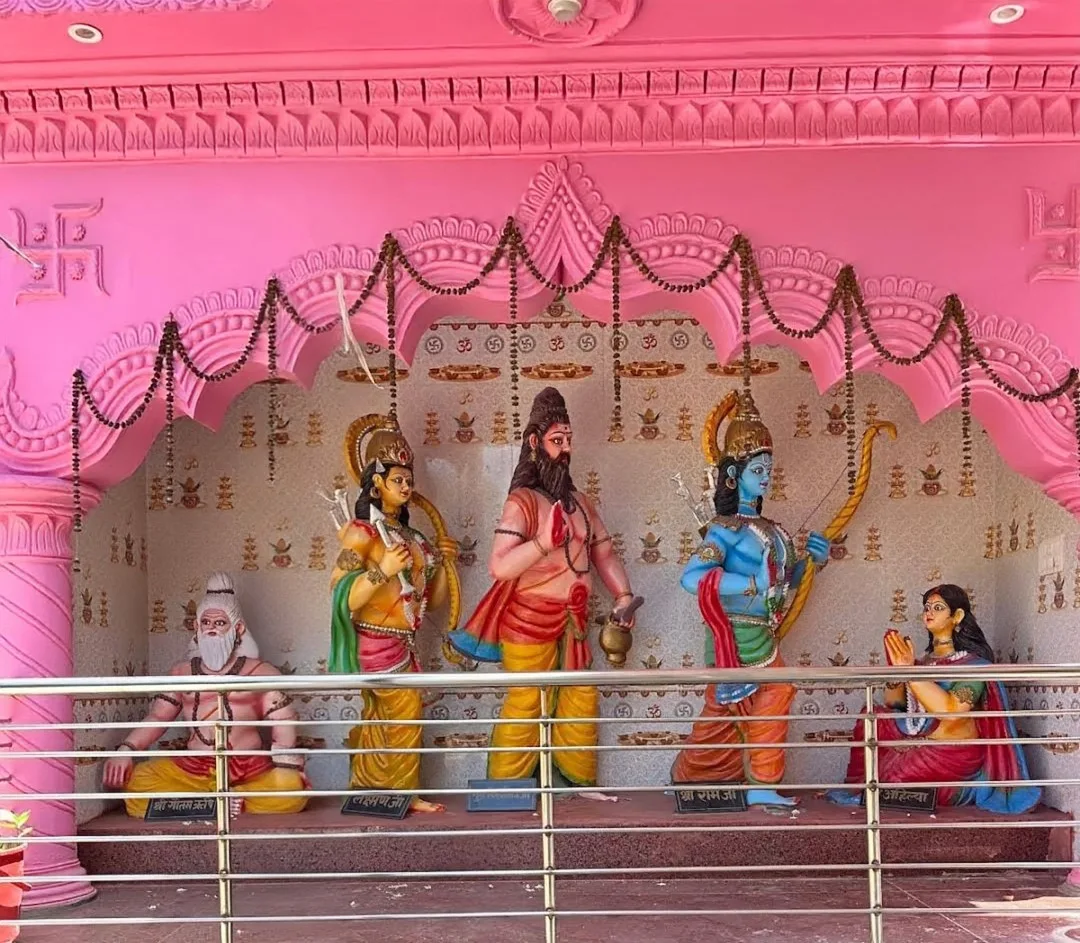
On the way to Mithila with the sage Vishwamitra, Rama and Lakshmana came to a quiet hermitage that was somehow empty. The grass was tall, the paths were overgrown, and Rama asked whose place this was. Vishwamitra told them it had been the ashram of the sage Gautama and his wife Ahalya, and then explained what had once taken place there.
One morning, while Gautama was at the river, Indra came to the hermitage disguised as Gautama and asked Ahalya to join him. Valmiki says she knew who he really was, and that she agreed out of curiosity. Other versions say she was fooled. Whichever the case, Gautama came back and saw Indra leaving. He cursed Indra, and he cursed her.
In Valmiki the curse on her is not that she be turned into stone. She was to stay in the ashram unseen, eating only air, lying in ashes, enduring for thousands of years, and she would be released when Rama came to the hermitage and she welcomed him. In Tulsidas she is a stone on the path, and the dust from Rama's foot touches her and she returns to life.
When Rama entered the ashram, the text says, Ahalya became visible to him and to Lakshmana, shining like a flame inside smoke. Rama touched her feet, and she welcomed the two with the water and the offerings of a guest. The gods rained flowers from the sky. Gautama, who had been in the Himalaya, returned and accepted her back, and they lived there together again.
A Ramayana reader is entitled to be troubled by what was done to her. The poets knew it too, which is why the story is retold, why Tulsidas makes her speak a long hymn of gratitude, and why some later writers make her the wronged one. The tradition keeps her among the five women whose names are said each morning to wash away fault.
प्रश्न Questions, answered
Was Ahalya turned into stone?
Not in Valmiki. There she is made invisible and lives on air. The stone is from later retellings, popularised by Tulsidas.
Who are the Panchakanya?
Ahalya, Draupadi, Kunti, Tara and Mandodari, five women of the epics whose names are recited in the morning in some traditions.
Where is Ahalya's ashram?
Valmiki places it near Mithila. A site called Ahilya Sthan in Darbhanga, Bihar, keeps the tradition.