Because the schedule is the experience, the sensible plan is to choose a darshan, not to turn up and hope.
How the idol came to stay
Devotees believe the black stone idol appeared from Govardhan Hill near Vrindavan, and Vallabhacharya, the 15th-century founder of the Pushti sect, began its worship. During religious unrest the image was moved in stages through Agra toward Mewar. Near the village of Sihad the cart's wheels sank and would not turn, which was read as the deity's wish to stay. The town that grew there is Nathdwara, the Gateway to Shri Nath Ji, and the temple was built in the reign of Maharana Raj Singh of Mewar.
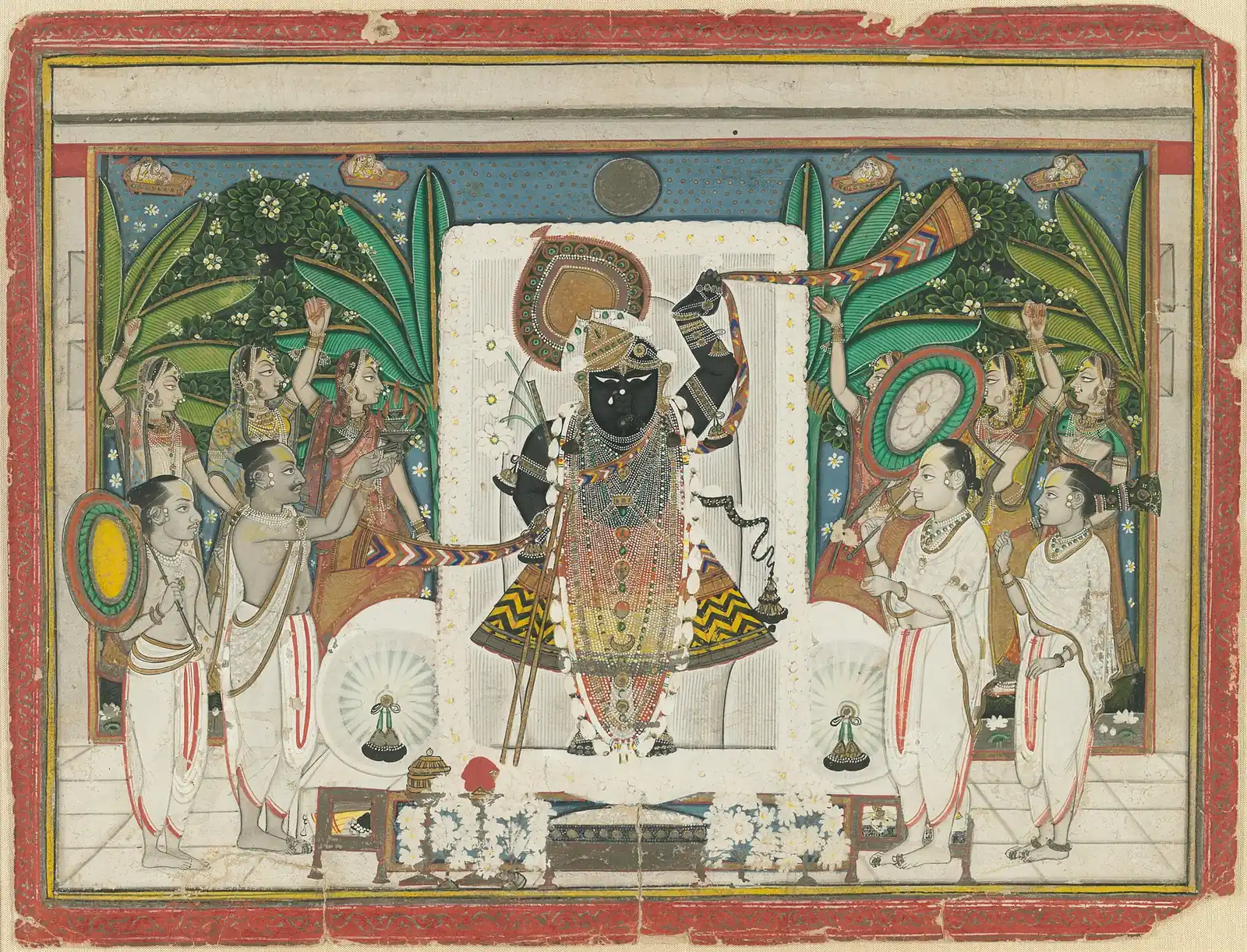
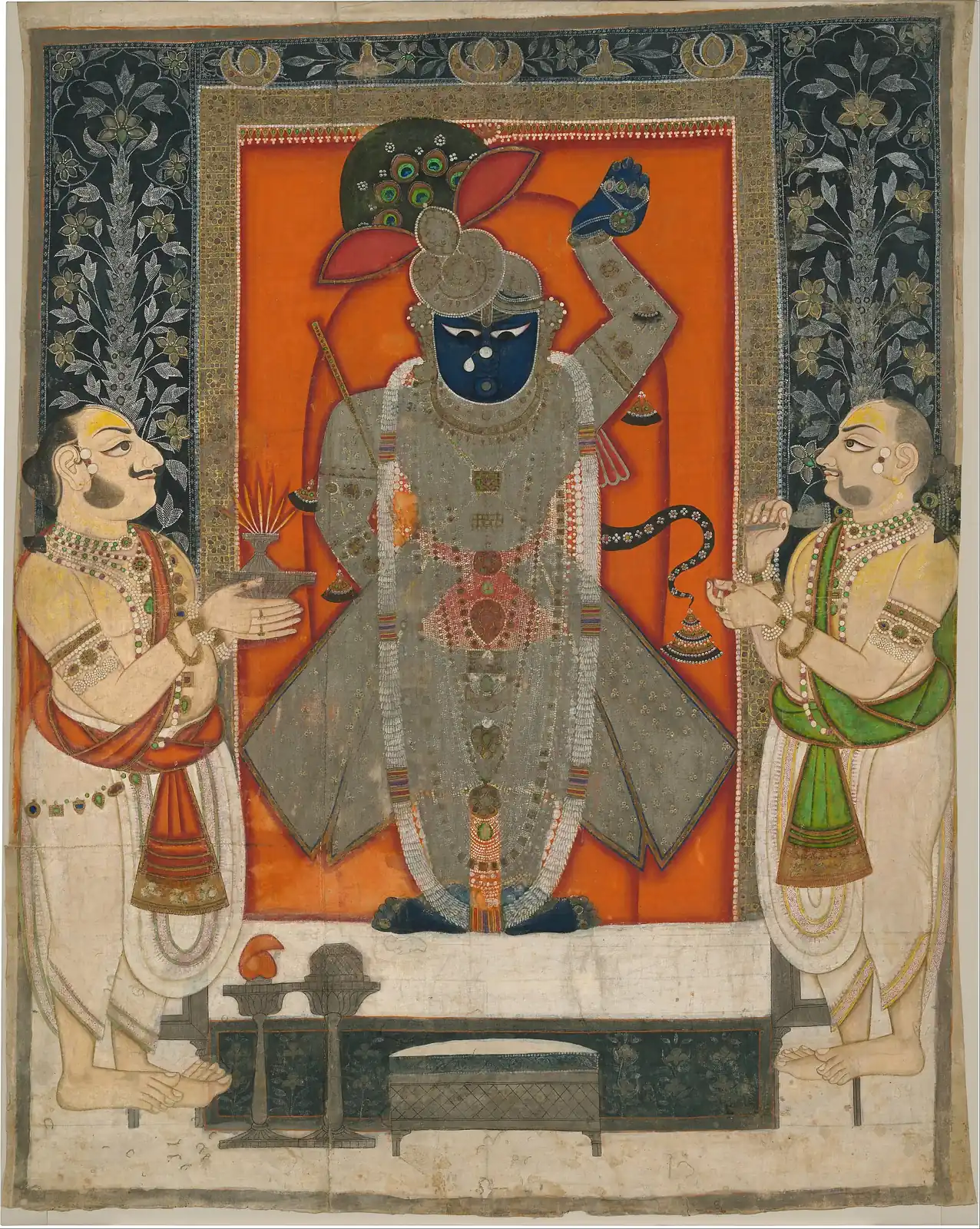
The tourism board describes the deity as carved from a single black stone, Krishna lifting Govardhan with the left hand raised and the right clenched in a fist, and dressed in silk, jewels and a diamond-studded crown. One source says the garments are not repeated within a year.
The eight darshans, and which to choose
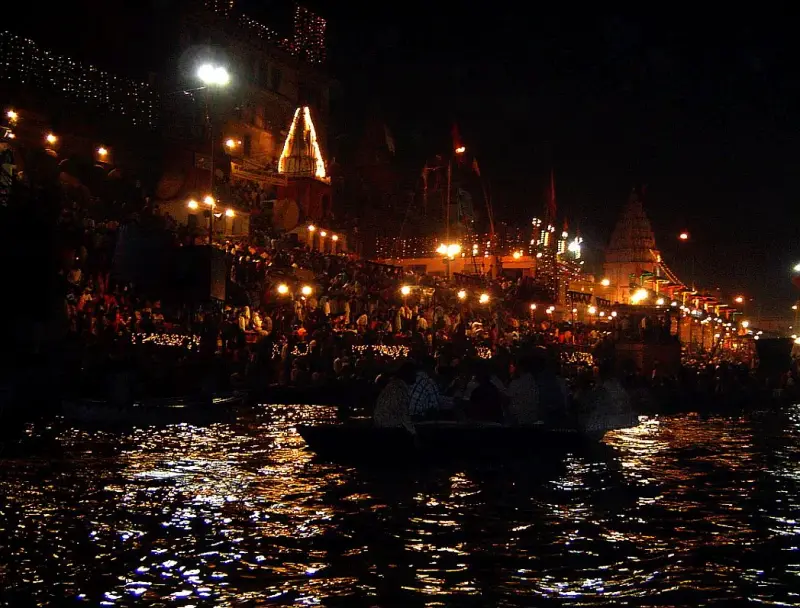
In order, they are Mangala, Shringar, Gwal, Rajbhog, Uthapan, Bhog, Sandhya aarti and Shayan, spread between 5 in the morning and about 8:30 at night, with the doors closed through the afternoon. Sources differ by 15 to 30 minutes, so go by the schedule posted at the gate. One listing gives Mangala at 5:15, Shringar at 7:15, Gwal at 9:15, Rajbhog at 11:15, Uthapan at 3:30, Bhog at 4:45, Sandhya aarti at 5:15 and Shayan at 6:50.
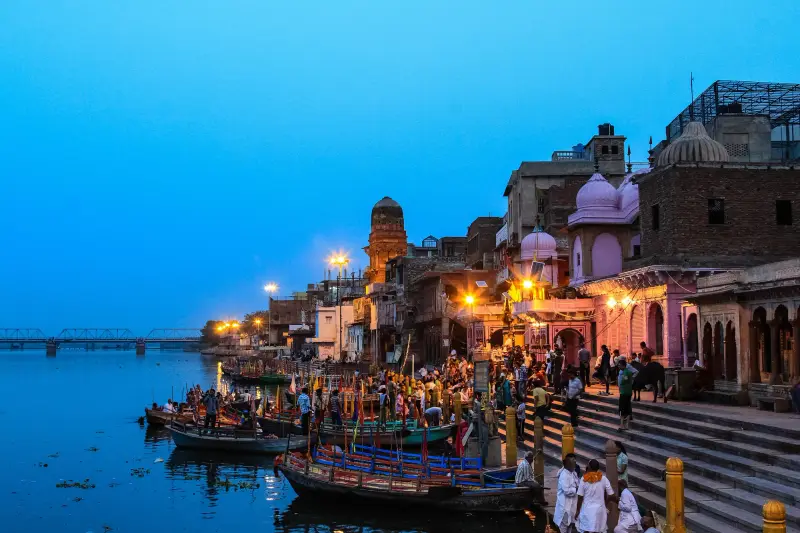
Mangala is the waking, the quietest and earliest. Shringar is the dressing, a visual feast of ornament. Rajbhog is the most elaborate, with a fresh garland and a royal meal, and an image of Shiva set before the deity. Sandhya aarti is the evening one. A fair rule: pick Shringar for beauty and Rajbhog for scale. In the cold months the last darshan of the day, Shayan, takes place at Nathdwara itself; in the warm half of the year it is said to move to Mount Govardhan. A longer stay lets you see all eight.
The rules at the gate
Shoes come off at the stand. Nothing electronic or bulky goes in, with lockers outside, and photography is banned. Dress modestly, with no shorts or miniskirts. Ordinary darshan is free; anything described as special or VIP is arranged through pandits, not a ticket counter, so treat offers carefully. The temple is 1 to 1.5 km from the parking area, so plan a walk or an auto-rickshaw.
Festivals change the day
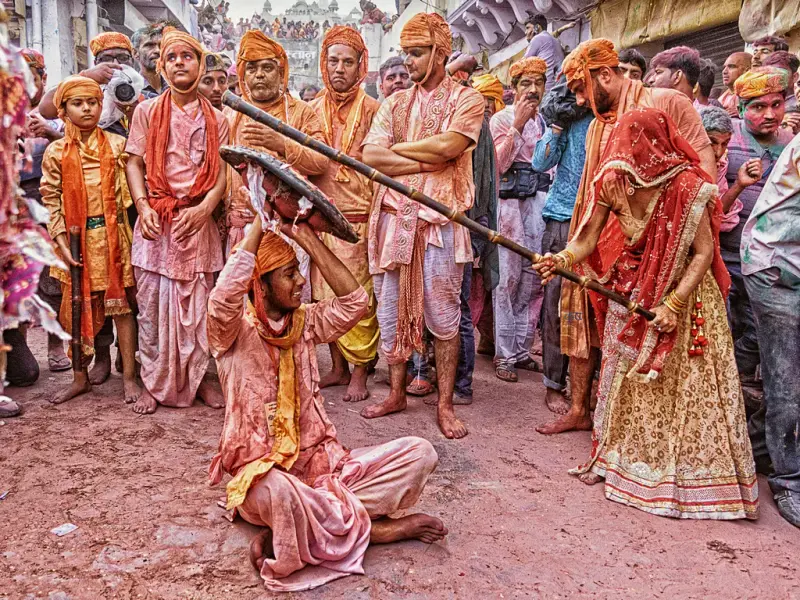
Four dates fill the town to the walls, and timings shift on all of them: Janmashtami, Holi, Diwali and Annakut. At Nandotsav, evening darshan is moved around, and at the Rose Festival devotees wade knee-deep into water to see the deity. Annakutta comes the day after Diwali, when priests offer about 2,500 kg of rice that devotees eat as prasad in the evening. Holi is observed for around forty days, from Vasant Panchami, and Dussehra marks the day Vallabhacharya is said to have installed the deity. At the chariot festival the deity rides a silver chariot. October to March is the recommended season for visiting.
A temple built like a palace
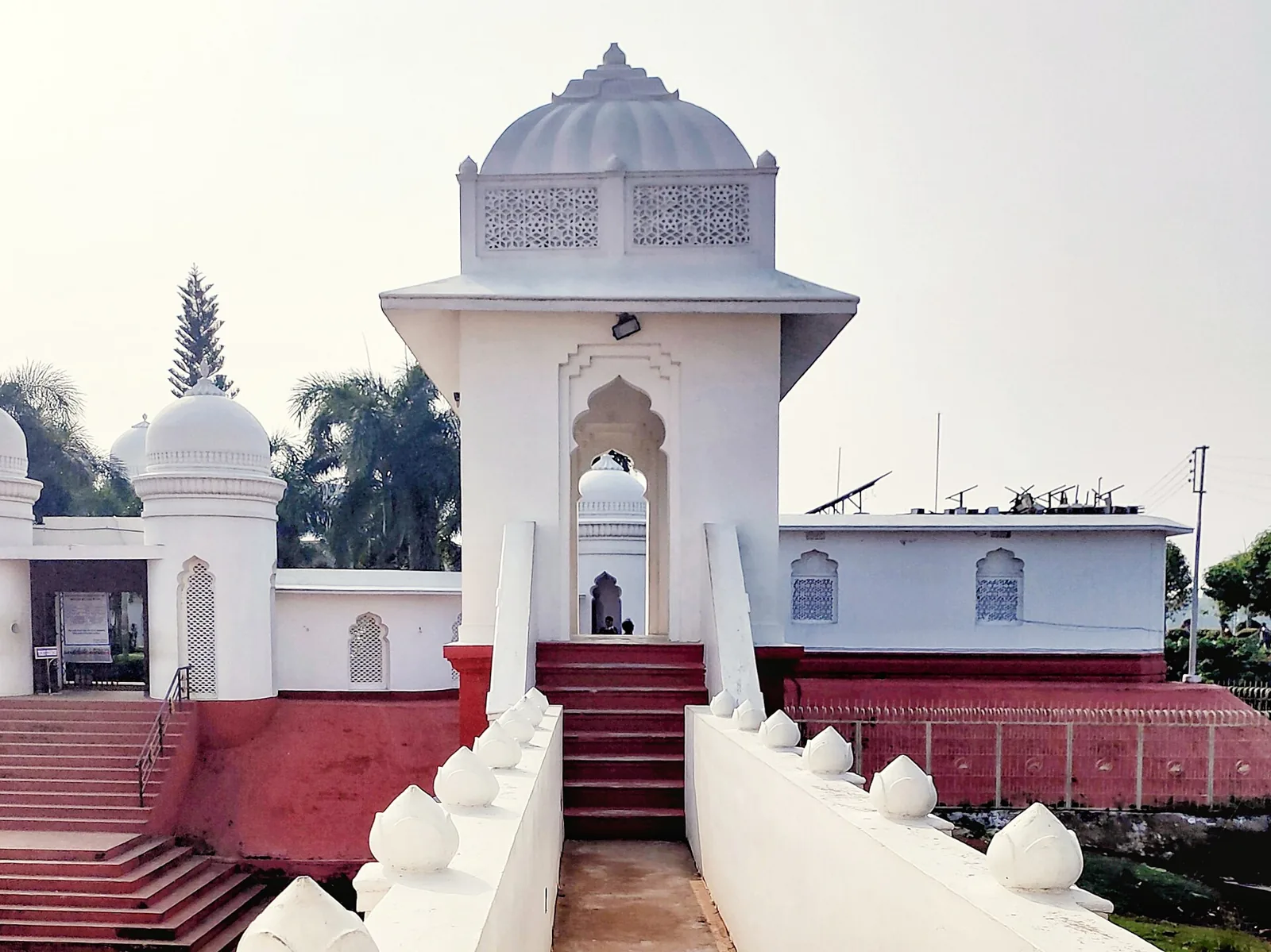
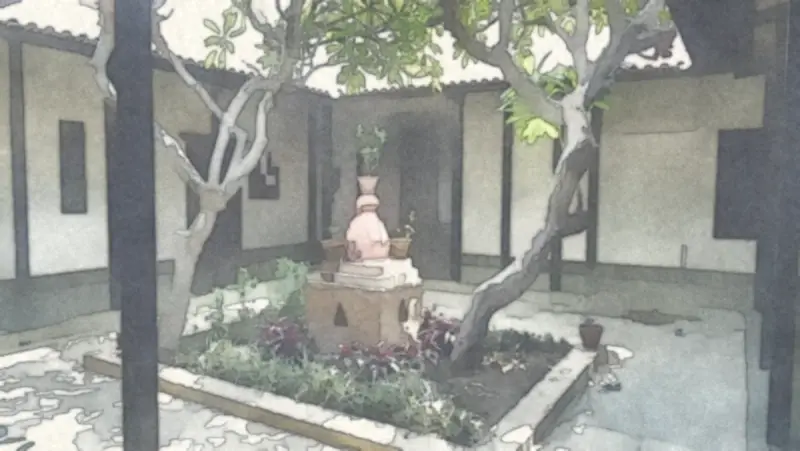
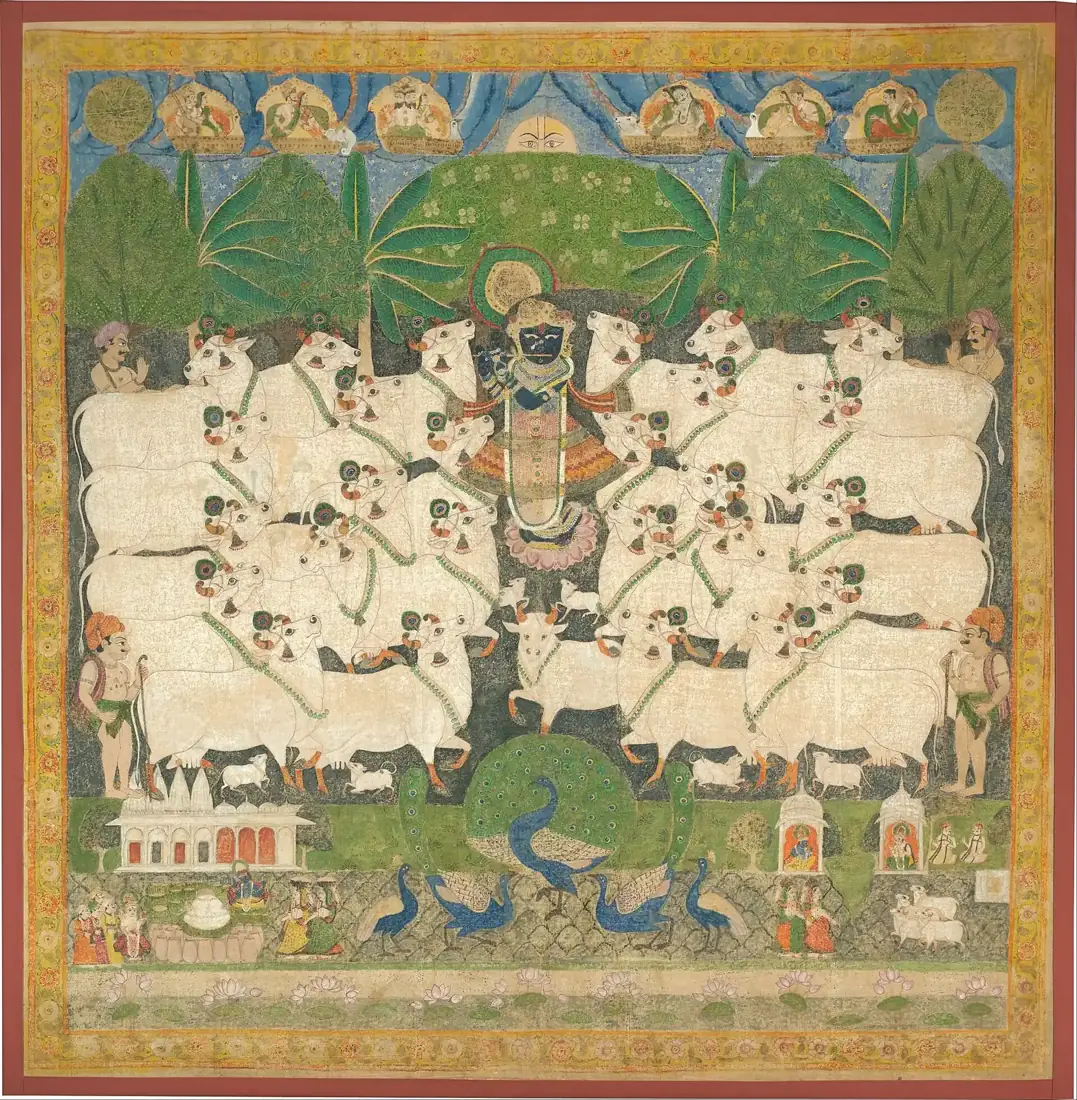
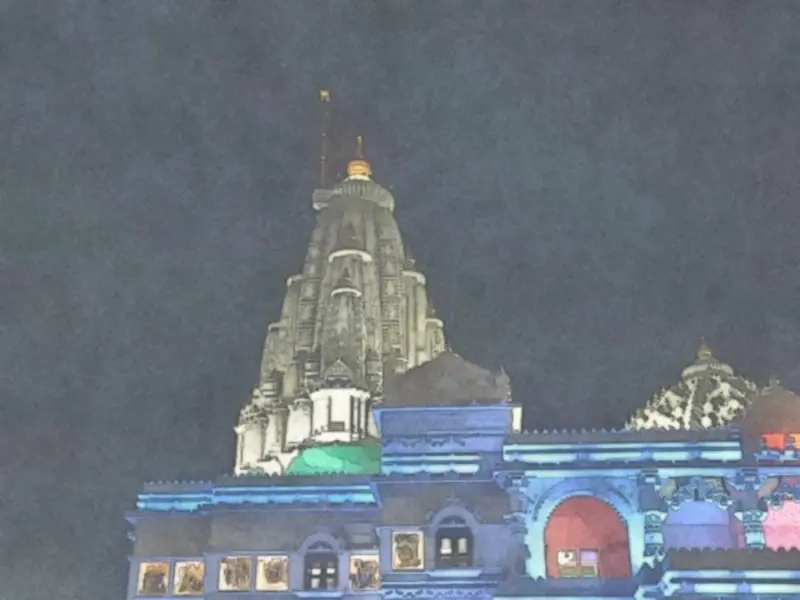
The complex is known as Shrinath Ji ki Haveli, and seven flags fly above it with the Sudarshan Chakra prominent. Inside it is organised like a royal household, with separate rooms for milk, betel leaves, sweets, flowers, the kitchen, the ornaments and the treasury. The signature offering is Sagar prasad of almonds, sugar and ghee, and the temple serves Chhappan Bhog, fifty-six items.
Pichwai: the painting to bring home
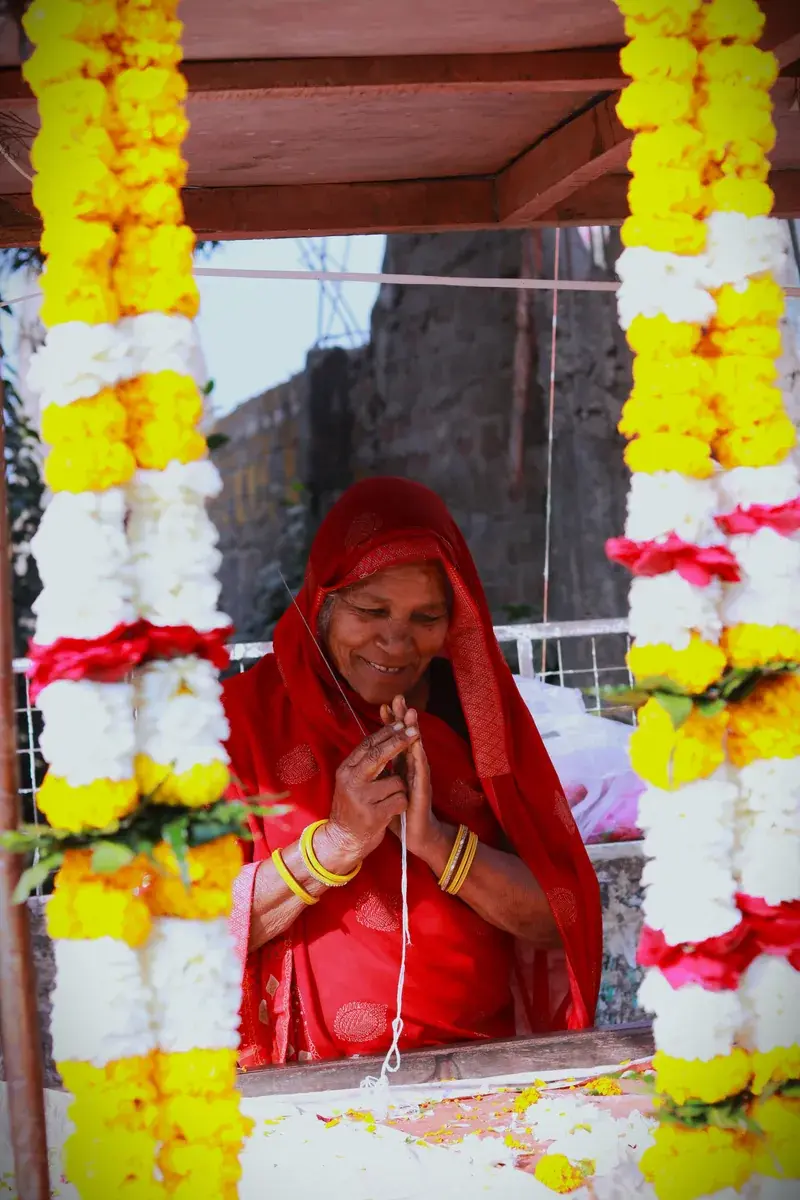
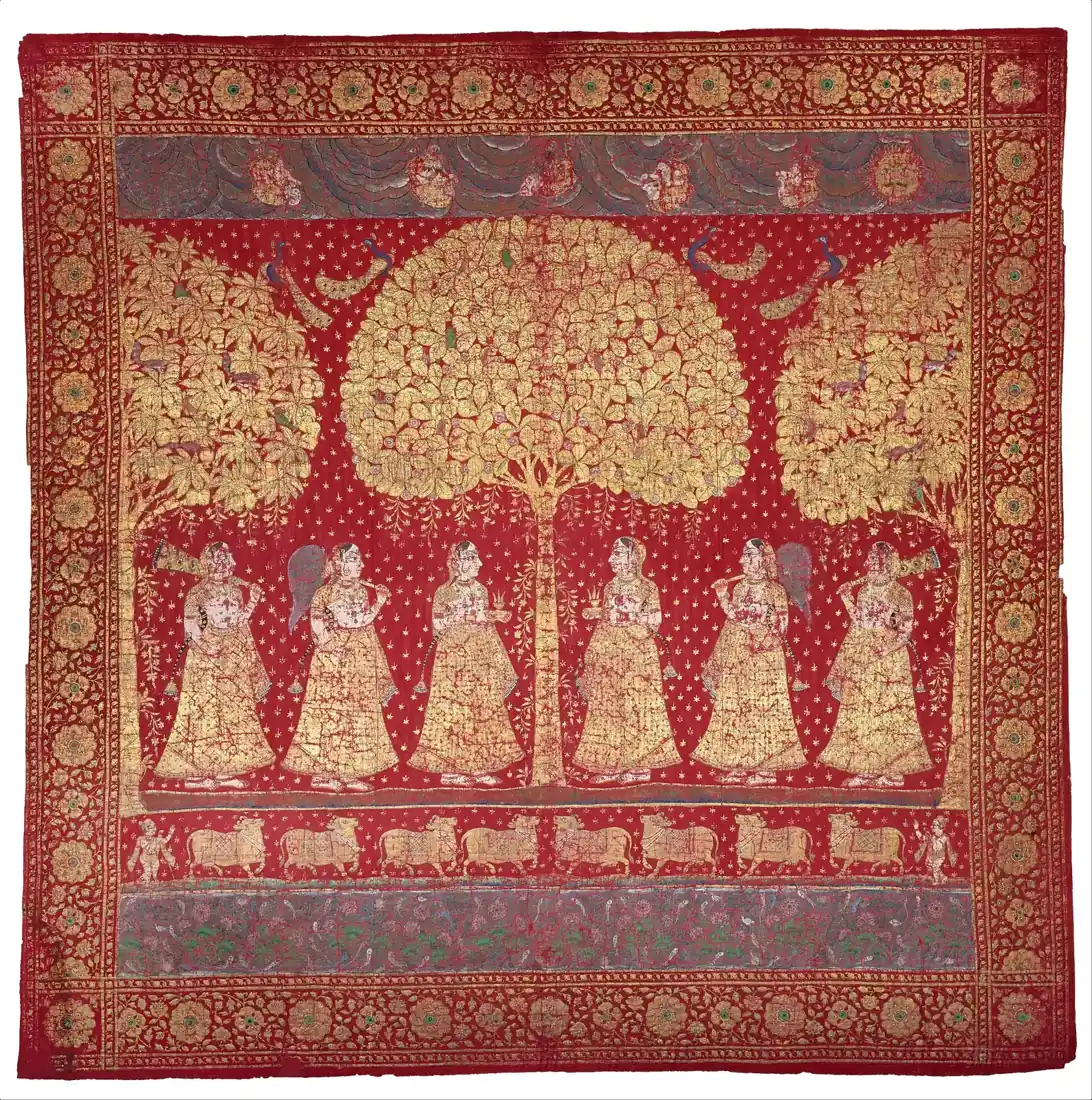
The painted cloth hangings behind the deity are called pichwai, and Nathdwara is where the tradition lives. They depict Shrinathji's leelas on cloth, wall and paper, as the photographs above show, and are the first item on every shopping list. Buy from a workshop where you can watch the work, and expect higher prices for hand-painted pieces.
Around Nathdwara, and getting there
Udaipur is about 46 to 48 km away, with its airport at 58 to 60 km and Udaipur City station about 50 km. Mavli station is 30 km. Nearby are the Dwarkadhish temple at Kankroli, Eklingji, Molela terracotta village and Nand Samand Dam, and Haldighati, where in 1576 Maharana Pratap fought Akbar's army and his horse Chetak carried him over a ravine; a memorial and museum mark the spot, a short way from Nathdwara. The temple's cow shelter houses more than 500 cows. Kumbhalgarh is about 51 km and Ranakpur about 81 km. From Delhi, honestly, you fly or take a train to Udaipur and cover the last stretch by road. See our [Udaipur guide](/blog/udaipur-travel-guide).
Let Laladham run it
Laladham picks you up in Delhi, from the airport, station, home or hotel, arranges the flight or train to Udaipur, a driver for Nathdwara, and a plan around the darshan you choose. Ask for a quote on the [book page](/book).
Questions, answered
What are the eight darshans at Nathdwara?
Eight openings of the sanctum, from the dawn waking to the night bedtime, between about 5 am and 8:30 pm.
Can I take my phone inside?
No. Phones and cameras are kept out, and there are lockers by the entrance.
Is there an entry fee?
Ordinary darshan costs nothing. Special arrangements go through pandits, so be wary of anyone selling passes.
How far is Nathdwara from Udaipur?
About 46 to 48 km, with the airport at around 60 km.
How many days should I allow?
One day covers a few darshans. Seeing all eight takes a longer stay.
When is the best time to visit?
October to March. Weekends and the big festival days are very crowded.