Where this corner sits
Mawlynnong lies in the East Khasi Hills, about 90 km from Shillong by the Economic Times' count, on the road that winds toward the Dawki border post. Livemint describes the drive: misty green hills, clouds drifting into the gorges below, and past the small town of Pynursla a fork onto a narrow village road that runs through a wall of betel and broom plantations. Dawki is farther on, in the Jaintia Hills, where the Umngot river runs from the Indian side into Bangladesh.
Delhi reaches Guwahati by air or by long train routes, and Shillong is the usual base beyond it. Treat this as an out-and-back day from Shillong or a night in the village itself, not as something to squeeze between two flights.
Mawlynnong: what the village is like on a good day
Mawlynnong became famous after a magazine named it Asia's cleanest village in 2003, and the BBC reports that the village now has about 600 people and welcomes up to 1,000 tourists on a Saturday. The ground rules are visible: wicker baskets called khoh fastened to trees and walls, signs warning that those who spit will be fined, and a ban on plastic. Livemint reports that chip packets, plastic cups and plates may not go in the baskets at all, and that visitors are expected to carry that kind of rubbish back out with them. Do exactly that.
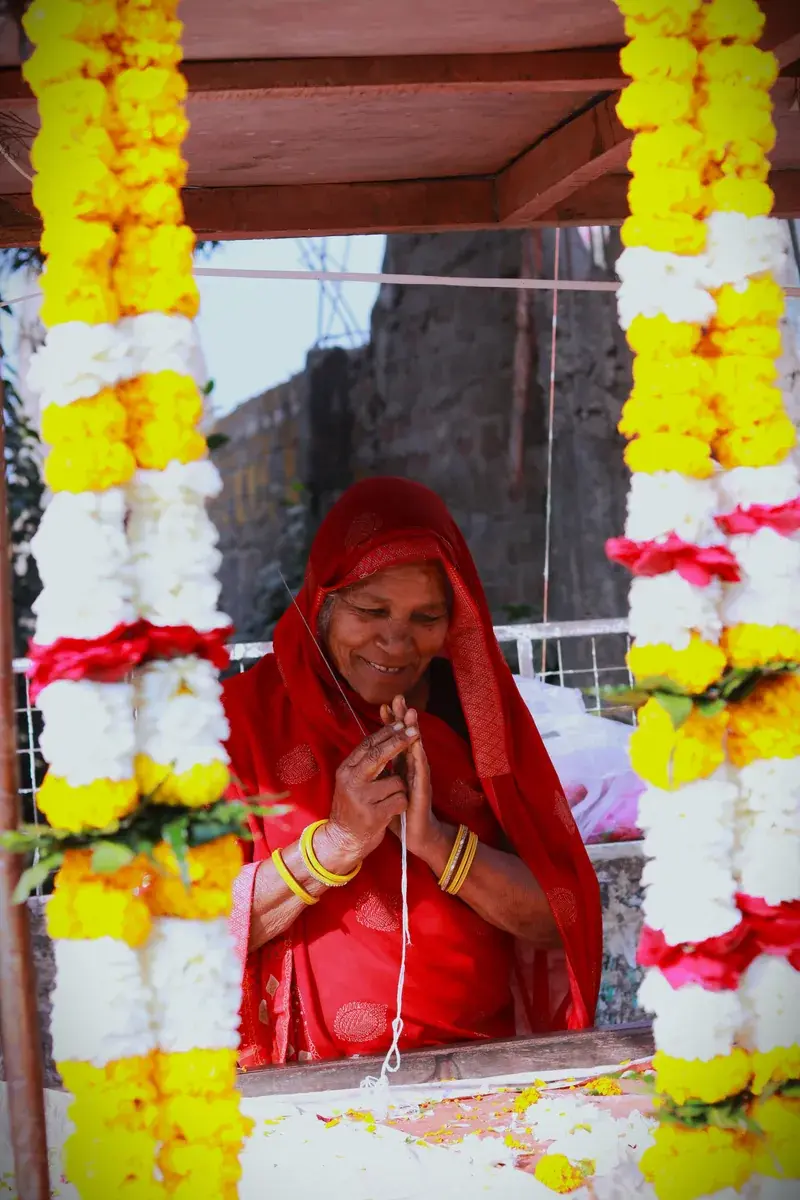
Walk without an agenda. The cobbled paths run past flower-draped homes, rainwater basins in the yards and a red-roofed church whose sign says 1902. At the edge of the village a bamboo skywalk climbs to a lookout over the plains of Bangladesh; the BBC mentions a 30 rupee charge for the bamboo walkway in the village centre, so keep small notes.
The Sunday rule
Since January 2026 the gates on the single road into the village are locked and guarded one day a week. Residents have banned day trippers on Sundays so that the largely Christian community can attend church and take a break from visitors. Anyone with a guesthouse booking that spans the weekend is exempt, according to the BBC.
So the practical plan is simple. Choose a weekday or a Saturday for the village, or sleep there and treat Sunday as a quiet morning you share with the locals. Do not arrive on a Sunday expecting a negotiation at the gate.
The Riwai root bridge
About 2 km away in Riwai village, the Economic Times says, you will find the famous root bridge. A paved stone path leads down to the Thyllong river, and Livemint describes a 30 metre span formed when the aerial roots of rubber trees planted on opposite banks around 1840 were guided together over the decades. It is still growing, and volunteers talk about extending it into a double decker.
It is also the busiest object in the district. Officials told Livemint that at times 50 people climbed onto it at once, so wait your turn and keep your group small. The climb back up those stone steps is the real price of admission.

Dawki: the Umngot and a border with no fence
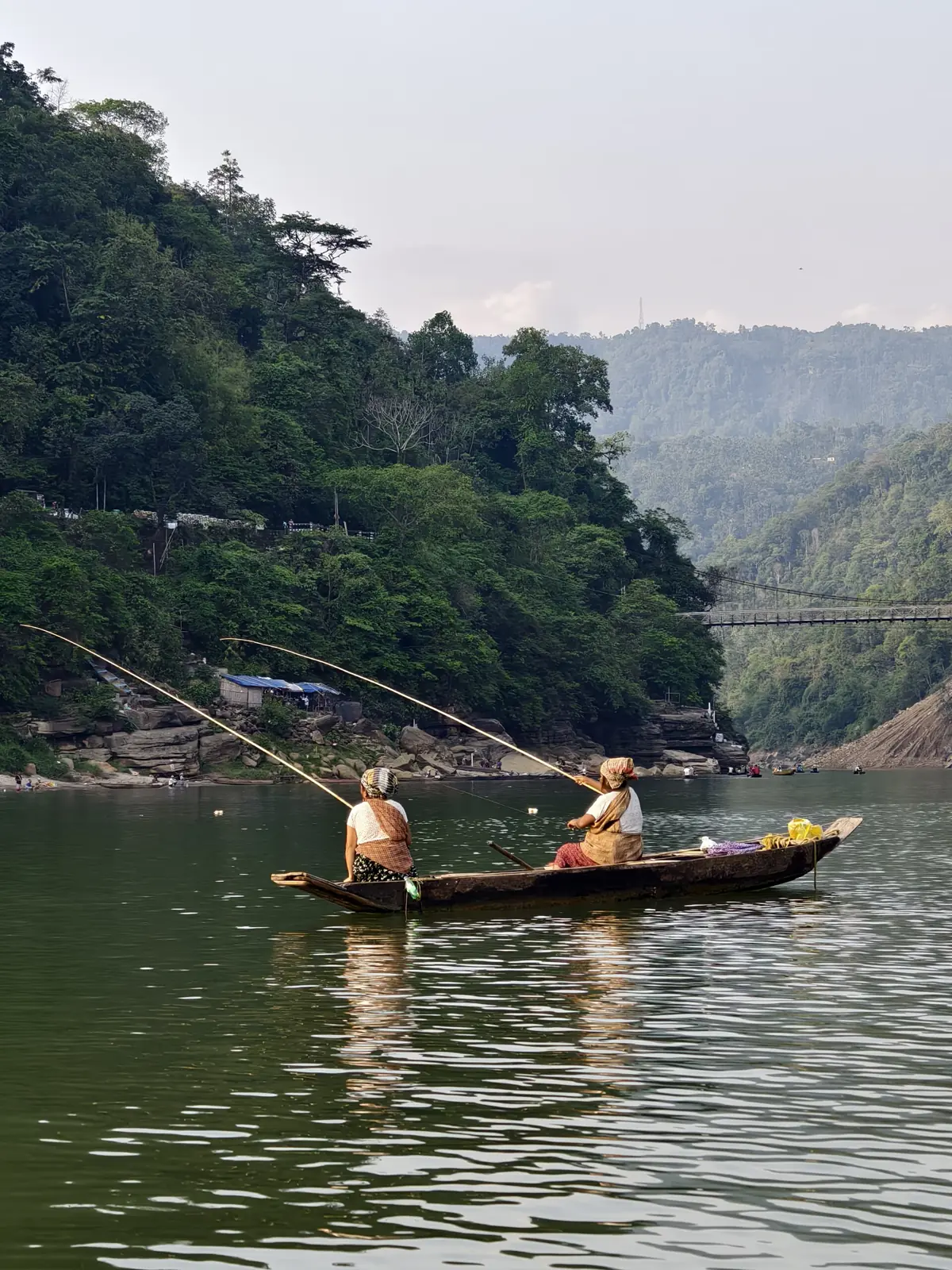
Dawki's pull is the Umngot river, clear enough that a Times of India columnist could see the bed 12 feet below from a boat. The boat ride is the point, and early morning is the calmer hour before day-trip traffic builds. The Dawki-Tamabil crossing is a working border post, and the same writer noted that little but a small stream and some pillars marks the line, with Sylheti fisherwomen selling fish at a roadside dhaba. That intermingling is not a show for tourists, so be polite when you photograph people.
Carry your original ID, because you are close to an international border, and do not wander onto the far bank. Ask your boatman where you may land.
How to build the day
Leave Shillong early so you reach the village before the vans. Do Mawlynnong and Riwai first, with the stone steps taken before the heat, and drive on to Dawki in the afternoon for a late boat ride. Eat in the village; Livemint counted 175 tourist beds across about 105 houses, so homestays are the norm and there is no hotel tower to find. Come back before dark, because the roads are bendy and the light fades quickly in the hills.
Season and kit
Meghalaya means abode of clouds, and rain can arrive at any hour. The river looks its best when the water is clear, which usually means outside the heaviest downpours, so ask locally before you commit to a monsoon date. Pack a rain shell, shoes with grip for the steps, a small daypack, and a bag for your own rubbish.
Laladham can run this from Delhi
Laladham can pick you up in Delhi, at the airport, station, home or hotel, and plan the whole trip: flights to Guwahati, a driver across to Shillong and onward to Mawlynnong and Dawki, rooms, and a day that respects the Sunday rule. Prices are not published for this route, so send your dates on the [book page](/book) and ask for a quote.
Questions, answered
Can I visit Mawlynnong on a Sunday?
Not as a day tripper. The BBC reports a ban since January 2026, though overnight guests are let through.
How far is Mawlynnong from Shillong?
About 90 km, according to the Economic Times. Allow a full day for the round trip with stops.
Where is the root bridge?
At Riwai village, roughly 2 km from Mawlynnong, at the bottom of a stone staircase.
Is plastic allowed in the village?
No. Plastic cups, plates and chip packets are not allowed in the baskets, and visitors should carry them back out.
What is special about Dawki?
Water clear enough to see the riverbed from a boat, plus a border crossing with Bangladesh.