Three centres, three airports
Incredible India names three airports for the state: Visakhapatnam, Vijayawada and Tirupati. That list is the best map of the state. From Delhi, pick the airport nearest to your main reason and let the road do the rest, rather than flying into one end and driving the length of the state. The Tourism Authority describes the state as the Kohinoor of India and sorts its pitch into nature, heritage, beaches, Buddhism, arts, religious and adventure travel, which is accurate if a little broad.
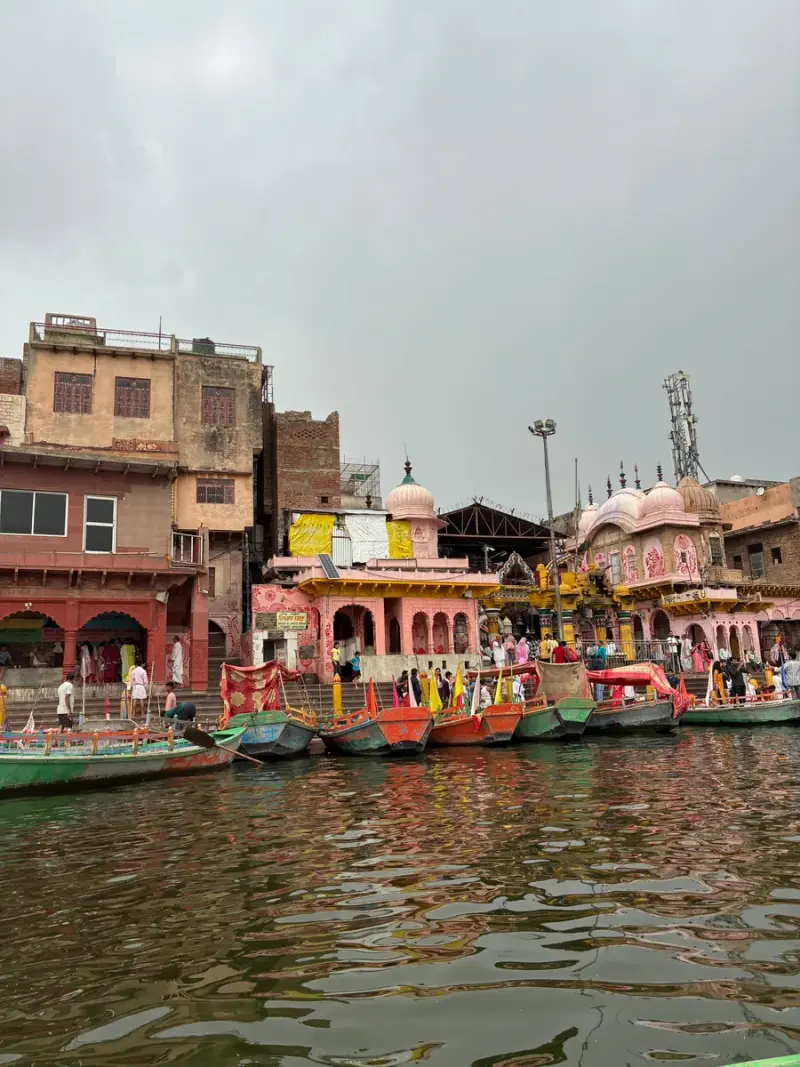
Tirupati and the Tirumala hill
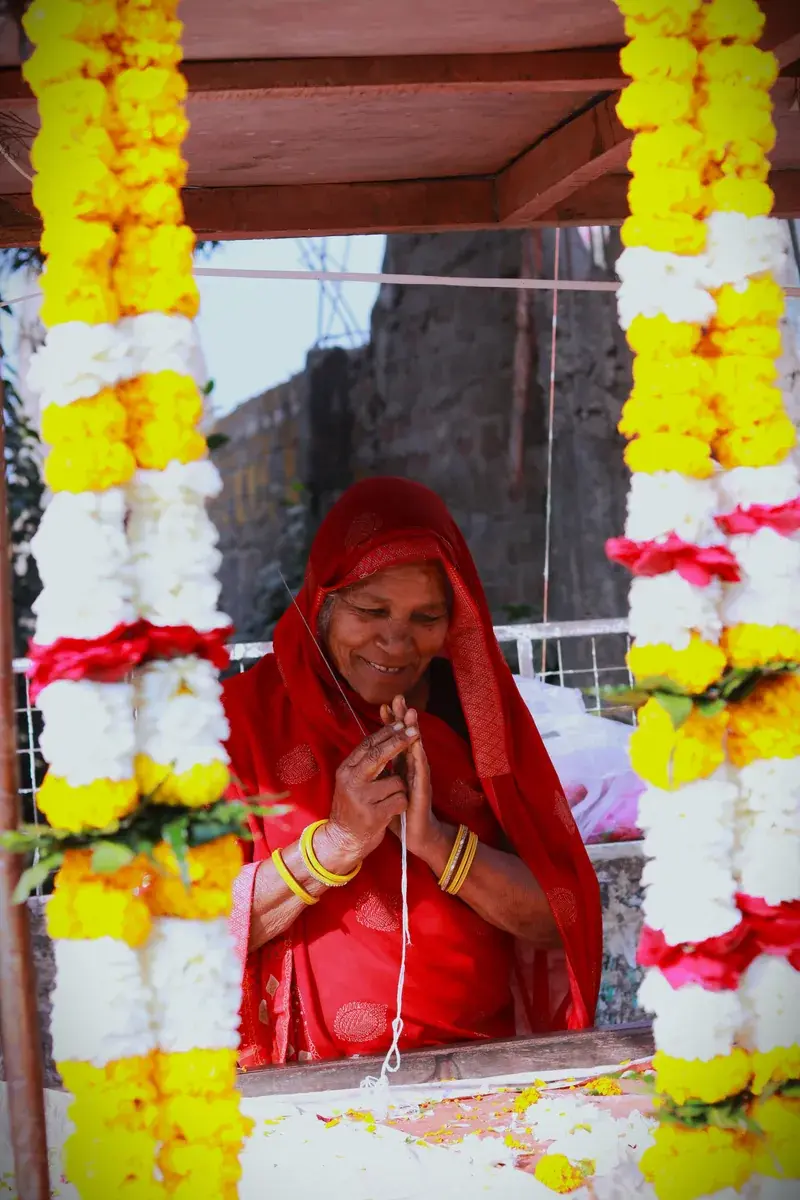
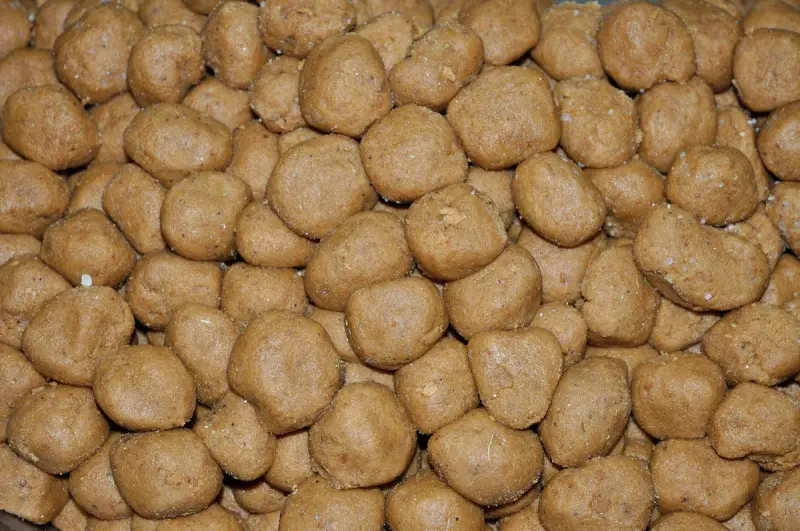
The Sri Venkateswara temple on Tirumala is the biggest single draw. Incredible India traces its development through the Pallavas in the 9th century, the Cholas in the 10th and the Vijayanagara empire in the 14th and 15th, with its rites formalised by the saint Ramanujacharya in the 11th. The famous laddu, made of gram flour, ghee, sugar and dry fruits, is distributed as an offering and carries a Geographical Indication tag.
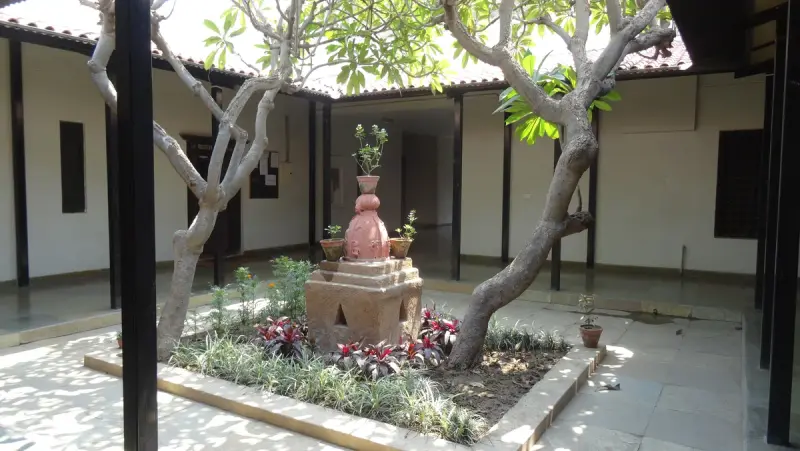
Darshan is where planning matters most. The temple trust's own site lists Sarvadarshan and a Special Entry Darshan, advance reservation for rooms at Tirumala and a slotted Sarva Darshan system where tokens are issued first come, first served at the counters. Book through the trust's channels in advance, since slots can run out. Many devotees offer their hair at the temple, and the board says the collected hair is auctioned for charity.
Around Tirupati are things worth an extra half day. Silathoranam is a natural rock arch dated to 1,500 million years, the Chakra Theertham is a waterfall among shrines, Chandragiri Fort has its own history, and Talakona, the state's highest waterfall at 270 feet, lies in the hills.
Amaravati: the Buddhist capital on the Krishna
Amaravati served the Satavahana dynasty as capital from the 3rd century BC, and Incredible India dates its great stupa, the Mahachaitya, to the 2nd century BCE, carved with scenes from the Buddha's life. The name means the place for immortals. Do not expect a tall dome today; the interest is in the carvings and the museum, and in how old the site is. The Amareswara Temple for Shiva stands on the riverbank and is said to date to the 5th century.
About 40 km away, the Mirchi Yard in Guntur is described as the largest chilli market in Asia. Guntur chilli is among the hottest in the world, and the yard is a vivid hour for anyone who likes spice. Incredible India also notes that the French astronomer Pierre Janssen identified helium from here during the 1868 eclipse, a detail worth carrying into the Baudhasree Archaeological Museum.
Vijayawada and the caves and forts nearby
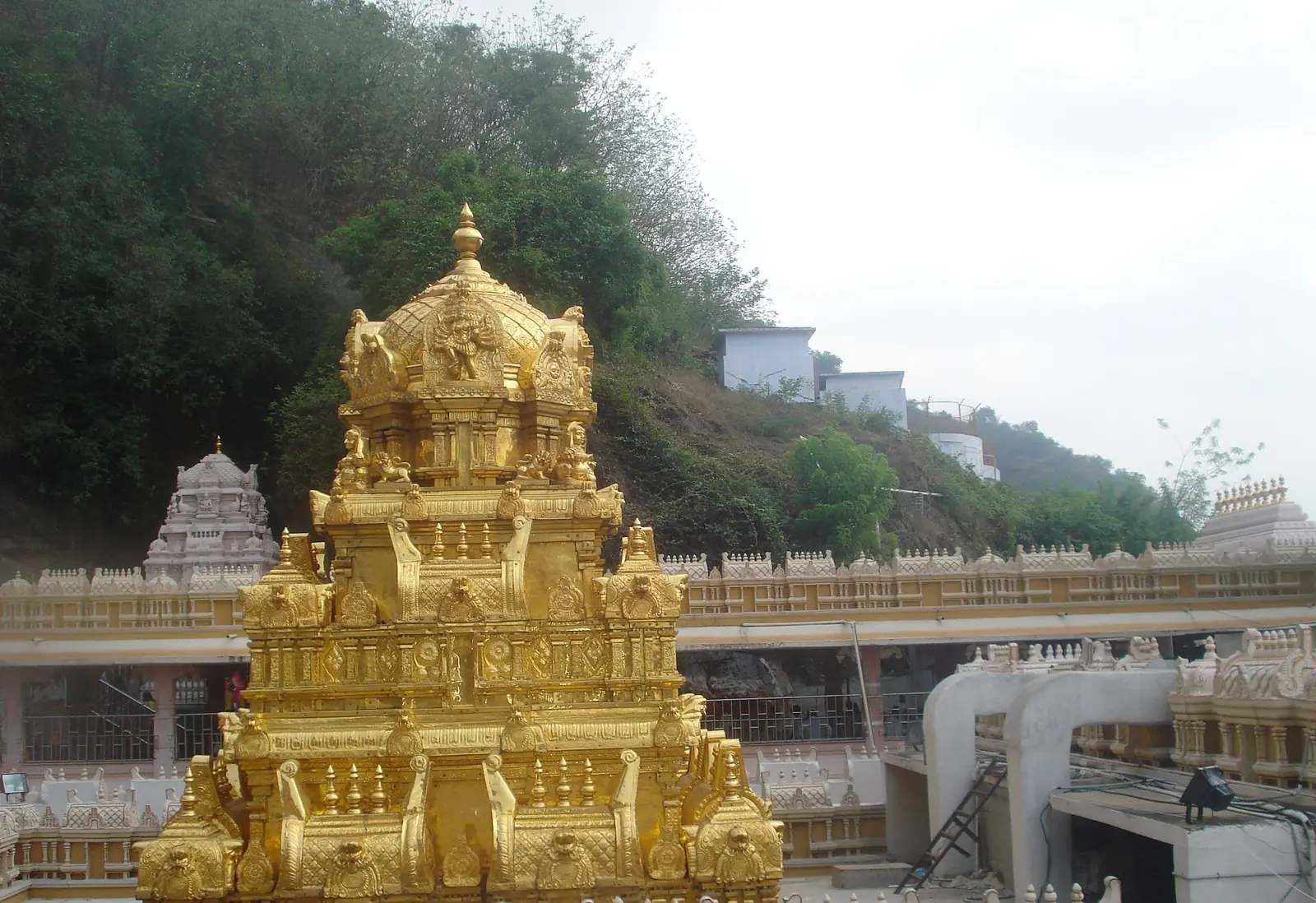
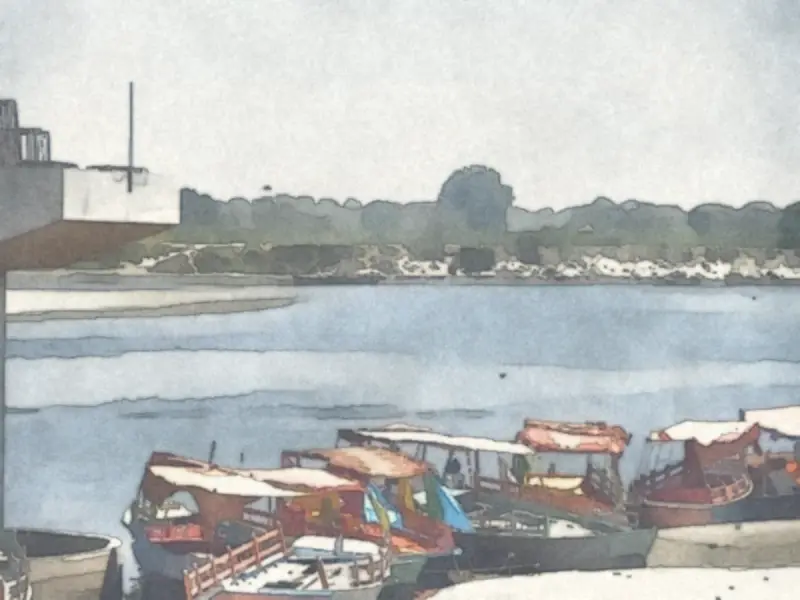
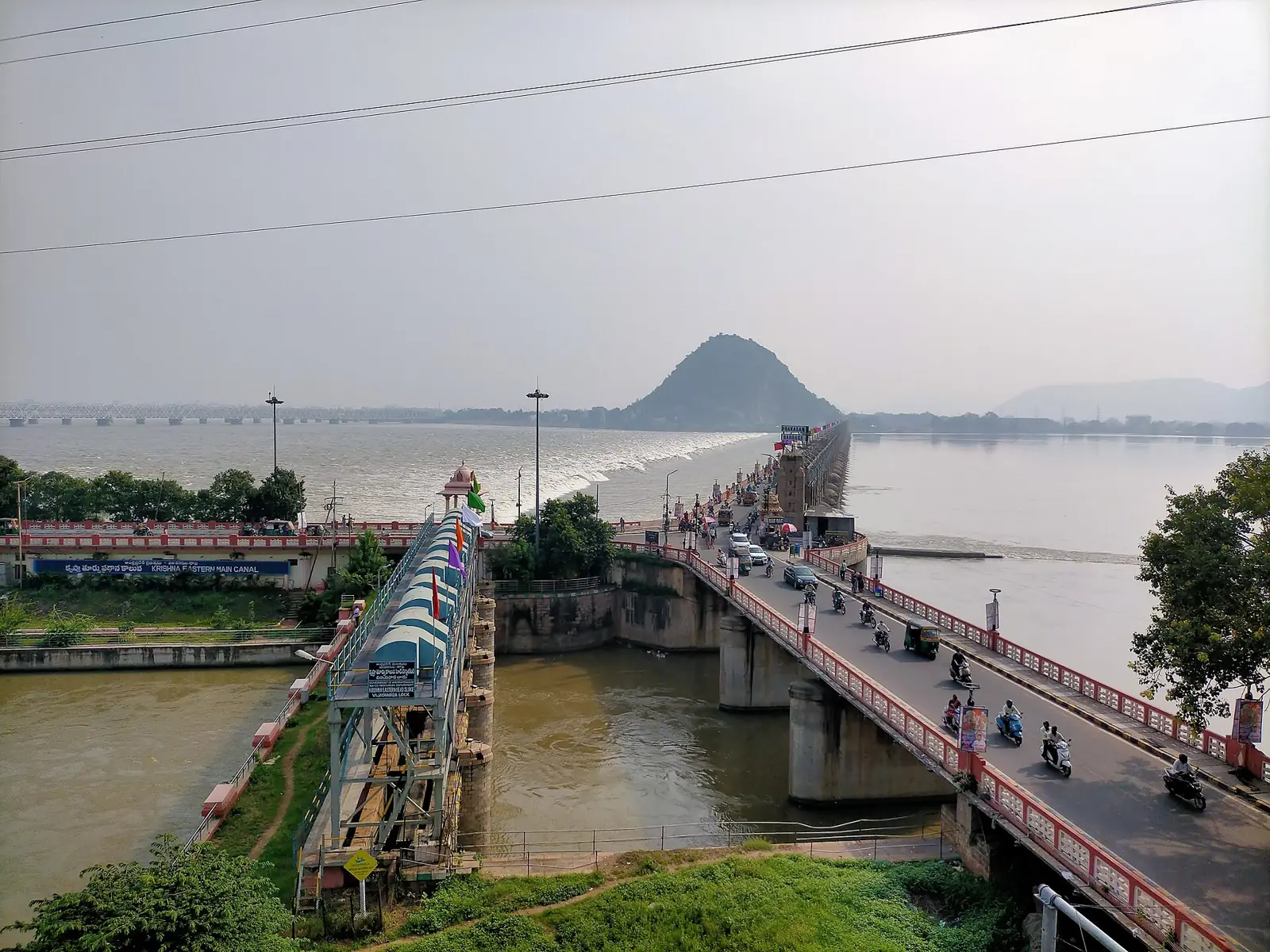
Vijayawada is the second largest city and the practical base for the Krishna belt. The Kanaka Durga Temple stands on Indrakeeladri Hill above the Krishna river, and devotees climb hundreds of steps to reach it. Prakasam Barrage crosses the river below. Undavalli Caves, from the 4th to 5th centuries, hold a large reclining Vishnu, and Kondapalli Fort, built by Prolaya Vema Reddy in the 14th century according to Incredible India, is a short drive away.
Visakhapatnam: the city of destiny
Vizag is a port city with a beach edge. The Submarine Museum, a decommissioned INS Kursura on Ramakrishna Beach, is the single oddest sight in the state, and the Visakha Museum sits in a Dutch bungalow. The city's name is tied by local belief to a temple to the god Visakha, and Incredible India lists Ugadi, Dasara and Navratri among the main festivals. The folk dances Dhimsa and Kolattam are worth looking for at festival time.
What to eat
Andhra food is spicy and proud of it. Incredible India points to Andhra chicken curry and gongura pachadi, a tart sorrel chutney, and Vizag adds pesarattu, a green gram dosa, chapala pulusu fish curry and pootharekulu, rice starch sweets rolled with jaggery. Ask for the chilli level before you order; the state grows some of the hottest chillies in the world.
Arts and crafts
Kuchipudi, the classical dance, comes from this state, and Machilipatnam is known for Kalamkari, hand painted textiles dyed with natural colours. If you want one thing to carry home, a Kalamkari piece is it.
When to go
Winter, roughly November to February, is the easy season for travel. Incredible India's monthly figures for Amaravati run from about 10 to 33 degrees in January to a high of 40 in March, so plan inland days early in the day. Tirumala is busy around Vaikunta Ekadasi, so book far ahead if you plan to visit then.
Let Laladham run it from Delhi
Laladham can pick you up in Delhi, at the airport, station, home or hotel, and run the complete trip: flights to the right airport, a driver for the long gaps between cities, darshan planning at Tirumala and stays in each centre. No price is published for this region, so ask for a quote on the book page with your dates and group size.
Questions, answered
Which airport should I use?
Tirupati for Tirumala, Vijayawada for Amaravati and the middle of the state, Visakhapatnam for the coast.
How do I book darshan at Tirumala?
Through the Tirumala Tirupati Devasthanams channels. The trust lists Sarvadarshan, Special Entry Darshan and slotted tokens.
What is the best time to visit?
Winter, from about November to February. Inland heat peaks around March.
What is Amaravati known for?
A great Buddhist stupa from the 2nd century BCE and a Satavahana capital from the 3rd century BC.
What is the famous sweet?
The Tirupati laddu, a Geographical Indication product.