Jaikara · Hanuman
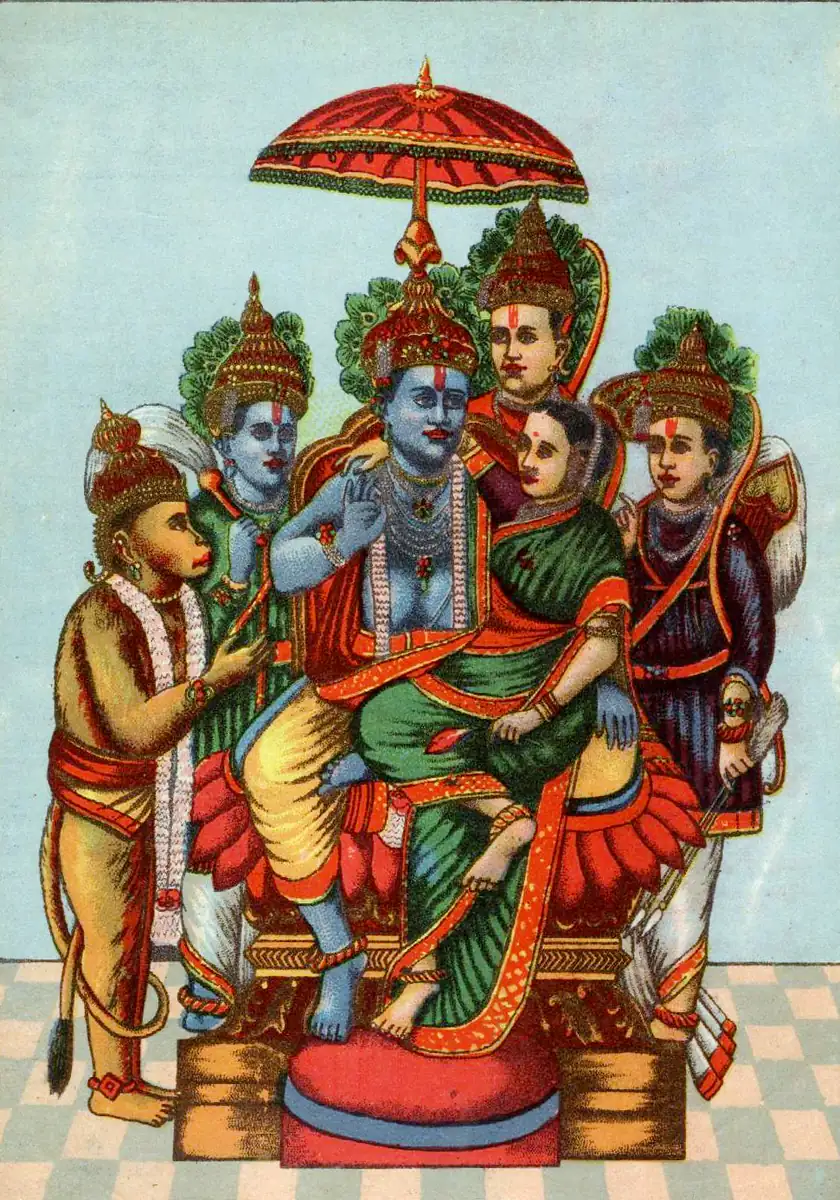
Siyavar Ramchandra ki Jai (Chalisa Closing Jaikara) सियावर रामचन्द्र की जय (चालीसा का जयकारा)
These four calls close the recitation of the Hanuman Chalisa in the printed booklets.
सियावर रामचन्द्र की जय ।
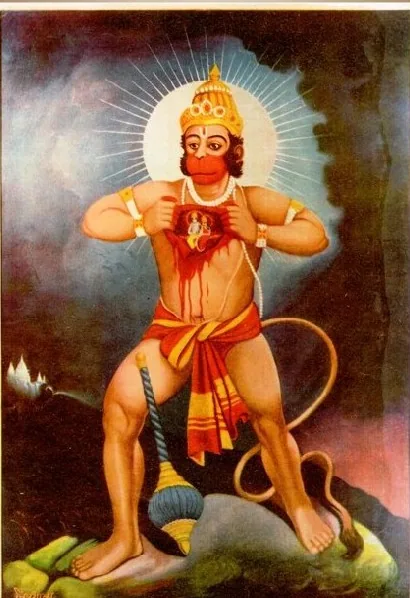
पवनसुत हनुमान की जय ।
उमापति महादेव की जय ।
बोलो भाई सब सन्तन्ह की जय ॥
What it means
These four calls close the recitation of the Hanuman Chalisa in the printed booklets. The first hails Ram as the husband of Sita, the second names Hanuman as the son of the wind, the third hails Shiva as the lord of Uma, and the fourth turns to the people around and invites a cheer for all the saints. The order goes up from the central figure, Ram, to his servant Hanuman, to Shiva, and ends with everyone present. The word jai means victory, so each line is a shout of Hail.
How it is sung
After the last doha of the Chalisa a leader calls each line and the group answers with the same words, louder. The first three can be shouted from the chest in quick succession, the last one is stretched. In many Hanuman temples it is called on Tuesdays and Saturdays, and booklets print the four lines right after the closing doha.
Questions, answered
When is this jaikara called?
At the very end of the Hanuman Chalisa, after the closing doha.
Who is Siyavar?
Siyavar means the groom, or best husband, of Siya, the name for Sita. So it is a name for Ram.
Do all books print the same lines?
Mostly yes. One booklet adds a chant of Shri Ram jai Ram jai jai Ram after these lines, and a few misprint Siyavar in the scan, but the four calls are the same.