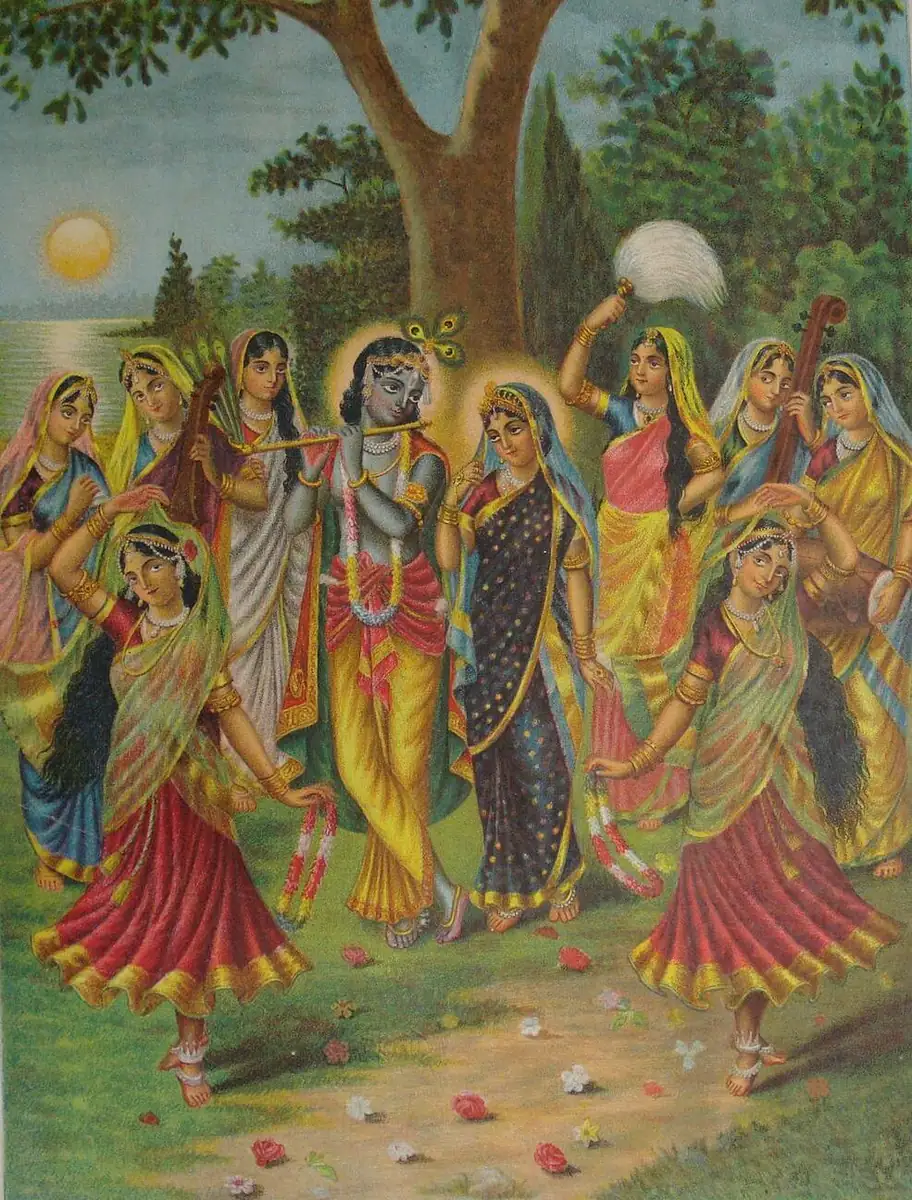
Aarti · Krishna
Shri Banke Bihari Teri Aarti Gaun श्री बांके बिहारी तेरी आरती गाऊं
A short, tender aarti addressed straight to Banke Bihari, the Krishna of Vrindavan.
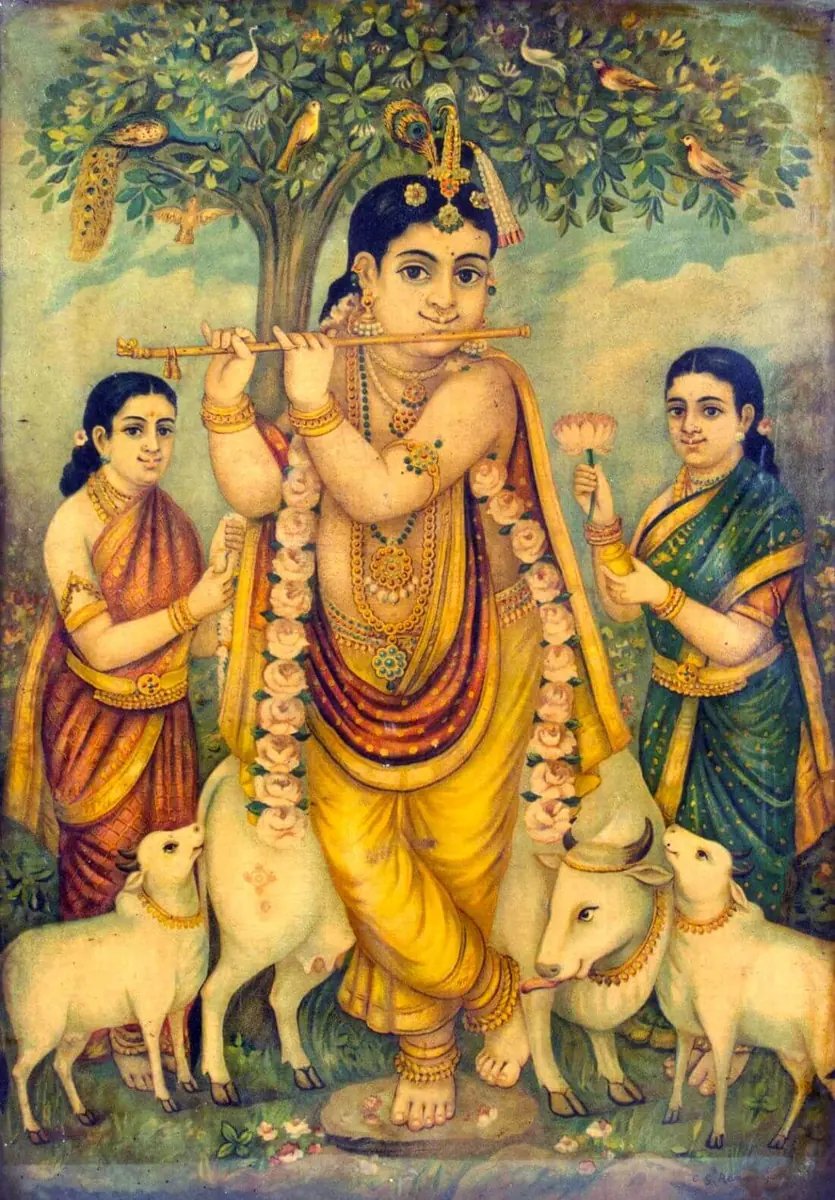
श्री बांके बिहारी तेरी आरती गाऊं,
हे गिरिधर तेरी आरती गाऊं ।
आरती गाऊं प्यारे आपको रिझाऊं,
श्याम सुन्दर तेरी आरती गाऊं ॥
मोर मुकुट प्यारे शीश पे सोहे,
प्यारी बंसी मेरो मन मोहे ।
देख छवि बलिहारी मैं जाऊं ॥
॥ श्री बांके बिहारी तेरी आरती गाऊं..॥
चरणों से निकली गंगा प्यारी,
जिसने सारी दुनिया तारी ।
मैं उन चरणों के दर्शन पाऊं ॥
॥ श्री बांके बिहारी तेरी आरती गाऊं..॥
दास अनाथ के नाथ आप हो,
दुःख सुख जीवन प्यारे साथ आप हो ।
हरी चरणों में शीश झुकाऊं ॥
॥ श्री बांके बिहारी तेरी आरती गाऊं..॥
श्री हरीदास के प्यारे तुम हो,
मेरे मोहन जीवन धन हो ।
देख युगल छवि बलि बलि जाऊं ॥
॥ श्री बांके बिहारी तेरी आरती गाऊं..॥
श्री बांके बिहारी तेरी आरती गाऊं,
हे गिरिधर तेरी आरती गाऊं ।
आरती गाऊं प्यारे आपको रिझाऊं,
श्याम सुन्दर तेरी आरती गाऊं ॥
What it means
A short, tender aarti addressed straight to Banke Bihari, the Krishna of Vrindavan. The singer says he will sing only to please his beloved, then looks at the peacock feather on the crown and lets the flute steal his mind. One verse reminds us that the Ganga rose from these feet, the same feet that carry the whole world across, and asks for a glimpse of them. The singer also calls Krishna the lord of the helpless who stays beside us in pain and in joy, and names him the dear one of Swami Haridas, the saint who first found the image.
How it is sung
Sung in the evening and during festivals such as Janmashtami in homes devoted to Banke Bihari ji. It is sung in a light, swinging tune with clapping, the first four lines being repeated at the start and end. The main thing is to sing as though speaking to a friend, not a statue.
Banke Bihari's courtyard in Vrindavan is the place for it, and Laladham can bring you there from Delhi and wait while you queue for darshan. Plan the trip
Questions, answered
Who is Haridas in this aarti?
Swami Haridas was the singer-saint of Vrindavan whose devotion brought the Banke Bihari image into the world at Nidhivan, according to tradition.
Is this the aarti sung in the Banke Bihari temple?
It is the aarti many devotees sing at home to Banke Bihari. The temple has its own set of seva songs and rhythms, so this should not be taken as a record of temple practice.
Who wrote it?
No author is named in the books and sites I checked, so it is given here as traditional.