Stotra · Durga and Devi
Sarva Mangala Mangalye सर्वमङ्गलमाङ्गल्ये
The Goddess is called the goodness inside everything good, the one who brings every purpose to its end, the one you can run to for shelter.
सर्वमङ्गलमाङ्गल्ये शिवे सर्वार्थसाधिके ।
शरण्ये त्र्यम्बके गौरि नारायणि नमोऽस्तु ते ॥
What it means
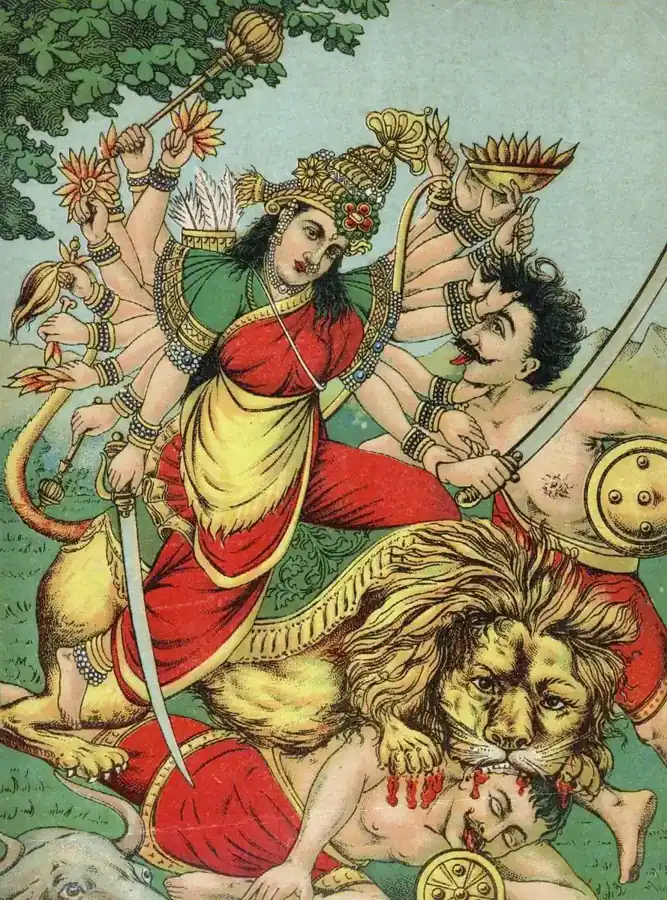
The Goddess is called the goodness inside everything good, the one who brings every purpose to its end, the one you can run to for shelter. She is three-eyed, she is Gauri, she is Narayani, and the verse simply bows to her under each name. It is short enough to say while walking into a temple. The lines are taken from the Devi Mahatmya, the text also known as Durga Saptashati, where the gods praise the Goddess after she has won over the demons.
How it is sung
Say it when you enter a Devi shrine, at the start of Navratri puja, or on a Friday evening at the home lamp. A soft, steady chant works best, and the last word 'te' can be held a little. Some families repeat it three times as they offer flowers.
Questions, answered
What does Sarva Mangala Mangalye mean?
O Shivā, auspicious of all that is auspicious, fulfiller of every aim, giver of refuge, three-eyed Gauri, Narayani, I bow to you.
Where is this verse from?
It belongs to the Devi Mahatmya in the Markandeya Purana tradition, the same book as the Durga Saptashati.
Is it only for Navratri?
No. It is a general Devi salutation and is said at any visit to her shrine, though it is especially common in the nine nights.