Stotra · Shiv
Karpur Gauram Karunavataram कर्पूरगौरं करुणावतारं
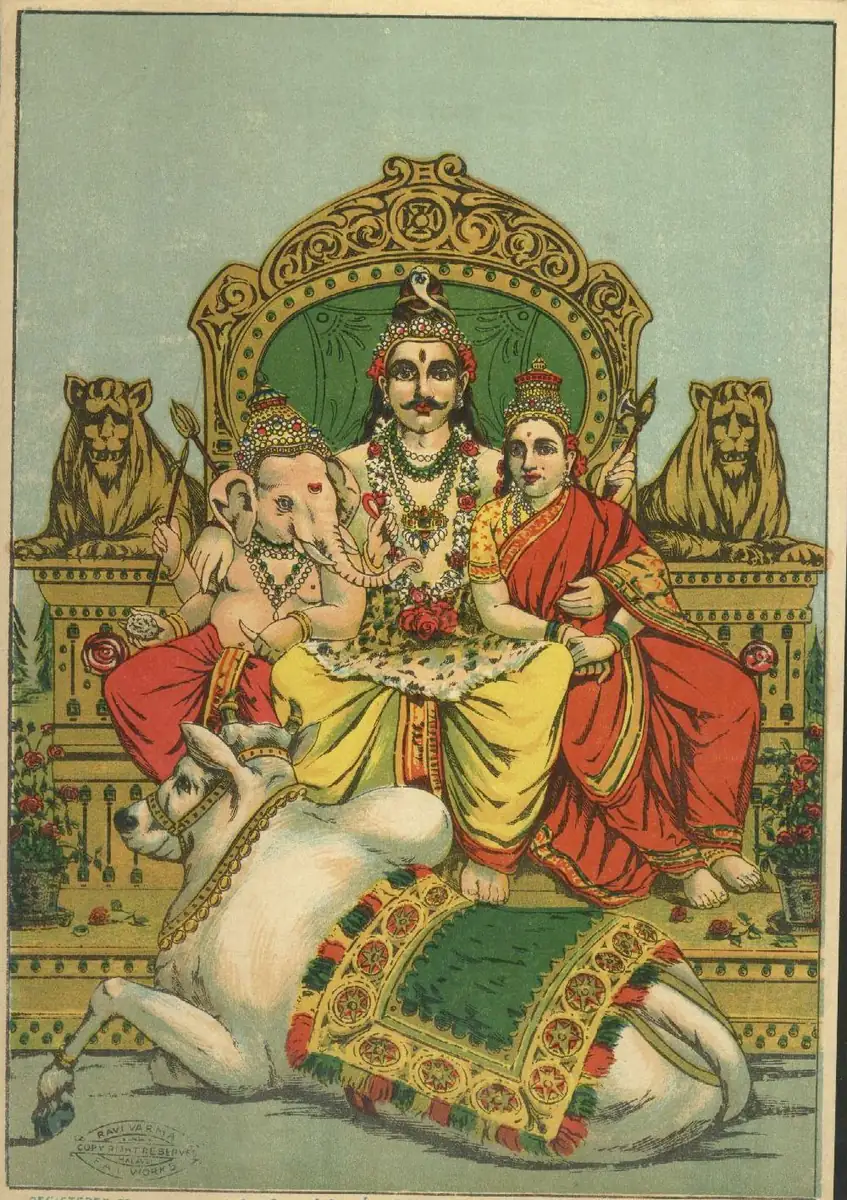
Shiva is described here as white as camphor, kindness in a body, the core of this whole world, with the king of snakes hanging as his garland.
कर्पूरगौरं करुणावतारं
संसारसारं भुजगेन्द्रहारम् ।
सदा वसन्तं हृदयारविन्दे
भवं भवानीसहितं नमामि ॥
What it means
Shiva is described here as white as camphor, kindness in a body, the core of this whole world, with the king of snakes hanging as his garland. The third line puts him somewhere unexpected: living always in the lotus of the heart. The last line bows to Bhava, which is Shiva, together with Bhavani, which is Parvati. The camphor in the first word is not decoration; it is the very thing lit at the end of aarti, so the words and the flame meet.
How it is sung
It is chanted while camphor is lit and waved, after the main aarti in many temples and homes. It is quick and light, one line per breath. On Mondays and Mahashivratri it is often the first verse a family sings.
Questions, answered
What does Karpur Gauram mean?
I bow to Shiva, white like camphor, an incarnation of compassion, the essence of existence, wearing the king of serpents as a garland, who forever lives in the lotus of my heart along with Bhavani.
Why is it sung when camphor is lit?
Because the first word is camphor and the verse is regarded as Shiva's own camphor aarti verse. The flame leaves nothing behind, like the ego offered to him.
Is it from the Vedas?
Sources disagree. Some call it a Yajurveda verse, others only a well-loved traditional verse. We list it as traditional.