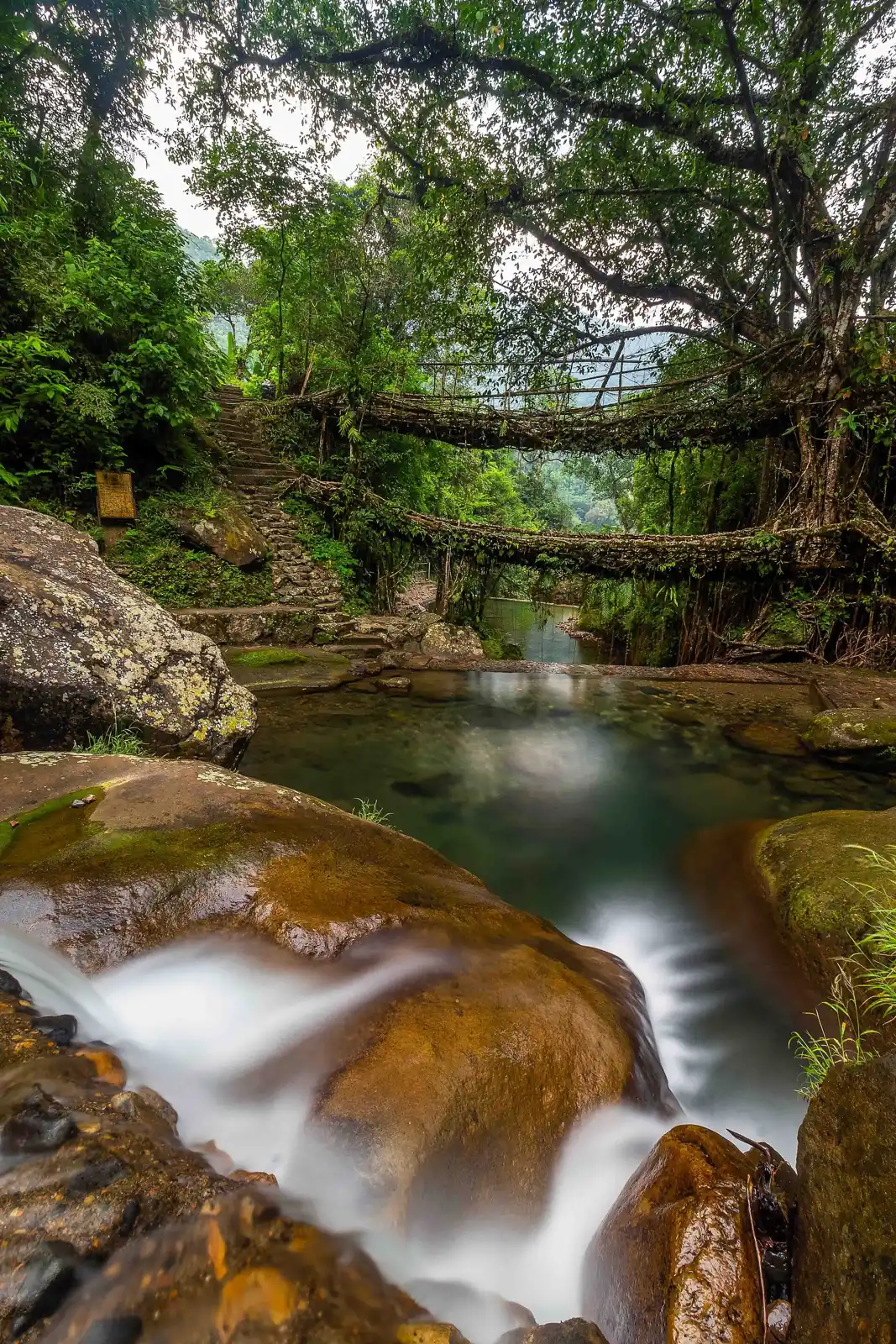
Meghalaya rewards the traveller who plans the hard day first and lets the rest fall around it. Most people who write about the state come back with the same two pictures, a living bridge grown from rubber fig roots deep in a valley and a boat that looks as if it floats on air over clear water. Between those pictures are long mountain roads, sudden cloud, small markets and a lot of steps. This five day plan is built to make room for the steps.
You land in Guwahati and keep one car and driver for the whole loop. Shillong is the first night, Sohra, also called Cherrapunji, takes two, and the fourth day wraps the far corner near Mawlynnong and Dawki before dropping back to the Shillong ridge for the night. The last day is a slow morning and the drive down to the airport. Hikers keep saying the big descent deserves a day of its own. Here it sits in the middle, with a gentle day before and a long, easy drive after.
It suits couples, small families and parents who like green hills, caves and water. It does not suit anyone who cannot manage two to three thousand uneven steps, though that part can be swapped for easier root bridges. Flights are not included, and the plan begins when you land.
From your pickup
Same trip, four starting points. Road times are real driving times; a long drive becomes its own travel day so nobody arrives wrecked.
Day by day
Day 1 · night in Shillong
Landing in Guwahati, up to Shillong
Guwahati airport to Shillong, about 100 km, roughly three hours
Your driver is at arrivals, and the road leaves the Brahmaputra plain for a wide, mostly divided highway that climbs through forest. Travellers put the drive at about three hours, a little longer on holidays and weekends, and report congestion in the last stretch toward the city. A stop at Umiam Lake is the usual pause: a broad reservoir with islands of pine, good for stretching legs and a cup of tea.
Once in Shillong, the first evening is for the lower part of town on foot. One couple who explored it that way said the central lanes and the lake are easy to walk, though a dark road near their stay was not. If you arrive in good light, the Gothic cathedral and its stained glass are the quickest wins; the board's own itinerary favours late morning for the glass, so do not worry if you only see it from outside.
Eat something local tonight: smoked pork with rice is the common order, and vegetarians should ask in advance, since one traveller reported thin choices at some eateries.
- Umiam Lake
- Shillong
- Cathedral of Mary Help of Christians

Day 2 · night in Sohra (Cherrapunji)
The wet edge of the plateau at Sohra
Shillong to Sohra, about 50 km, a little over an hour of bends
Leave early. Ward's Lake at half past seven is the official suggestion, but a visitor who got there late in the afternoon was disappointed, so either do it now before the car leaves, or drop it. By nine you are on the Sohra road, stopping at the Mawkdok viewpoint where the valley opens up. The official trail says to arrive early for that stop and before the tour groups.
At Sohra, the waterfalls are the headline, and they depend entirely on season. Once the rains have gone the cascades thin out, and some visitors find them underwhelming. Nohkalikai, the tall plunge fall, is usually done in the morning when the mist lifts, and Arwah and Mawsmai caves fill the afternoon, so check the closing time locally, since one of the official itineraries warns the caves shut around half past five.
Stay near the trailhead village if you can. A writer from late 2019 advised a homestay in Cherrapunjee itself rather than driving back to Shillong, and with a 6 a.m. start tomorrow that advice is sound.
- Mawkdok viewpoint
- Nohkalikai Falls
- Mawsmai Cave
- Seven Sisters Falls
- Arwah Caves
Day 3 · night in Sohra (Cherrapunji)
Down the steps to the double decker bridge
Sohra to Tyrna, the trailhead village, roughly 18 to 20 km by car
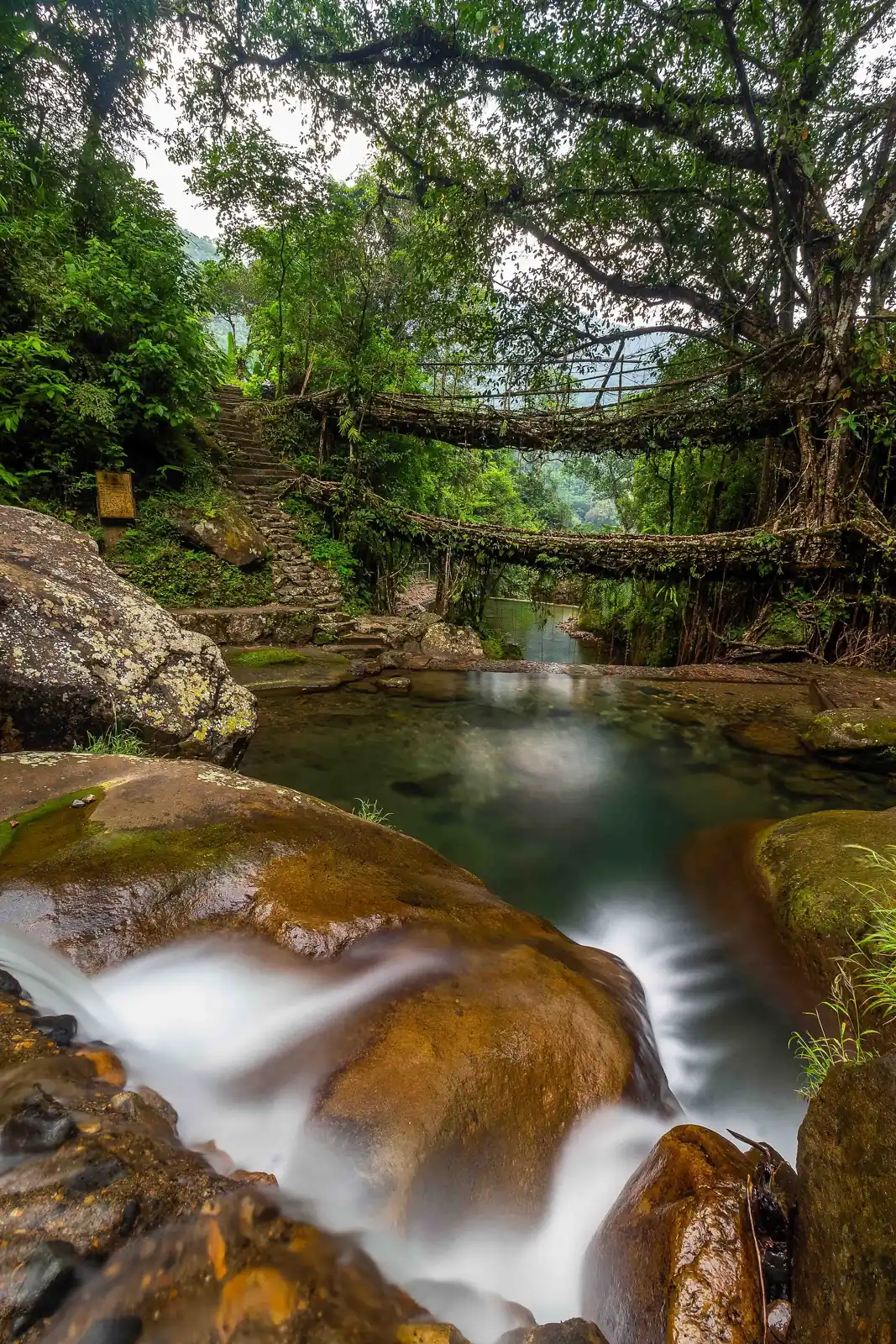
This is the day the trip is built around. The tourism board gives the descent to Nongriat as about three thousand steps, with a higher estimate of 3,500 elsewhere on the same page, and suggests a local guide. Walkers who have done it say the first stretch is concrete and easy, the lower part is steeper, and two swaying iron-wire suspension bridges come before the village. One couple needed just over two hours to go down; another pair left at eight, stood on the root bridge around ten, and needed nearly four hours to get back up.
The reward is the stacked pair of bridges, one living span stacked above another, plus pools and smaller bridges around it. Every account agrees the return climb is the real work: rest every hundred steps or so, buy a bamboo cane at the entrance, carry only water and snacks, and bring salts. Only two people stand on a root bridge at a time, and the trail is humid even in winter, so dress light. A pair of writers advise sleeping a night in the village instead of doing the round trip in one go, and they came back too tired to find a ride; your car waits at Tyrna, which removes that problem.
The trail is marked, so guides are a choice, though Rainbow Falls beyond the village is where one is worth it. Some viewpoints at Nongriat were reported closed on Sundays, so we shift the day if needed. Anyone with bad knees can trade this day for a smaller bridge elsewhere with far fewer steps, and the plan adjusts if you tell us early.
- Tyrna
- Nongriat
- Double decker root bridge

Day 4 · night in Shillong
Mawlynnong, a border river and the way back to Shillong
Sohra to Dawki, 80 to 90 km, a four or five hour run with no stops, then on to Shillong
Expect a long day and start by eight, not nine. A family who wrote this leg up left an hour late because everyone was tired and reached the Shillong ridge after seven in the evening. First comes the living root bridge near Mawlynnong, around a hundred and fifty steps from the road, which they took about an hour over. The village needs two or three kilometres of walking, so most people pick either the lanes or the bridge. A different writer arrived at Mawlynnong at half past four, found it too dark to see anything and had no torch, so go in daylight.
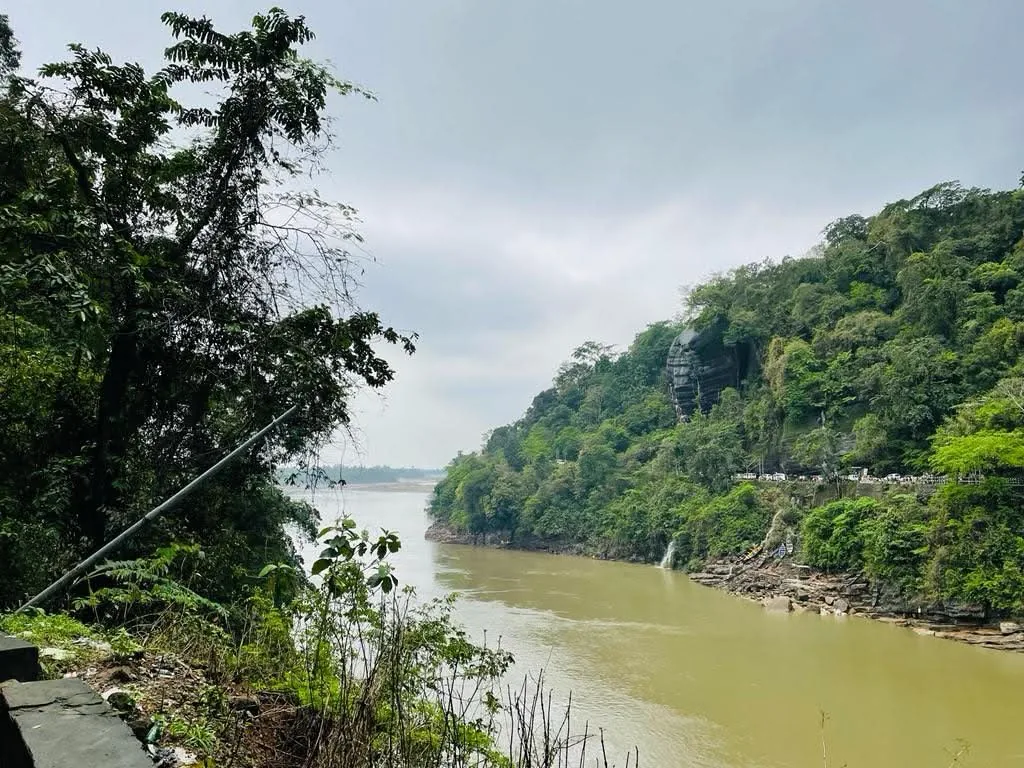
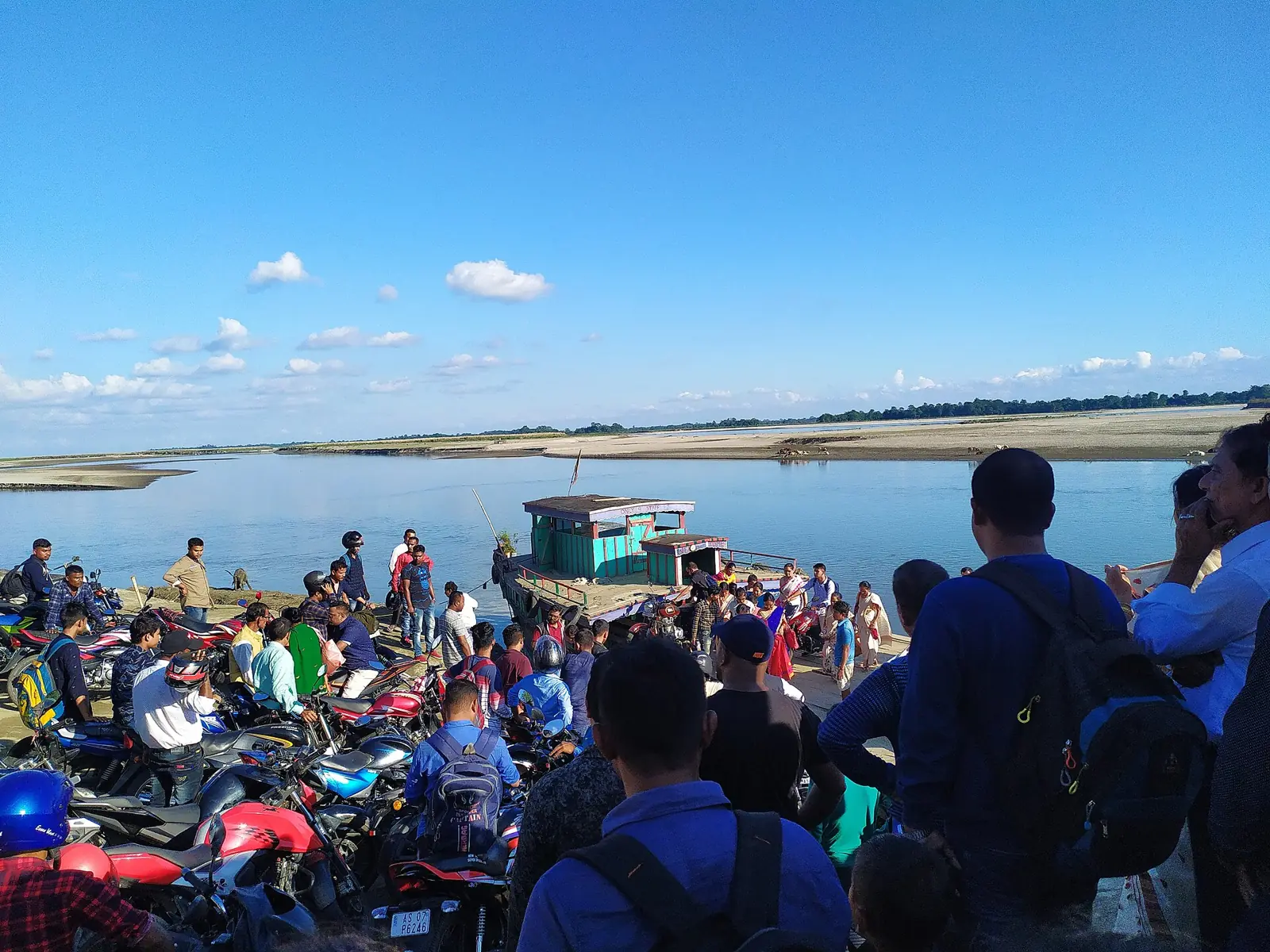
Then the Umngot at Dawki. Several accounts talk about the water: clear enough to see the river bed, turquoise or green depending on the light, and best between October and March. The boat landing lies about three hundred steps below the car park. The family above was steered by their driver to a stand where he earned a commission, so ask for the board marked as the Dawki boating point. A forty-five minute ride and a one hour ride covered nearly the same water. A solo traveller who skipped the boat said he wished he had gone.
Eat from a packed lunch if you can: one writer called a roadside shack lunch the worst meal of her trip, and another found only pork dishes on a Sunday. Skip the Tamabil border crossing unless you are curious, because a 2018 visitor found the road bumpy and dusty with trucks. Then drive back to Shillong for the night.
- Mawlynnong
- Living root bridge
- Dawki
- Umngot river
Day 5 · night in Guwahati
A sacred forest, then the airport
Shillong to Guwahati airport, about 100 km, three to four hours with Umiam traffic
Spend the morning at Mawphlang, a protected forest where a guide leads you through Khasi tradition and old trees. A guided walk is the way to do it, ideally in the morning light. It is a quiet end after a hard week.
Take the highway down after lunch. Allow for traffic at Umiam on the way out, because several writers noted a crush of incoming and outgoing vehicles there. Plan to reach the airport comfortably before a late flight, and if you leave in the early morning, tell us ahead, because the first night would then be in Guwahati rather than Shillong. Your car and driver finish the trip at the airport.
- Mawphlang Sacred Grove
- Umiam Lake
- Guwahati airport
When Meghalaya shows its best
October to March is the dry, walkable window. Winter is busy, so rooms in Sohra fill early and the state board suggests booking ahead. The trade-off is water: after the rains end the flow drops, and one spring visitor called two of the big falls a letdown. The Umngot runs clearest from mid November, which makes that month the happy middle for river and views. During the monsoon the roads slide and cloud swallows the view.

What to carry for steps and showers
Shoes with a real tread matter more than anything else you pack. The tourism board asks winter visitors to carry thermals, gloves and a waterproof jacket for sudden showers, and for the rainy months an umbrella, quick-drying clothes and insect repellent. A small torch is handy after dark.
What would be better left out
A few things disappoint: waterfalls late in the season, the Tamabil border road, and an island stop on the boat ride that costs extra and offers little. Jowai is also left out, because accounts say its sights close early and need more walking than a tired group can manage.
What the price covers
- Car and driver from your pickup to the airport, and again from arrival to departure
- 4 nights in hand-picked stays
- Breakfast and dinner every day
- Local guide at the main sights
- Tolls, parking and fuel
- Flights and trains (we book them with you at the fare of the day)
- Lunches
- Monument tickets, permits and activity fees
- Personal shopping
Questions people ask
How hard is the double decker root bridge trek really?
Harder on the way up than down. Expect somewhere between 3,000 and 3,500 steps each way, with the descent taking a little over two hours and the climb back often closer to three or four.
Is the Dawki water always clear?
No. After rain it turns brown. Walkers and the official site both point to the cooler months, especially mid November into December, and to bright afternoon light.
Can we do Cherrapunji and Dawki in one day?
It can be done, but writers who tried it described a very long drive, close to five hours each way with no stops. Giving it its own day, as this plan does, is gentler.
Is the trip right for a family with a six-year-old?
Yes, with edits. The caves, lakes and the small Mawlynnong bridge work well, while the Nongriat steps are too much for most young children, so a shorter alternative replaces that day.
Where does the trip begin if we live near Agra or Jaipur?
Wherever suits you among Delhi airport, Agra, Mathura or Jaipur. A Laladham car collects you from whichever you choose and drops you at the airport for the flight you buy, and in Guwahati a driver meets you at arrivals.
Do we need permits anywhere in Meghalaya?
Indian visitors do not usually need a special permit for these places, but entry rules for the border area and some villages can change, so confirm close to the dates.
What if the Sohra road is blocked by a landslide?
It happens in the rains. The driver chooses the open road and we reorder days, so the double decker trek can move to a clear morning.
- Cave and root bridge closing days and times; one blogger reported the Nongriat viewpoints shut on some Sundays
- Entry or boat fees at Dawki, and which boarding point is the official one
- Road status on the Sohra and Dawki routes after rain
- Waterfall flow, which depends on how recently the rains ended
 4 days
 4 days
 4 days