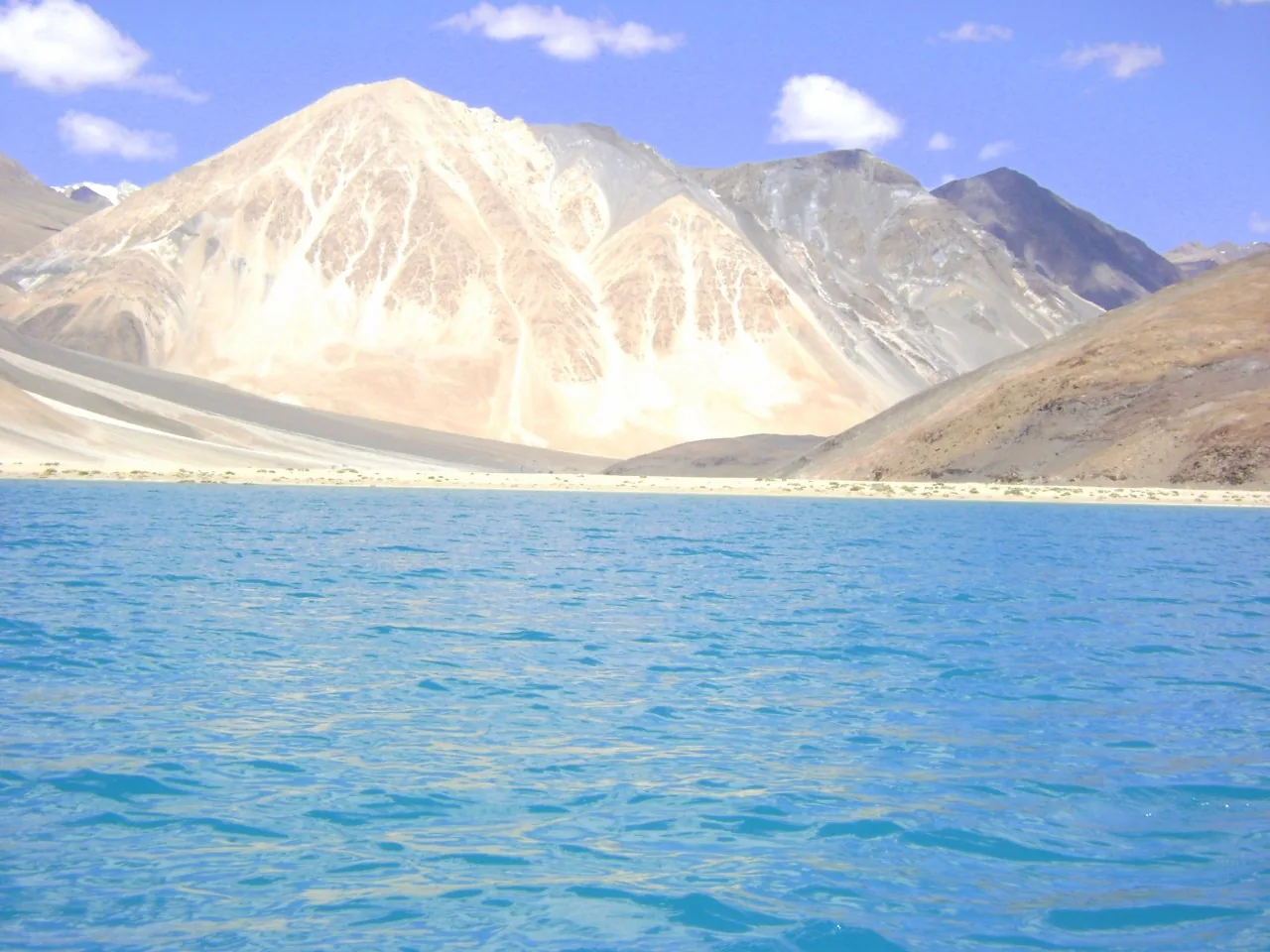
The most repeated sentence in Ladakh trip reports is not about the lake or the passes. It is some version of "I wish I had rested more on the first day." Leh sits at about 3,500 metres, the airport drops you there within an hour of leaving Delhi, and the body takes its time to agree. This plan is built around that sentence: the opening pair of days stay inside Leh, and nothing higher than the town is attempted before two nights at height.
After that the trip opens out. You cross Khardung La into the Nubra valley, where the landscape suddenly turns wide, sandy and strangely green in patches. You spend a night near the Hunder dunes, then take the long road along the Shyok river towards Pangong Tso, sleep at the lake, and return across Chang La. The final day is a quiet one in Leh, which is deliberate: the road days are tiring and those who wrote about them say so.
Seven days is enough for this loop and not enough for Turtuk, Tso Moriri or the Kargil road. It suits couples, friends and families with teenagers who can handle a few long days in a car. It is not a good fit for anyone who cannot spend a night at 4,000 metres or more. You book your own flight into Leh; the first day starts when you land.
From your pickup
Same trip, four starting points. Road times are real driving times; a long drive becomes its own travel day so nobody arrives wrecked.
Day by day
Day 1 · night in Leh
Landing and doing almost nothing
Leh airport to your stay, about 15 minutes
Your driver is at the arrivals gate, and the hotel is a short ride away. Then comes the hard part, which is to stay still. Every account that says anything useful about altitude says the same thing: sleep, drink water, eat light, skip the alcohol and do not stride up any stairs. Ginger tea is the standard welcome in Leh for a reason, and a mild headache and breathlessness on the first evening are common enough that the tourism pages mention them.
If you feel steady after a long rest, walk slowly into the Main Bazaar in the late afternoon. The street is wide because it was built for caravans of horses and camels that came through from Punjab and Central Asia, and women from nearby villages still sit along the edge selling vegetables. Stay for tea, buy nothing, go back early. One writer who took a day-one rest, even while taking altitude tablets, said skipping it can end a trip before it begins.
- Leh Main Bazaar
- Rest day
Shanti Stupa Day 2 · night in Leh
The town itself: palace, fort and the white stupa
Today is gentle sightseeing in the town, nothing higher. Start at Leh Palace, nine storeys built in the 1630s by King Sengge Namgyal. Be prepared: much of the inside is bare or partly collapsed, floors are uneven, and the prayer room is what survives of the grandeur. Bring a torch, and take the open terrace above the entrance for the view over rooftops to the Stok range. The fort on the ridge above, Tsemo, is smaller than it looks from below, and most of the pleasure is in the prayer flags and the wind.
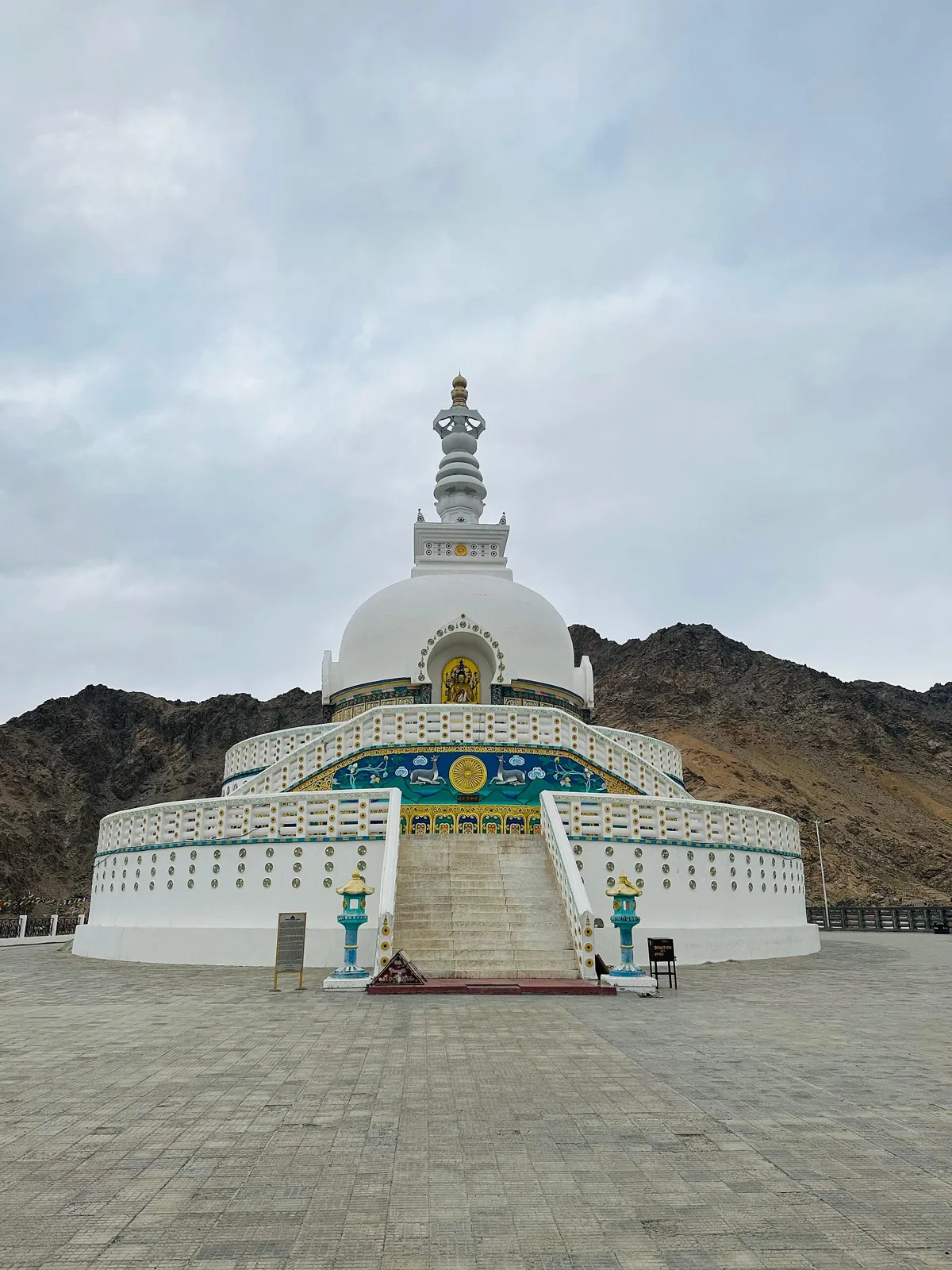
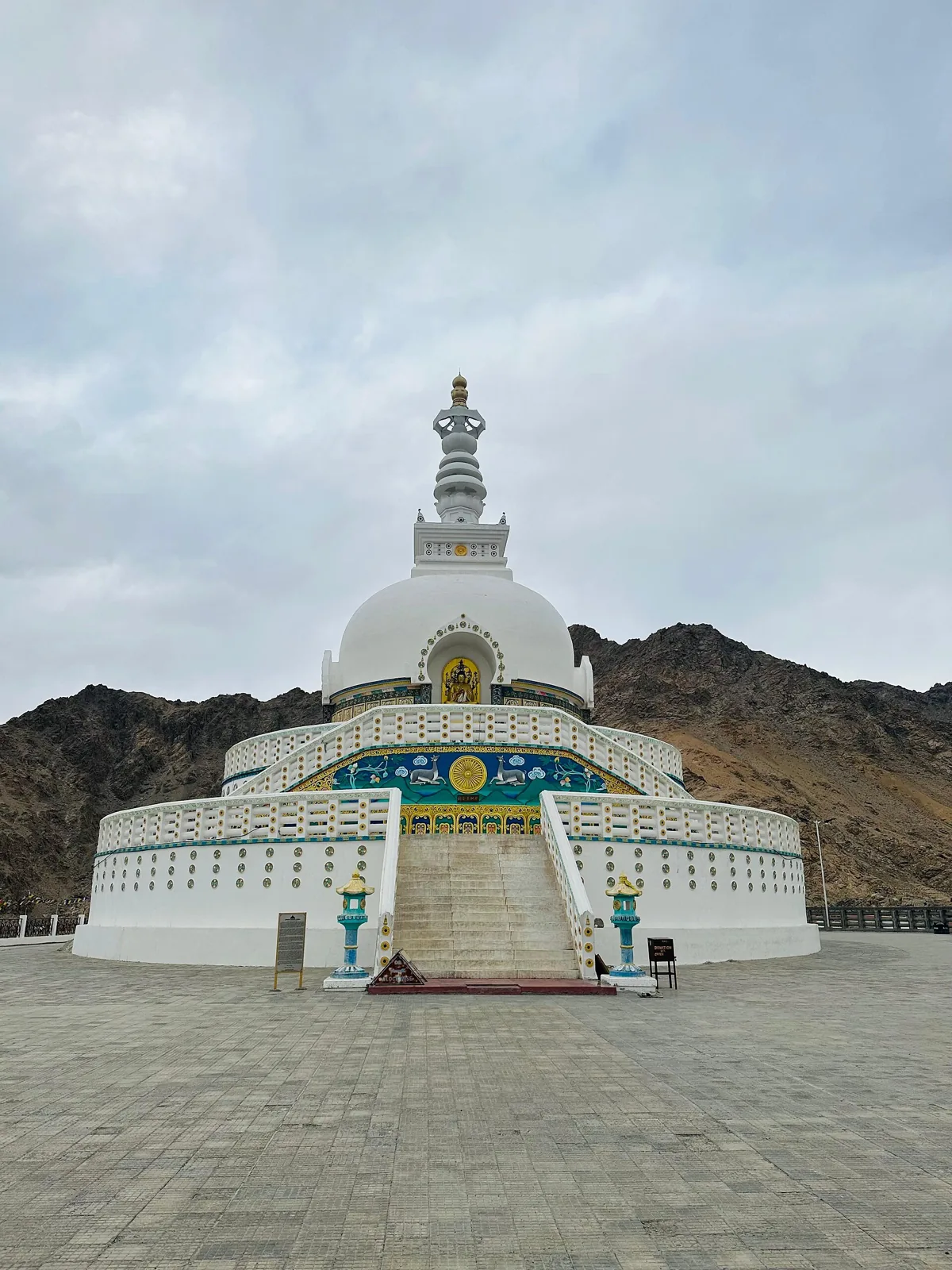
In the afternoon go slowly to Shanti Stupa. It was built in 1991 by a Japanese monk, and it is walked clockwise. People who go near sunset report that the light on the dome and the town below is the reason to climb. Take the steps in small pieces and stop often.
One blogger who packed Leh sights into a single day said afterwards she would split them over two. You are doing exactly that, and tomorrow's outing is the other half.
- Leh Palace
- Tsemo Fort
- Shanti Stupa
- Leh Bazaar
Day 3 · night in Leh
Monasteries in the Indus valley
Leh to Thiksey about 19 km; Hemis about 45 km
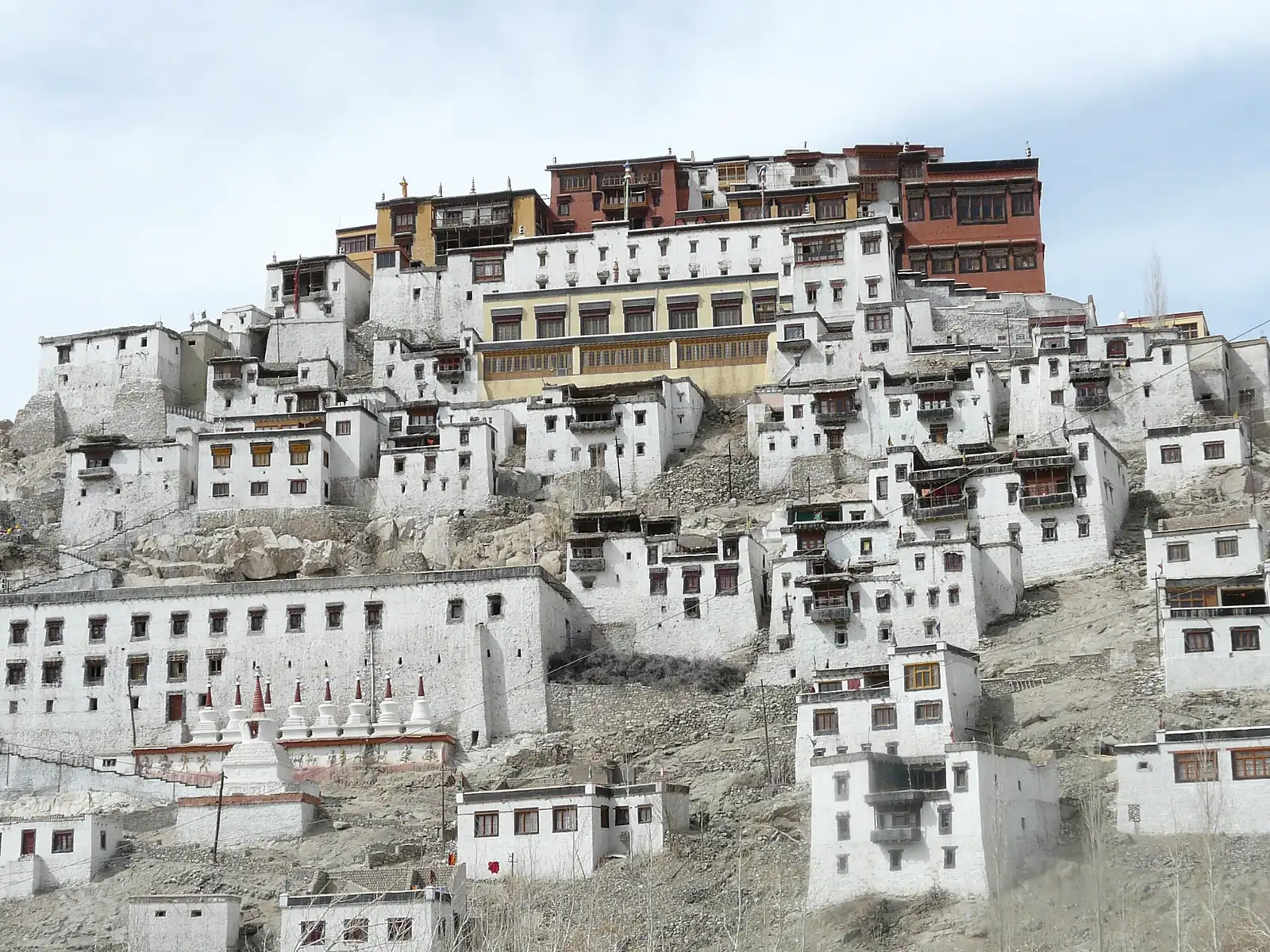
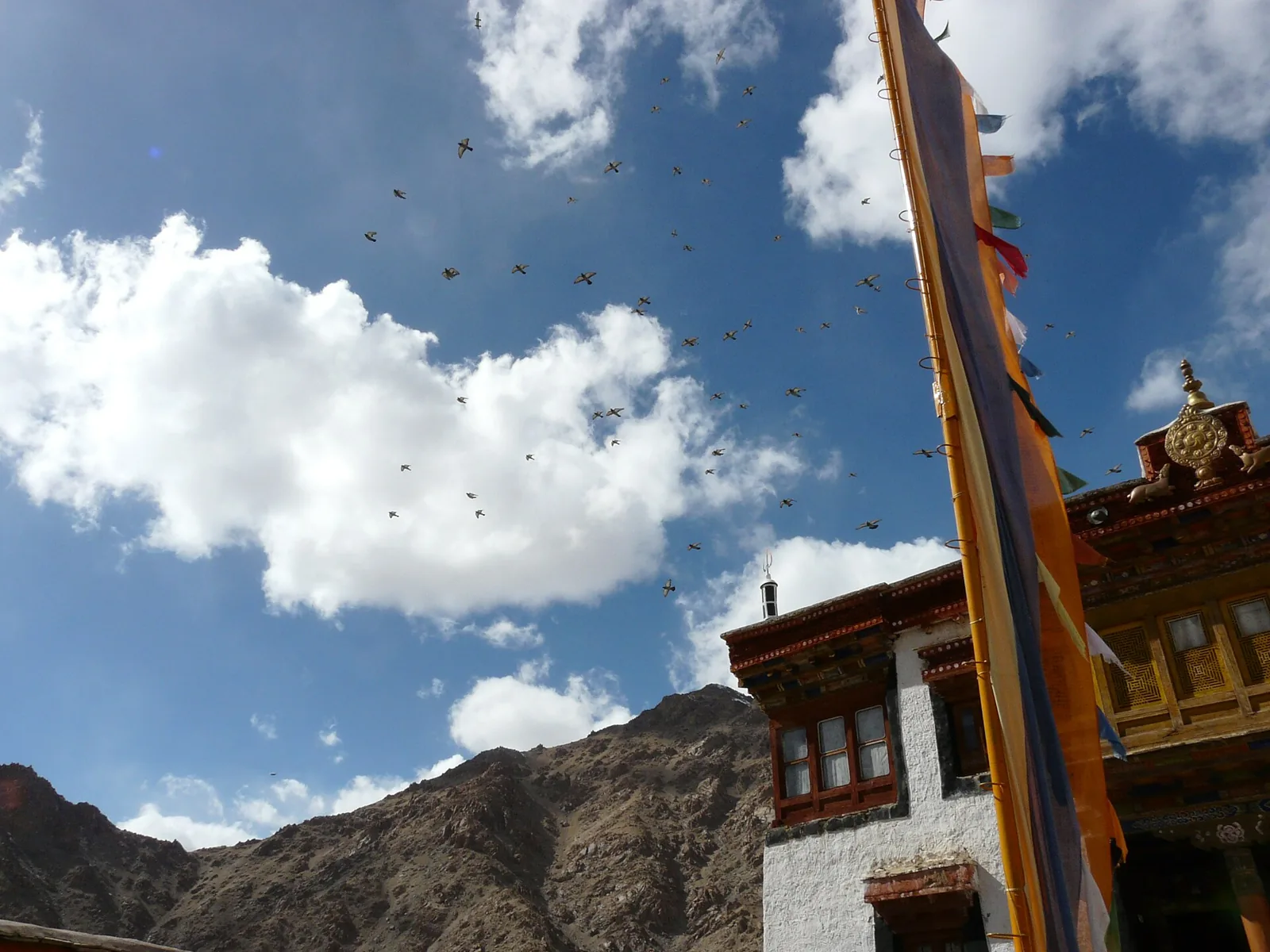
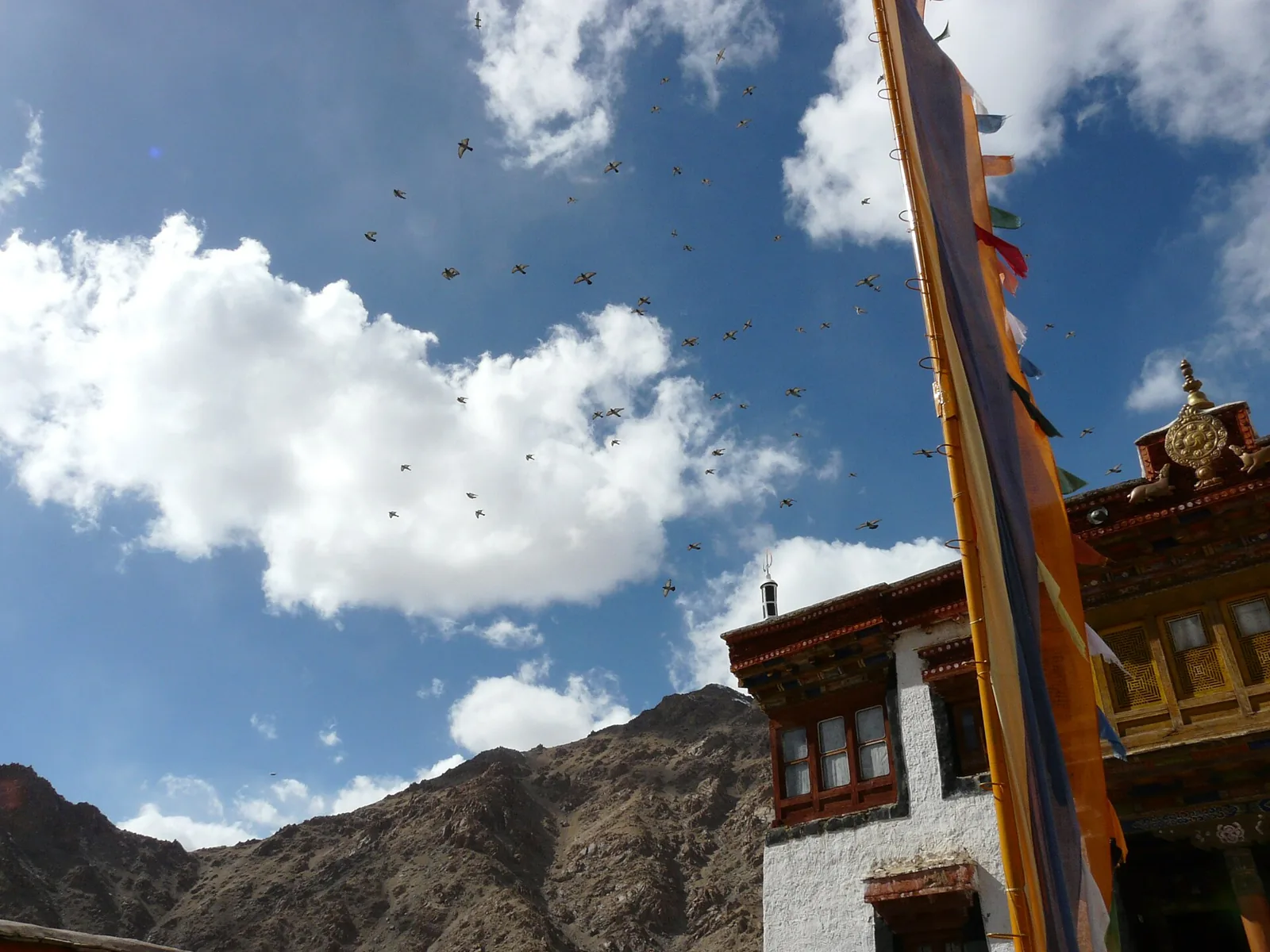
Start early for Thiksey, a whitewashed monastery stacked up a hillside. Morning prayers are the draw: a traveller who went at sunrise in October wrote about chanting and butter tea with the monks as the best hour of her Ladakh week. Dress warm, because it is cold at that hour whatever the month, and be quiet at the back of the hall.
From there the Indus valley road carries you to Hemis, the largest and richest monastery in this part of Ladakh, founded in the 1630s. Its big festival falls in summer, and in the weeks around it the courtyard fills. Off season, the same traveller found Hemis almost empty. You can add Shey and Stok palace on the way back if the afternoon holds.
Altitude matters less today because the valley floor is close to Leh's own level, but keep drinking water. Tomorrow is the first real climb and you want a clear head.
- Thiksey Monastery
- Hemis Monastery
- Shey
- Stok Palace
Day 4 · night in Hunder
Over Khardung La into Nubra
Leh to Hunder via Khardung La, about 160 km to Diskit and a little further to Hunder, a full day
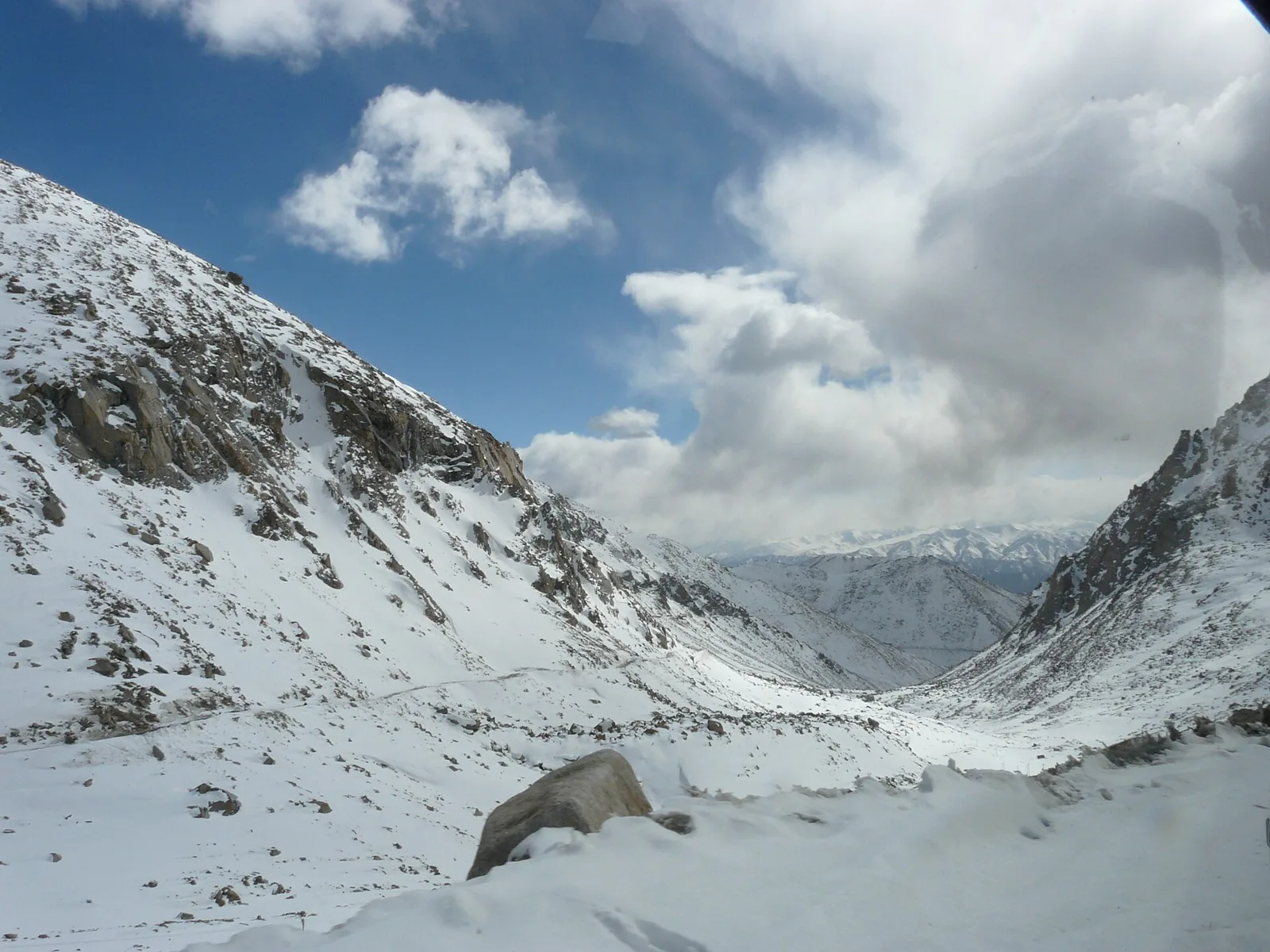
Leave early. A trip report from a group that left Leh around half past eight found a signboard saying the road would only stay open until mid morning that day for construction, so the driver's judgement on timing counts. Expect snow patches on the climb even in July, and the pass sits at roughly 5,359 metres. A sign there asks you not to stay beyond twenty minutes. Two different writers say they stayed about that long or less, because of the cold, the thin air and the queue at the toilet block.
Descent into Nubra opens onto a wide valley where the Shyok river braids across pale sand. Diskit monastery has a Maitreya statue, thirty two metres tall, looking over the valley, and the monastery keeps a lunch hour shut. Hunder is about fifteen minutes further, and the dunes there are the camel ride people expect: a short ride on two humped camels. Reports describe a small entry and a ticket that can sell out late in the day, so go before the evening rush.
Hotels in Hunder range from basic to properly heated. At least one visitor in October was glad of central heating. There is little mobile signal here, so tell people at home.
- Khardung La
- Diskit Monastery
- Maitreya statue
- Hunder dunes
Day 5 · night in Pangong
Along the Shyok to Pangong Tso
Hunder to Pangong via the Shyok valley, roughly 190 km, seven hours or more
This is the hardest road of the trip, and everyone who has done it says so. You follow the Shyok river on a surface that alternates between good tarmac, boulders and shallow stream crossings, and the early start matters because snowmelt can swell the streams by afternoon. One traveller's group crossed the worst water early, with a driver who knew where to push. Do not plan an extra stop.
Lunch is usually in Tangtse around one. The food there is plain, and the account we read describes instant noodles being the first offer, with eggs on request. Carry nuts and biscuits in the car for the long gaps.
The lake arrives suddenly: a long strip of impossible blue behind the village of Spangmik, at over 4,200 metres. Camps beside the water are basic by every report. Bucket hot water, generator electricity only for a few hours in the evening, scarce drinking water and in some seasons no heater. Dress for it, eat early and be in your sleeping bag by nine. The cold at night is real.
- Shyok valley
- Tangtse
- Spangmik
- Pangong Tso
Day 6 · night in Leh
Sunrise at the lake, back over Chang La
Pangong to Leh via Chang La, about 5 to 6 hours
Get up for first light. Visitors who stayed overnight say the early hour belongs to them: the water goes through pink and silver before any day trippers arrive, and the tour buses reach the shore only late in the morning. Walk along the shingle, then have a quick breakfast. Bread sometimes runs out early at camps, so ask the evening before.
The road back climbs to Chang La, a snowy high pass that in the shoulder months can slow everything for road works or ice. You descend through green stretches where streams feed the grass and come out at Leh by the afternoon. Hot water at the hotel will feel like a luxury.
Eat a proper dinner of thukpa or momos tonight and go to bed early again. Two long road days in a row are exhausting, and tomorrow is meant to be easy.
- Pangong sunrise
- Chang La
- Leh
Day 7 · night in Leh
A soft last day in Leh
Nothing is scheduled before late morning. If you fly out today, the flights from Leh are mostly morning ones, so the car leaves for the runway early. If you fly tomorrow, you have a free day for the market, the cafés and whichever monastery stop you skipped.
People who bought Ladakhi things in Leh say the best targets are pashmina, prayer flags and apricot products, and that a second walk down the bazaar after the road days is when prices feel easy. Take your time and carry cash, since small shops and remote stops do not always take cards.
Leave the afternoon for Leh's tea houses or a last look at the Palace from the lane below.
- Leh Bazaar
- Free time
- Airport
Why two quiet days come first
Ladakh's own tourism advisory asks visitors to rest a full forty eight hours in Leh before going higher, and the order of this trip follows it, though the page itself could not be reopened today so check it before you fly. Climbing high and sleeping lower, as the Khardung La to Nubra leg does, is something other travellers say helps. Going straight from the airport to a high camp is the plan most likely to end in a hospital visit.
- Drink water through the day, not in a rush at night
- Skip alcohol and smoking for the first two days
- Ask your hotel about oxygen support before you need it
- Tell the driver at once about a headache that will not clear
Permits and paper
Citizens of India need an Inner Line Permit to enter Nubra and Pangong, and the application can be done online. One traveller advises getting a single permit that lists every place, and carrying several printed copies, because each checkpoint usually keeps one and remote posts may not accept a phone screen. Foreign visitors have different rules, so check them before booking.
What this trip leaves out
Turtuk, with its Balti houses and apricot orchards, needs another day in Nubra, and the people who skipped it say it is more about atmosphere than sights. Tso Moriri and the Srinagar and Manali roads are also not in the plan. A common regret in trip reports is trying to squeeze these in and spending the week in the back seat.
What the price covers
- Car and driver from your pickup to the airport, and again from arrival to departure
- 6 nights in hand-picked stays
- Breakfast and dinner every day
- Local guide at the main sights
- Tolls, parking and fuel
- Flights and trains (we book them with you at the fare of the day)
- Lunches
- Monument tickets, permits and activity fees
- Personal shopping
Questions people ask
How do I avoid altitude sickness in Ladakh?
Rest on the day you land, drink a lot of water, eat light and skip alcohol. Hold off on anything high until two nights in Leh are behind you. Going over Khardung La and sleeping lower in Nubra helps the body adjust. Carry any medicine your own doctor recommends, and say so if headache, nausea or dizziness will not pass.
Can we start this trip from Agra or Jaipur?
Yes. Start wherever suits you among four meeting points: Delhi airport, Agra, Mathura or Jaipur. Laladham drives you to your departure airport, and in Leh a different driver is waiting at arrivals who stays with you for the whole mountain section.
Is Pangong worth the long drive?
Most writers say yes, but only as an overnight, because the road in and out eats the day. Visitors who stayed say the sunrise hour, before the buses arrive, is the real payoff. Camps are plain, so expect comfort to be low and cold to be high.
Is it fine for parents in their sixties?
It can be, with a doctor's nod and the two rest days in the plan. Khardung La is short stop only, and Pangong at 4,200 metres is the hardest night. If either parent has heart or lung trouble, ask the doctor about it before booking.
Do I need a permit and when should I get it?
The paperwork is the same one described under permits above: apply online ahead of time, print copies, and keep photo ID in your pocket at checkposts. Your hotel in Leh can help confirm that yours lists every place you will pass.
When is the road open?
The high passes are generally open from late spring to autumn, while the two long roads in from the south shut for winter. Snowfall on the passes can arrive early or linger, so keep a spare half day in your own plans around the dates.
- Inner Line Permit rules and portal for Nubra and Pangong, which differ for Indian and foreign visitors
- Khardung La and Chang La road status, and the Nubra road construction hours that one report mentions
- Leh Palace and Shanti Stupa timings, which sources disagree on
- Diskit monastery hours: Outlook Traveller lists 7 to 18 with a break at 13:00
 4 days
 3 days
 3 days