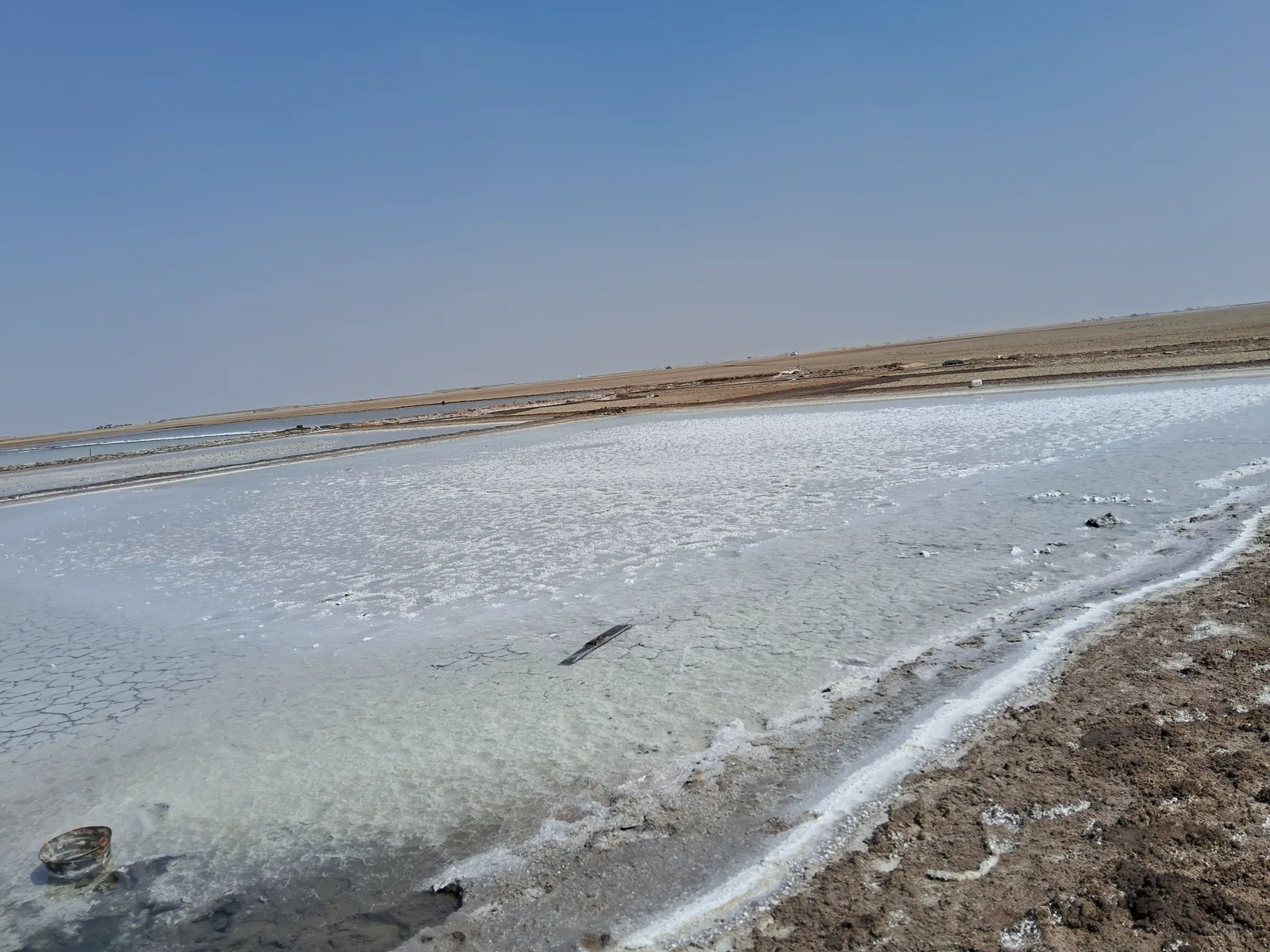
People who come back from Kutch tend to describe it in two sentences. The first is about the white: a flat, glaring salt plain that looks like nothing else in India when the light goes pink. The second is a warning that the white is a long way from anywhere, the roads are straight and empty, and most of the trip is spent in a car. Both are fair, and this plan is built around them.
The winter tent city at Dhordo is open only from the start of November to early March, and that is the season this itinerary is written for. Outside it the Rann is often a marsh or a flooded flat. One rider who went in the heat of March found the salt only a thin crust over mud, and a driving couple who came off season reported a lake where they expected a desert. So the shape here is deliberate: two nights beside the salt, a night in Bhuj at the start and another near the end, and the craft villages tucked into the road between.
It suits couples, families with teenagers, and parents who like landscape and handwork more than hiking. It does not suit anyone who wants beaches and nightlife, or anyone who hates early starts. You fly into Bhuj yourself, the car and driver meet you there, and they stay for the whole trip. Flights are not included.
From your pickup
Same trip, four starting points. Road times are real driving times; a long drive becomes its own travel day so nobody arrives wrecked.
Day by day
Day 1 · night in Bhuj
Landing in Bhuj and a slow first afternoon
Bhuj airport to the old town, a few kilometres, about fifteen minutes
The airport is close to town, so you are checked in before the day has had time to wear you down. Eat something simple. One group who drove to Kutch mention khulcha paratha with lassi as the dish worth asking for, and nobody regrets starting gently, because tomorrow is a long drive.
In the afternoon the old town is the place to be. Aina Mahal, the eighteenth century mirror palace, and the Gothic-looking Prag Mahal next door are walkable from each other, and both close for a break around midday, so aim for the afternoon opening. Inside Aina Mahal you will see mirrored walls, blue and white tiles and a hall with a water channel built to keep the room cool. The 2001 earthquake damaged much of this part of town, and the museum is honest about it.
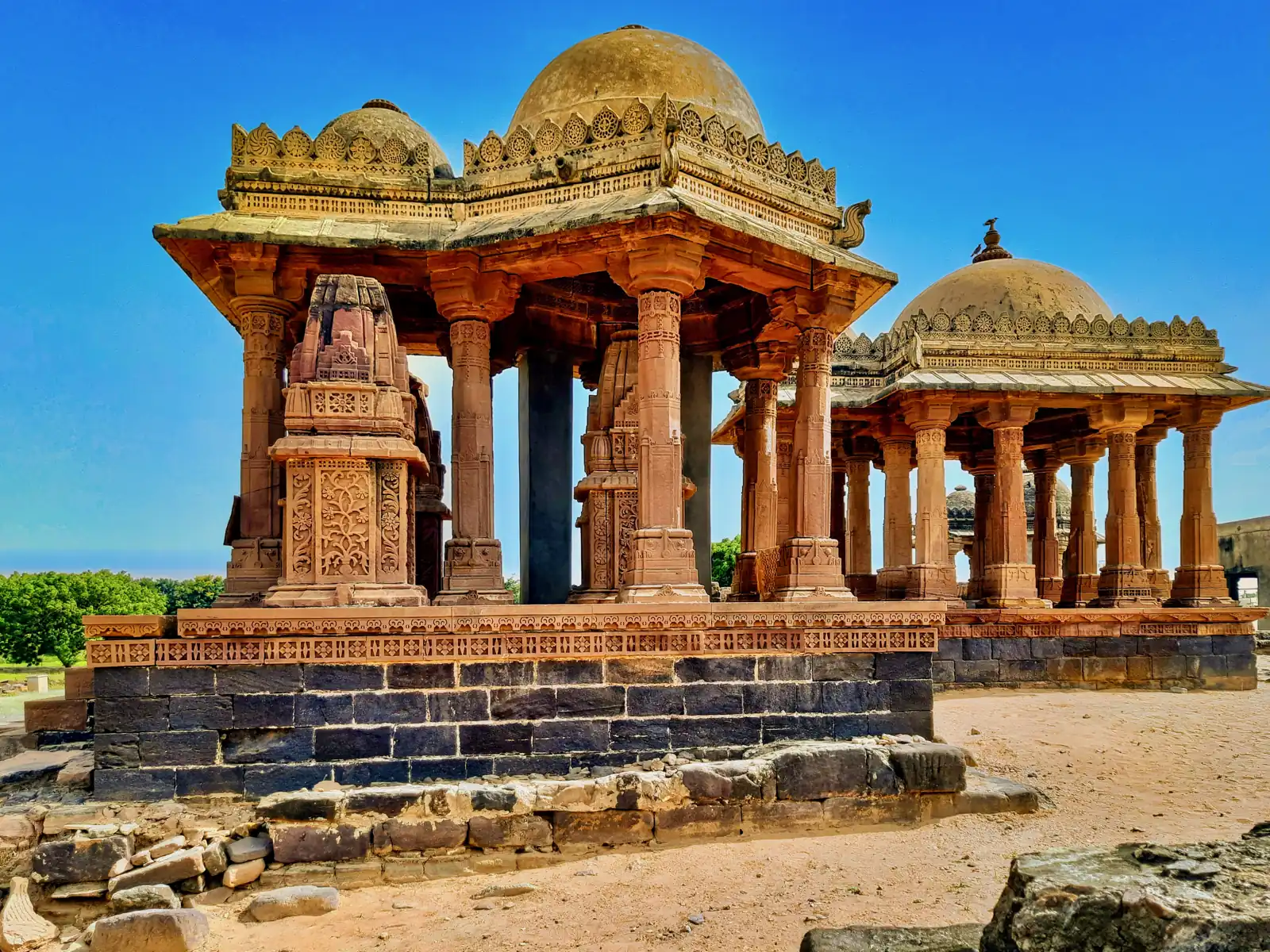
Leave the last hour of light for the royal cenotaphs. They were hit hard by the quake, they are quiet, and they are a good sunset spot. Tripods are not allowed, so bring a phone and a steady hand. Then bed early: the next morning starts before the traffic.
- Aina Mahal
- Prag Mahal
- Royal cenotaphs
- Old town Bhuj

Day 2 · night in Dhordo
Craft villages on the way to the salt
Bhuj to Dhordo, roughly 85 km, two to three hours with the village stops
Leave Bhuj by half past seven. One road-tripper who did the same run described the stretch north of Bhuj as two lanes and bumpy, never faster than about eighty, and that is without stopping. The first halt is Ajrakhpur, roughly ten kilometres out, where the cloth is block printed and dyed in natural colours. That village was rebuilt after the quake, and the same traveller lost an hour and a half in a single workshop watching the printing, so decide in advance how long you want.
Then the road to Hodka and Nirona. Nirona is the village that tourism guides single out if you only have time for one: lacquer work, copper bells and Rogan painting, all within a short walk. Artisans are not always working when you arrive, so do not expect every process on demand. If you buy, buy where the maker is sitting, and avoid the factory imitations sold at roadside stalls.
You reach Dhordo in the afternoon, check in and rest. The tent city is about three hours from Bhuj by one official count and just under two by another, which is a reminder that the weather, the checkpoints and your stops decide it. The first look at the white flat is at sunset, and the guides agree on one thing: it gets crowded. Walk well past the viewpoint onto the flat and the crowd thins out. The salt is hardly ten minutes from the tents, per Incredible India.
- Ajrakhpur
- Hodka
- Nirona
- Dhordo tent city
- White Rann at sunset
Day 3 · night in Dhordo
Sunrise on the white, then Kala Dungar
Dhordo to the White Rann viewpoint, then out to Kala Dungar; sources put it anywhere from 25 to 70 km, on a long straight road
Be up in the dark. The white looks most like itself in the early hours, and a rider who came in the late afternoon wrote that the salt would have looked whiter earlier in the day. At first light it is a pale, quiet flat with a crust thinner than the photographs suggest. You need the permit for the viewpoint, and Outlook Traveller advises sorting it out in advance.
Come back for breakfast and a long rest, because the afternoon is another drive. Kala Dungar is the highest point in Kutch, about 460 metres, with a Dattatreya temple at the top and a view over the Great Rann; the temple is known for feeding jackals around noon. The honest part: more than one traveller reached the viewpoint to find the Rann hidden under a thick haze. Go after lunch, plan to be there before the light goes, and if the haze wins, the straight, nearly empty road back is a consolation of its own.
On the full moon nights listed in the notes below, the camp runs late and the white glows. If your trip falls close to one, that evening is the one to spend at the viewpoint rather than in the camp. Wear more than you think: the cold arrives hard after sunset.
- White Rann at sunrise
- Kala Dungar
- Dattatreya temple
- Moonlit salt flat

Day 4 · night in Bhuj
Back through Khavda to Bhuj
Dhordo back to Bhuj, same road, two hours with stops
A late breakfast and a slower morning. If you did not walk to the edge of the camp for the horizon yesterday, do it now, when the day trippers have gone to bed. Then drive south, and make the village stops you skipped coming north.
Craft shopping works better on the way back than on the way out. You have seen what is genuine, you know what you like, and you are not carrying it through the tent city. People who write about this say the small things are what they actually use afterwards: a block-printed cloth, a bell, a small painted panel.
You reach Bhuj in the afternoon. Use it for whatever you missed on day one. The Kutch Museum is in town, and the Ramkund stepwell, listed as an offbeat option, is a quiet half hour. Keep the rest loose, since the sunrise start leaves most people tired.
- Khavda
- Kutch Museum
- Hamirsar Lake
- Ramkund stepwell
Day 5 · night in Bhuj
Mandvi by the sea
Bhuj to Mandvi, about an hour
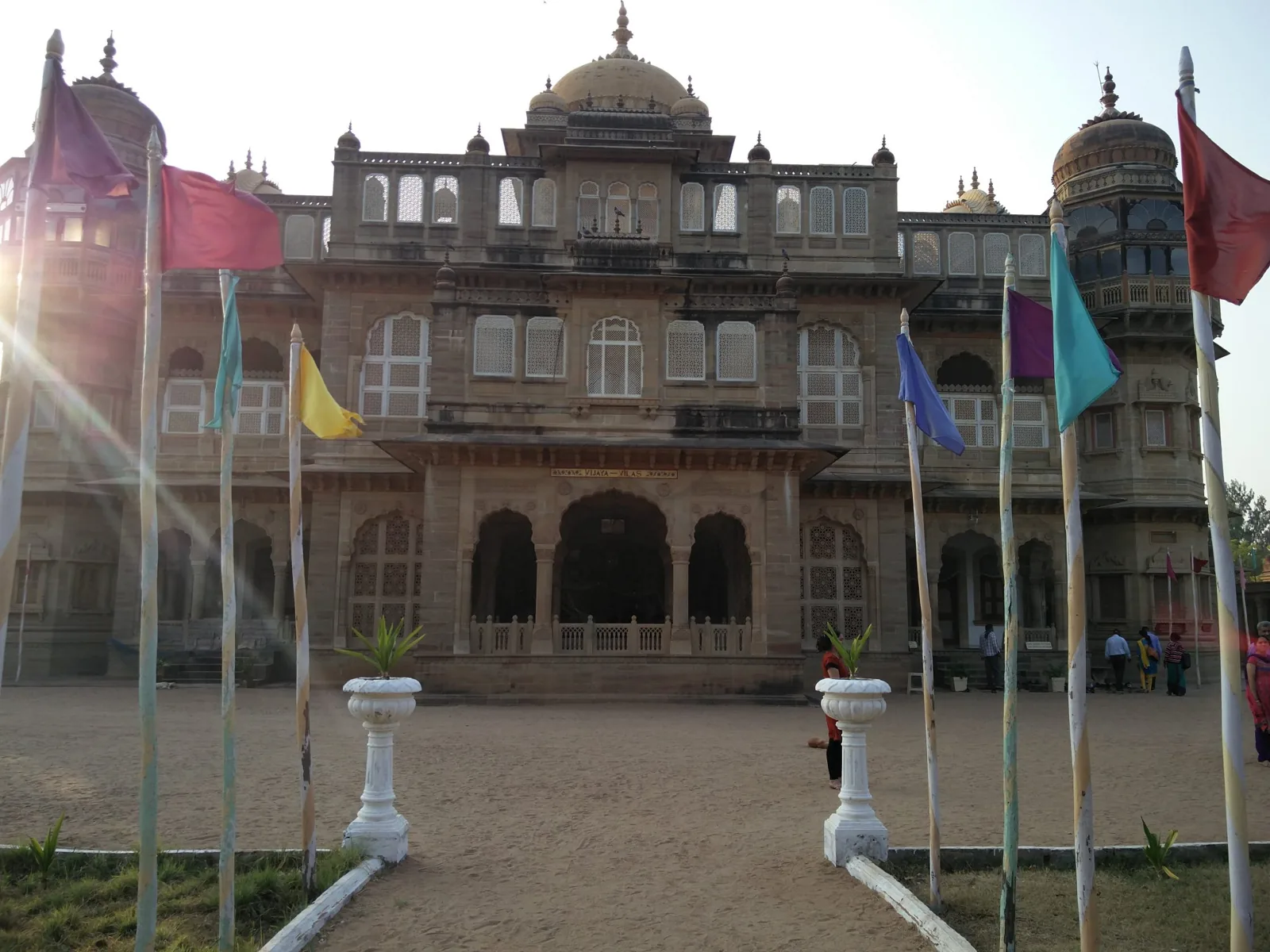
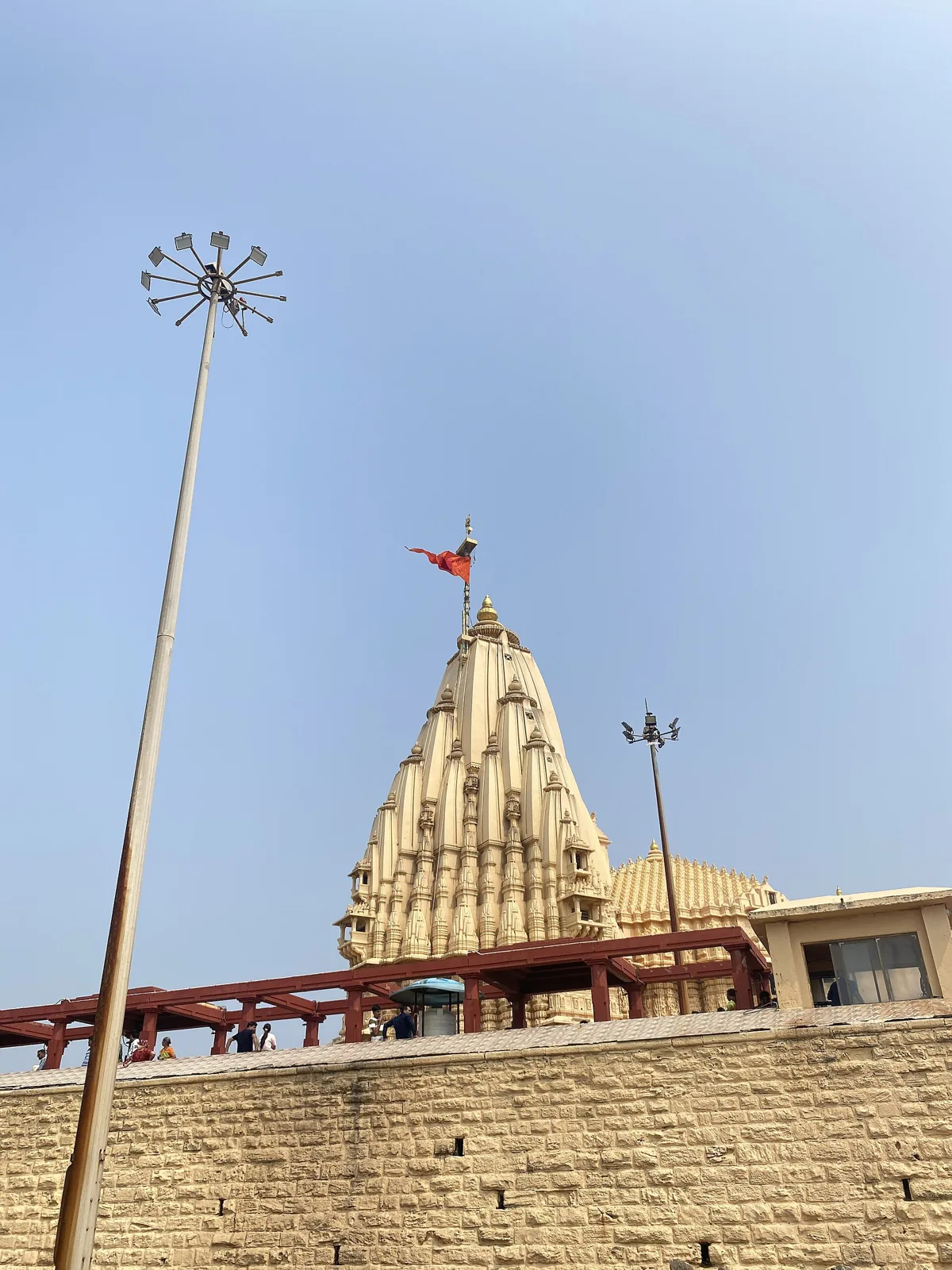
The last day is about the coast. Mandvi is about an hour from Bhuj, and its Vijay Vilas Palace faces the Arabian Sea, an Arabian Sea palace that Incredible India says appeared in Bollywood films such as Lagaan. One traveller found the beach extremely crowded, and another friend group who went on weekdays reported empty roads and few visitors at their stops, so a weekday helps.
Mandvi is also where people eat dabeli and drink goti soda, and where one group of friends bought bandhani as gifts. After lunch there is time to walk the town, then the drive back.
If your flight is late you can be back in Bhuj with room to spare. If it is early, say so when you book, and we will fold this day into the one before. Either way the car takes you to the airport.
- Mandvi
- Vijay Vilas Palace
- Mandvi beach
When the white is worth the drive
The tent city runs from 1 November 2026 to 7 March 2027 according to the state tourism pages, and the best light for the white is at sunrise, sunset and on full moon nights. The press guide lists 23 to 25 November, 22 to 24 December, 21 to 23 January and 19 to 21 February. Dark moon dates are better for stars. Diwali week, Christmas and New Year are the crowded stretches, and the viewpoint then feels like a fair.
Outside the season, think twice. Off season accounts describe marsh, flooding, haze and a salt layer that is thin and muddy underneath.

What people get wrong
Three mistakes turn up in trip reports. The first is leaving Bhuj late, which means arriving at the white after the colour has gone: one rider missed the sunset by minutes. The second is expecting to drive on the salt; you cannot, and the crust is fragile. The third is treating the stops on the way as shopping. Rushed visits to craft villages leave people with a bag of cloth they did not choose.
Food is a smaller worry but a real one. Gujarati meals in the camp are vegetarian and, by one traveller's account, spicy and not cheap. Carry fruit and a few plain snacks, and tell us if anyone has a sensitive stomach.
For older parents
Nothing in the plan is a climb. The sunrise on the salt is on flat ground and Kala Dungar is reached by road. The strain is the length of the drives and the cold, so pack a proper layer and pick sunset over sunrise for them, whichever day suits.
What the price covers
- Car and driver from your pickup to the airport, and again from arrival to departure
- 4 nights in hand-picked stays
- Breakfast and dinner every day
- Local guide at the main sights
- Tolls, parking and fuel
- Flights and trains (we book them with you at the fare of the day)
- Lunches
- Monument tickets, permits and activity fees
- Personal shopping
Questions people ask
Do I need a permit for the White Rann?
Yes, for the Dhordo viewing area the press guide says visitors must have it before the visit. Rules and the way to apply change by season, so check the latest on the Rann Utsav booking page. We tell you what to carry on the morning.
Can I do this from Delhi, Agra, Mathura or Jaipur?
Kutch is far from all of them, so the realistic way is to fly to Bhuj and join the trip there. Our driver meets you at the airport. The plan on this page starts at that landing.
How many nights near the Rann are enough?
The tourism press says two to three nights is the practical minimum. Here it is two, so there is a sunset, a sunrise and a Kala Dungar afternoon without rushing.
Is it too cold in winter?
Days are mild and sunny, nights are properly cold. Bring a jacket, a scarf and closed shoes. The glare is strong, so sunglasses matter as much as a sweater.
What if the haze hides the view at Kala Dungar?
It happens. Travellers have reported reaching the top and seeing only a pale blur. The plan is to go after lunch, stay for the light, and treat the long straight road as part of the day.
Is the tent city worth staying in or should we sleep in Bhuj?
Sleeping near the salt is what makes sunrise possible, since a drive from Bhuj eats the best hour. That is why two nights are in Dhordo.
Which month is best?
December and January have the clearest light and also the biggest crowds, with the moon dates drawing the most. November and February are quieter.
- Rann Utsav dates: sources give 1 Nov 2026 to 7 Mar 2027, one blog gave 5 Nov to 4 Mar
- White Rann permit: whether and where it is issued, and the entry fee, changes by season
- Aina Mahal and Prag Mahal hours (9 to 12, 3 to 6 per Incredible India) and weekly closing day, sources disagree
- Kala Dungar access beyond the army checkpost is restricted and times vary
 4 days
 5 days
 4 days