Krishna · पर्व और त्योहार
नरक चतुर्दशी / रूप चौदस
Narak Chaturdashi (Roop Chaudas, Chhoti Diwali)
The pre-dawn oil bath with ubtan, a prayer to Krishna and an evening lamp for Yama, done the day before the Diwali Amavasya and called chhoti Diwali.
On Chaturdashi of the dark fortnight of Kartik, the day before Diwali Lakshmi puja. The abhyang snan is taken in the window from moonrise to sunrise, as long as Chaturdashi is in force. The evening lamps are lit in pradosh kaal. The calendar day can differ from the day shown on a wall calendar, so check a panchang (drikpanchang.com) for your city.
Everyone in the family, including children and the elderly. Women often take extra care with ubtan, which is why the day is also called Roop Chaudas.
about 1 hour in the morning plus 15 minutes in the evening
सामग्री Samagri checklist
For the abhyang snan
For the morning prayer
For the evening lamp
तैयारी Before you begin
- Wake before sunrise. This is the main point of the day.
- Mix the ubtan the night before so that it is ready in the morning.
- Keep the oil slightly warm.
- Clean the south side of the house, because the Yama lamp goes there in the evening.
- Wear clean clothes after the bath and keep the day light and cheerful.
पूजा विधि Step by step
ब्रह्म मुहूर्त में उठना Wake before sunrise
about 5 minutes
Get up while the stars or the moon are still in the sky. The snan belongs in the dark hours, so do not wait for daylight.
तेल मालिश Applying oil
about 10 minutes
Rub sesame oil over the whole body, starting from the head. Sources also accept another suitable oil according to family custom. Let it sit for a few minutes.
उबटन Ubtan
about 10 minutes
Scrub gently with the paste of besan and haldi. Many homes make it with oil so the skin does not dry. Wash it off with warm water.
अपामार्ग Apamarga sprig
about 2 minutes
Where your family follows it, move a sprig of apamarga around the head and body before or during the bath, and put it aside afterwards. One panchang source says a mantra is said at this point, but the wording was not confirmed, so say a short prayer in your own words that the sprig takes away your faults.
स्नान The bath
about 10 minutes
Pour water over yourself with the thought that the bath is for health and cleanliness. The tradition is that this snan keeps a person from the fear of Naraka.
श्रीकृष्ण स्मरण Prayer to Krishna
about 10 minutes
Put on the clean clothes, light a lamp and incense at the home shrine, and offer a flower and a sweet. Remember Krishna who freed the 16,100 captive women and killed Narakasura after first killing Mura. Pray for peace in the family.
घर की सफाई और सजावट Cleaning and decorating
about 30 minutes
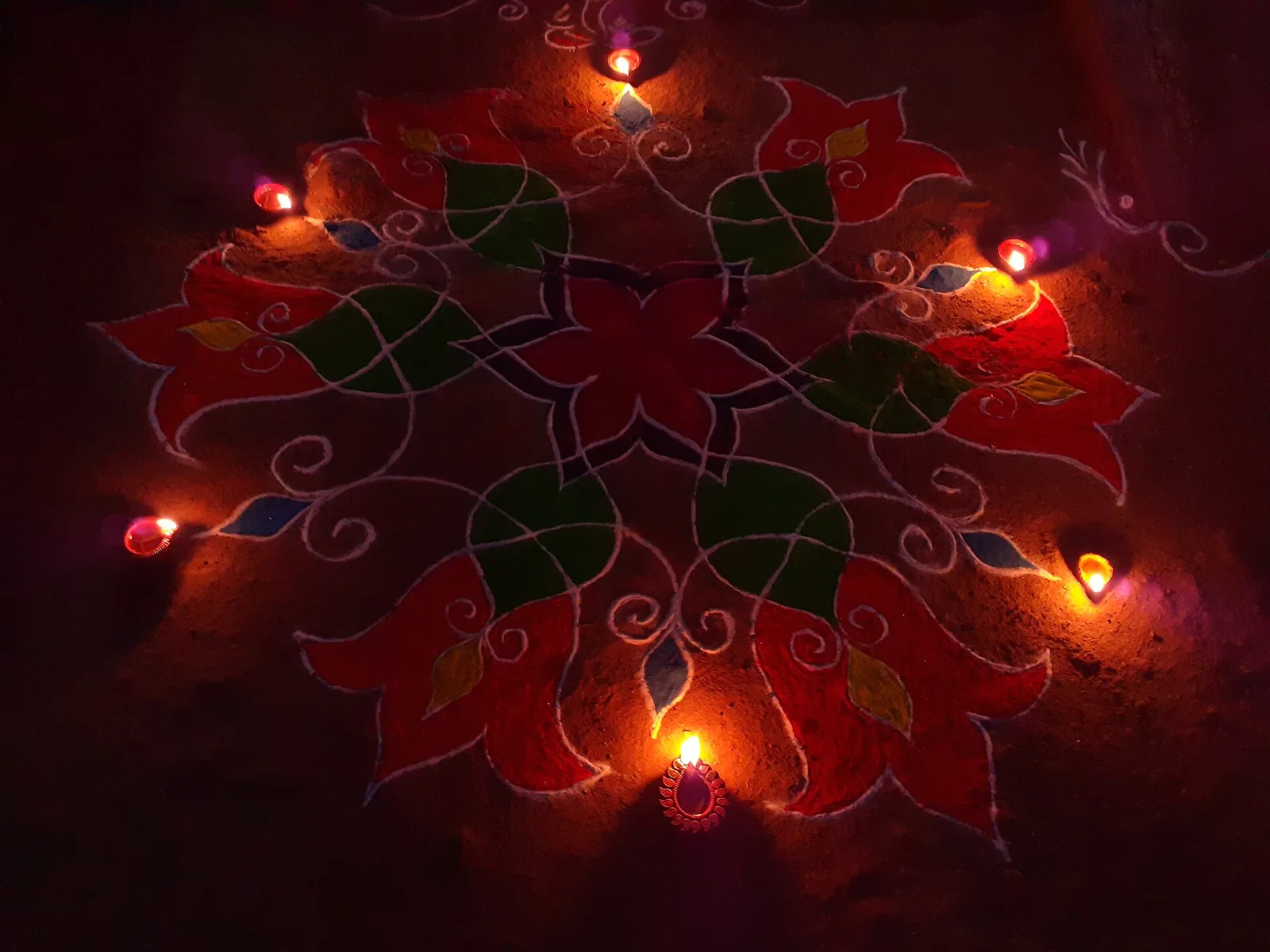
Finish what remains of the cleaning, put up the toran, and refresh the rangoli at the door. This is the day when the festival lights begin to come on in most homes.
यम दीपक Lamp for Yama
about 10 minutes
At pradosh, fill the chaumukhi diya with mustard oil and place four wicks facing the four directions. Carry it around the house once with a prayer for health and safety, then set it facing south, outside or at the southern part of the house. Light the other diyas in the courtyard in the usual way. This is a prayer that Yama keep untimely fear away from the family.
दीपदान Deepdan around the home
about 15 minutes
Light lamps at the door, the tulsi, the kitchen, the courtyard and in a temple if one is near. The festival is also called chhoti Diwali because the lamps of this night look forward to Diwali.
प्रसाद Prasad and food
about 10 minutes
Share the sweet offered in the morning prayer with the family and the neighbours. Keep the evening meal light, because Diwali puja comes the next day.
आरती और विसर्जन Aarti and closing
No fixed aarti. A short Krishna aarti in the morning is enough, and any Krishna bhajan the family knows can be sung.
Nothing is immersed. The used apamarga sprig is put out of the house or in running water. The Yama lamp burns out on its own and is cleared in the morning.
क्या करें · Do
- Finish the bath before the sun is up.
- Face south when you set the lamp.
- Keep the southern corner tidy.
- Light lamps in the courtyard and near the door.
क्या न करें · Avoid
- Do not skip the morning bath for a late sleep, since the day is named after it.
- Do not leave the lamp near anything that can burn.
- Do not place the Yama diya anywhere but the south.
परंपराएँ Variations and Braj
- North India: Roop Chaudas and Chhoti Diwali, with ubtan and the evening Yama lamp.
- Many regions treat this early oil bath as the main Diwali morning bath. Ask your own family about the meal and sweets that follow it.
- Gujarat and some other regions observe Kali Chaudas on the night of this tithi. Panchang sources note that it and Narak Chaturdashi can land on different days when the tithi starts or ends at odd hours.
- Your family or priest may add customs not listed here. Follow them.
In Braj the lamps of chhoti Diwali sit along the Yamuna ghats, and Krishna temples decorate for the coming days of Diwali, Govardhan puja and Bhai Dooj. A family from Braj usually remembers Krishna in the morning after the bath, because this is Krishna's own victory over Narakasura.
प्रश्न Questions, answered
Why is it called Roop Chaudas?
Roop means beauty. The ubtan and oil bath on this day are believed to give beauty and good health, and Chaudas is Chaturdashi.
Is Narak Chaturdashi the same as Kali Chaudas?
They use the same tithi but the calendar days can differ. Narak Chaturdashi is the morning bath day, and Kali Chaudas is often observed the evening or night of the tithi.
What time should the abhyang snan be done?
Between moonrise and sunrise, with Chaturdashi running. Drikpanchang gives a muhurat for each city, usually less than an hour.
Which direction should the Yama diya face?
South. A chaumukhi diya with four wicks and mustard oil is the usual form.
What is the story of the day?
Krishna killed the demon Narakasura after Mura and freed 16,100 women held in his prison. Narakasura asked that his death be remembered by a festival of lights.
कुल की परंपरा सर्वोपरि है। Where your family custom differs, follow it, and ask your priest when in doubt.
Check locally
- The abhyang snan muhurat and the Chaturdashi tithi timing for your city on drikpanchang.com.
- Whether your family keeps Narak Chaturdashi and Kali Chaudas on the same day.
- The apamarga mantra and sequence your family uses. It was not confirmed from two sources, so none is given here.
- Any custom of your region for lamp counts.
More pujas
Doing this in Braj? Seekers often bring a puja to Vrindavan, Govardhan or Mathura. A Laladham driver who knows the ghats and the timings is one message away.
Plan my trip