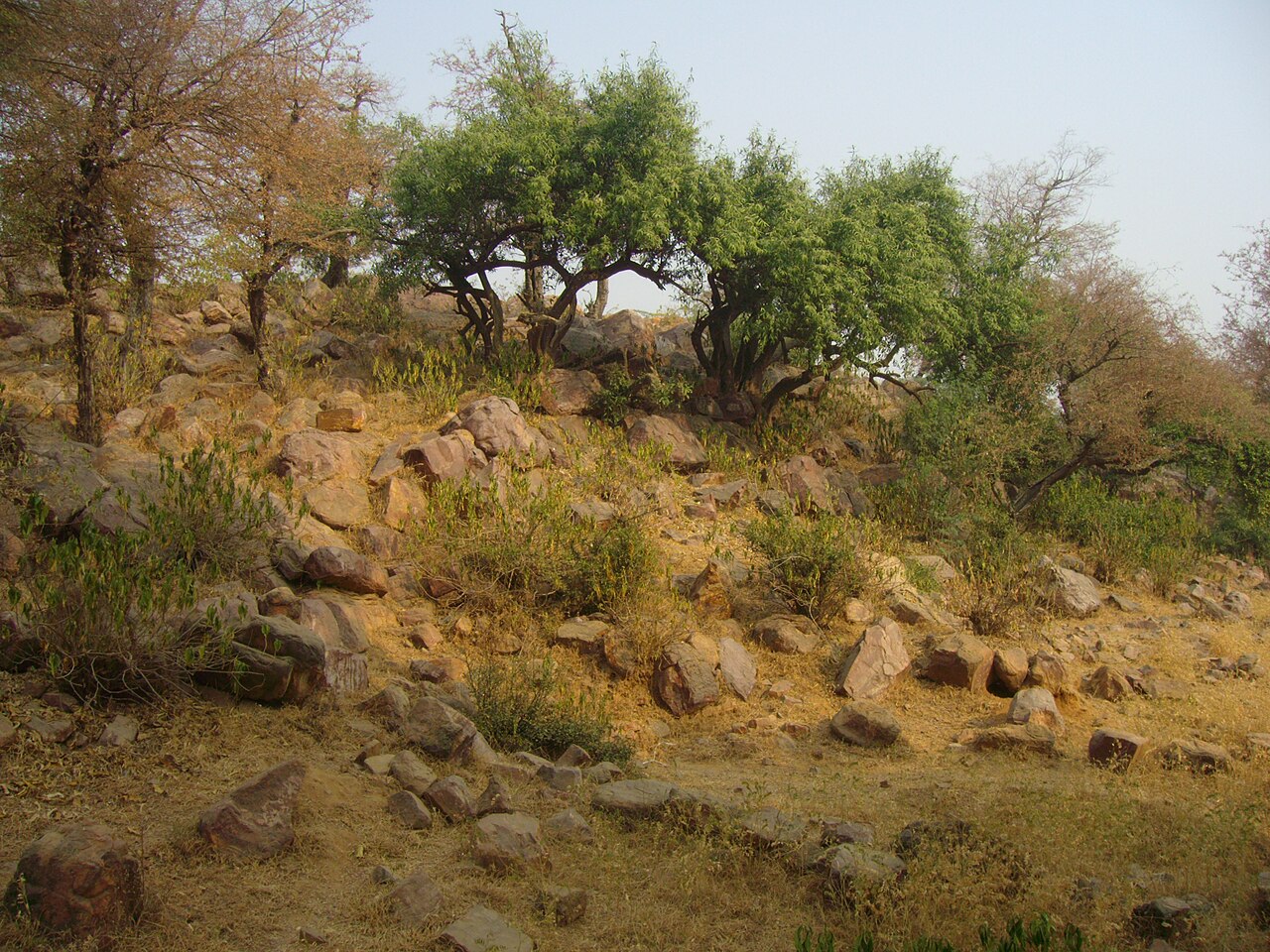
After the long dry heat, the first rain on Braj is an event. The smell of wet earth rises from the lanes, peacocks call from the rooftops, and Govardhan, which looked like a tired brown ridge in May, turns green in a fortnight. Old people say this is the season in which Krishna and Radha swung in the groves.
It is also a season that asks for care. Here is the plain picture, so that a monsoon yatra is a joy and not a struggle.
What the weather is really like
Climate sites put July as the wettest month in Mathura, with about 227 mm of rain in climate-data.org figures, and the year at about 744 mm. July averages about 30 degrees Celsius, cooler than the 33 degrees of May and June, but humid. Another site names July and August as the rainiest months with the most rainy days.
These are third-party figures and differ a little between sites, and we have not checked them against IMD tables or the exact onset date, so treat them as a guide. Expect heavy showers, sudden clouds and hot, sticky hours between them.
Mornings are often the best hours, with clearer skies, and afternoons bring the clouds. A small rain does not stop the temples, and many pilgrims say that darshan in light rain, with the smell of wet stone and the sound of bells, is among the most beautiful of all.
Who should come in this season
Come if you love green, quiet and the swing festivals, if you do not mind a wet shoe, and if you can be flexible. Crowds are lighter than in winter, except on festival days and Sawan weekends. Photographers and families with older children often enjoy it.
Think twice if you travel with frail elders, or if you cannot manage slippery steps and damp air. A cool, dry winter is gentler for them.
Temple timings that change
Timings follow the usual summer pattern with an afternoon rest, and festival days shift them. At Banke Bihari the Hariyali Teej swing darshan in Sawan is one of the most crowded days of the year, with a green poshak on the deity. Dwarkadhish in Mathura keeps its Hindola and Ghata festivals through Shravan. Check each temple's board the day before.
Rain can also close outdoor programmes at short notice, such as a ghat aarti, so keep your plan loose.
Clothes, water and health
Wear quick-dry cotton, carry a small umbrella and a light waterproof bag, and choose rubber or open slippers over leather, which stiffens in the damp. Marble and stone steps become slippery, so shoes with grip are wise.
Drink sealed water, eat food cooked hot in front of you, and avoid cut fruit and ice. Mosquitoes are more active in this season, so carry repellent. Anyone with a chest condition should keep medicines at hand.
Jhulan season
Jhulan Yatra and Hindola are the heart of the monsoon in Braj. The temples hang swings, rooms are decorated in dark cloud colours, and devotional songs of the rain are sung. Our post on Jhulan Yatra and Hariyali Teej explains the dates and the golden swing at Banke Bihari.
Women's Teej celebrations bring green clothes, mehndi and swings on village trees. It is a tender sight, and visitors are welcome to watch with respect.
Road and ghat caution
The Yamuna rises in the rains, and ghat steps can go under water. Do not enter the river, keep children away from the edge and expect boat rides to stop at short notice if the current is strong. Parts of rural roads and parikrama paths can be muddy or flooded, so ask your driver the day before.
The Govardhan parikrama is greener but more slippery in the rains, and thunderstorms make open ground risky. Plan the walk for a clear morning, and shelter at once if lightning begins.
What to book and what to skip
Book a covered car with good tyres and a driver who knows the flooded stretches. Choose a stay with good drainage and a dry entrance. Skip long barefoot walks and the full parikrama on rainy days. Keep two options for each day, one outdoor and one indoor.
Pack a spare set of clothes in a plastic bag in the car, and a towel. A wet yatri is a cold yatri, and a dry shirt after a downpour is a small mercy. Keep phones in waterproof pouches and carry a power bank, because humid air drains batteries and storms can cut the power.
Month by month snapshot
June is hot and builds toward the rains. July is the wettest and greenest, and Sawan begins. August brings Raksha Bandhan, Hariyali Teej and Janmashtami in most years. September is humid and tapering, with the festivals of Radhashtami. Dates shift each year with the lunar calendar, so confirm with a panchang.
lala:Cab can plan around the weather, with a covered car and rest stops, and the Laladham homestay offers a dry, quiet base.
Questions, answered
Which is the wettest month in Mathura?
July, with about 227 mm in climate-data.org figures. Other sites say July and August.
Is the monsoon a good time for Braj?
It is green and quiet, with the Jhulan festivals, but wet and humid.
Can I do the Govardhan parikrama in the rains?
Choose a clear morning. Paths are slippery and storms are risky.
Is the Yamuna safe to enter?
No. It rises in the monsoon and the ghat steps can flood.
Timings, entry rules and fees change. Please confirm on the day with the temple or your driver.
- IMD monsoon onset and normals for Mathura
- Third-party rainfall figures
- Ghat and road conditions on the day
- Festival dates for the year
Walking this path soon?
If you would like a driver who knows the lanes and the timings, the lala:Cab app is there when you are ready. No advance, no pressure.