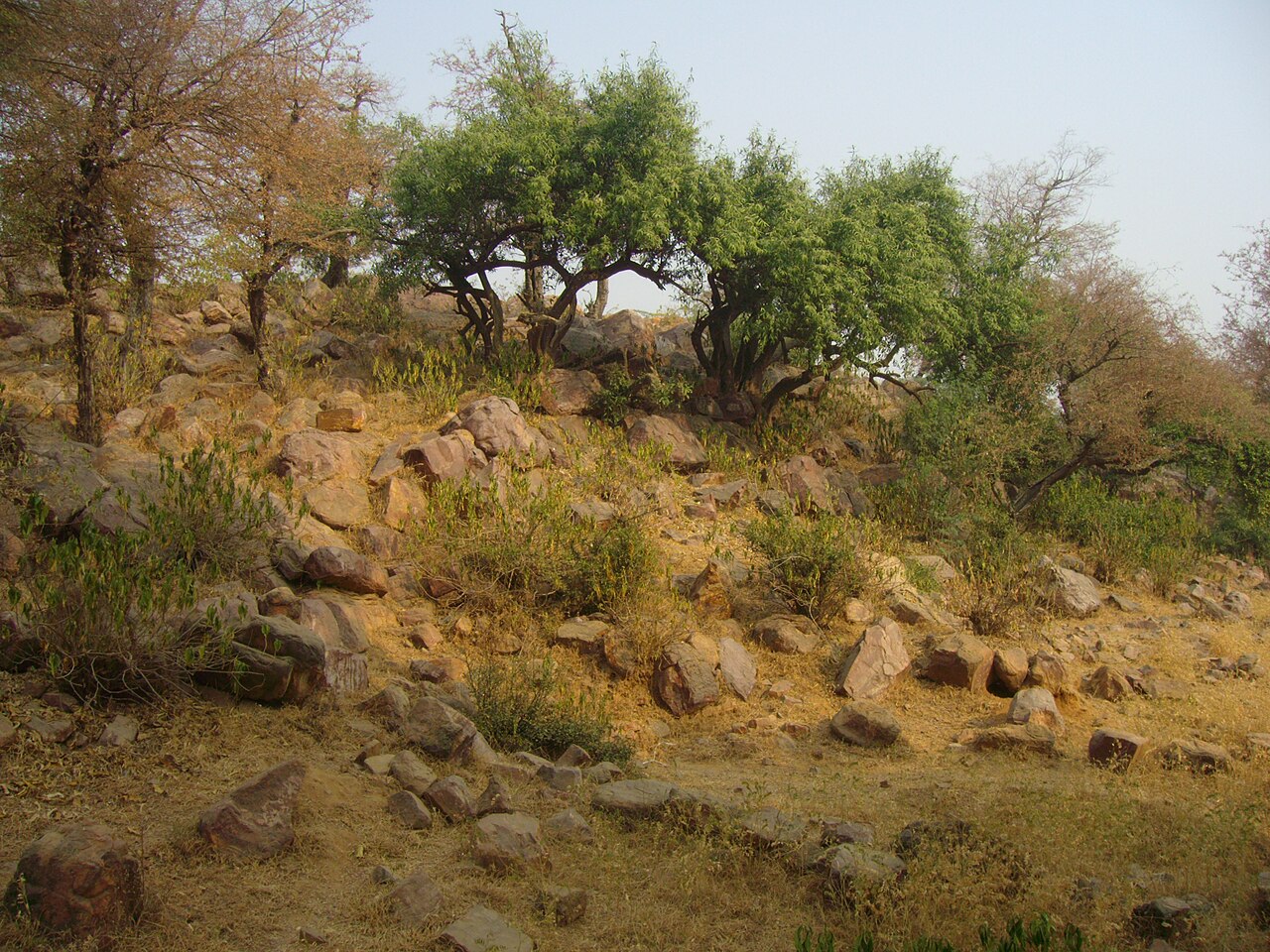
In May the sun over Braj is not gentle. The tar of the parikrama road burns bare feet, the stone steps of the kunds scald the soles and the air above the fields shimmers. Even so, thousands walk, because a vow does not always wait for a cool month.
It is said that a pilgrim must protect the body that carries the prayer. Here is how to do it, and when it is wiser to choose another season.
What the weather is really like
Climate sites put May and June as the hottest months in Mathura. Climate-data.org gives a May average near 33 degrees Celsius, with a daily maximum around 40, and a June average about 33.5. Another site notes that on the hottest May days it can reach 39 degrees. The figures differ a little between sources, and we have not checked IMD tables, so use them as a guide.
Heat waves can push temperatures well above these averages. Check the IMD forecast and any local warning before you plan a long outdoor day.
Humidity matters as much as the number on the thermometer. Before the monsoon breaks, the air in Braj can be dry and scorching, and after it breaks, it turns damp and heavy, which makes sweating less effective. Both kinds of weather need attention to water and rest.
Who should come in this season
Fit adults who start before dawn and are used to heat can manage short walks. Frail elders, small children, pregnant women and anyone with heart, kidney or blood pressure problems should avoid the Govardhan parikrama in summer, and should consider a winter visit instead.
Summer is also not the best time for new visitors from cooler countries. October to February is far gentler.
Temple timings that change
In summer, temples open earlier in the morning. Banke Bihari, for example, runs roughly 7:45 am to 12:00 pm and 5:30 pm to 9:30 pm, and ISKCON starts mangala aarti at about 4:30 am. Midday is closed in most temples, which suits the heat. Plan darshan for the first hours and the evening, and rest between 11 am and 4 pm.
The Govardhan route is open all day and night, so you can walk after dark if the moon and the company are right. The guide advises walking early, before 9 am, and late.
If your vow requires you to walk, consider the night or the hour before dawn. Many local devotees walk in the cool of the night, with lamps and singing groups. The route has lights in places, though the guide says the state of shelters and lighting should be checked locally.
Clothes and footwear
Wear loose cotton in pale colours, cover your head with a cap or a wet cloth, and use sunglasses. Many walk barefoot, but on hot tar it is painful, so carry slippers and cotton socks and put them on at the road crossings. Marble inside temples is also hot, so step on cloth mats where they are laid, and keep a thin cloth to stand on.
A small umbrella gives welcome shade, and a wet towel around the neck cools the body.
At the kunds, wet your head and neck with the cool water before walking on. Radha Kund and Kusum Sarovar have trees and broad steps for rest. Sit in the shade for ten minutes before you set off again.
Hydration and warning signs
Drink small amounts of water often, before you feel thirsty, and carry oral rehydration salts. Buttermilk, lemon water and coconut water help, and sealed bottles are safest. Avoid ice from unknown sources.
Watch for dizziness, headache, nausea, very hot dry skin, confusion or no sweating, which can signal heat stroke. Stop at once in shade, cool the body with water, and get medical help urgently. These are general health points and not medical advice, so follow your own doctor's guidance.
What to book and what to skip
Book an air-conditioned car that waits at the halfway point, an early start and a stay that is cool and has power backup. Consider an e-rickshaw circuit of 3 to 4 hours with stops, in place of the full 6 to 8 hours on foot. Skip the midday walk completely.
Avoid festival days in summer, when crowds add to the heat. Roads at Purnima and Guru Purnima are jammed.
Heat also affects food. Eat light, fresh and sattvik meals, and avoid heavy fried food in the middle of a long walk. Keep fruit like bananas and oranges in your bag. Sweets left in a hot car spoil quickly, so buy them at the end of the day.
Month by month snapshot
April warms up, and May and June are hottest. July brings the rains and humidity. Big crowds come at Guru Purnima in June or July. Searches for the Govardhan parikrama spiked in June 2026, which may be the extra Adhik month, but that is only our interpretation.
If your vow falls in summer, lala:Cab can build a day around the dawn hours with a car, water and a guide.
Questions, answered
Which months are hottest in Braj?
May and June, with daily maxima around 40 degrees Celsius in climate-data.org figures.
Is it safe to walk Govardhan parikrama in summer?
For fit adults, early and short. Elders, children and anyone with a heart or blood pressure problem should avoid it.
What should I carry?
Water, oral rehydration salts, a cap, slippers with socks and a wet towel.
Which season is best instead?
October to February.
Timings, entry rules and fees change. Please confirm on the day with the temple or your driver.
- IMD heat warnings and normals
- Temple summer timings
- E-rickshaw fares at Govardhan
- Adhik month interpretation of the June 2026 search spike
- Climate-data.org: Mathura climate
- Kupi: weather in Mathura
- Inditales: Govardhan Parikrama
- General heat-health advice (consult a doctor)
Walking this path soon?
If you would like a driver who knows the lanes and the timings, the lala:Cab app is there when you are ready. No advance, no pressure.