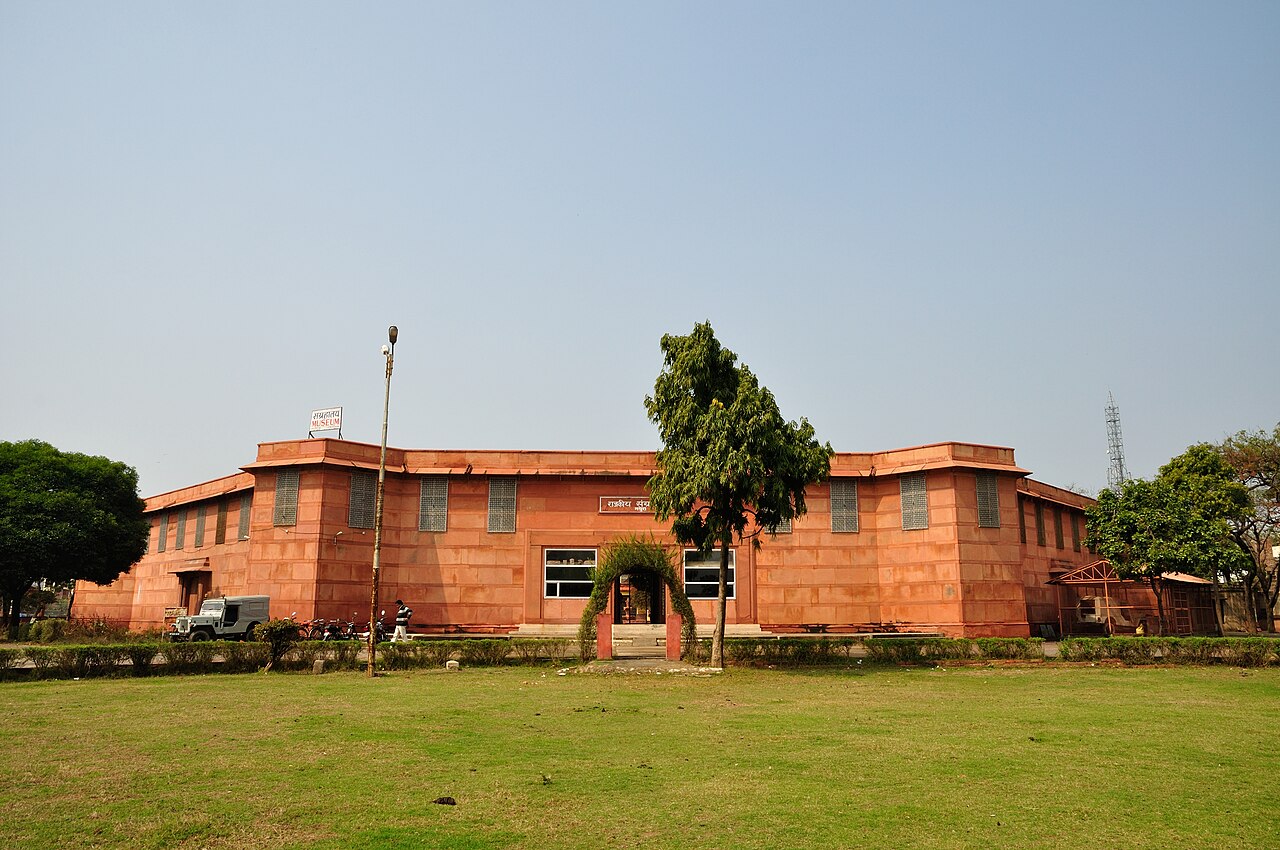
In the middle of a city that lives for its temples there is a quiet building where the oldest faces of Mathura are kept. They are carved in red sandstone and are many centuries older than the shrines around them. Standing among them, a visitor feels that the faith of Braj is not a story told only in books, but a thing people have carved with their hands for two thousand years.
It is said that Mathura was an artistic capital before it was a pilgrim town. The museum is where you can see that.
The story in a few lines
Between about the 1st century BCE and the 5th century CE, the sculptors of Mathura made some of India's finest images in red sandstone, for Jains, Buddhists and Vaishnavas alike. The Government Museum holds the greatest collection of this work, including early images of Krishna and Balarama, Naga figures and portraits of Kushan kings.
Frederick Salmon Growse, the District Magistrate, started it as a local collection in 1874. The building in its present form opened in the 1930s as the Curzon Museum of Archaeology and now operates as the Government Museum under the state's Culture Department.
The red sandstone itself is a clue. It was quarried near Sikri, not far from Fatehpur Sikri, and carried to Mathura's workshops, which tells you how wide a web of trade and craft once fed the city. Few visitors know this, and a guide who does can turn a glass case into a window.
Why it matters on the yatra
For a devotee, the museum offers a different kind of darshan. The guide notes the earliest known sculptures of Krishna with the Govardhan hill, of Krishna and Kaliya and of Vishnu forms carved some 1,500 to 2,000 years ago. These show that stories of the Bhagavatam, such as the Kaliya lila in canto 10, chapters 16 and 17, were already carved in stone in this very city.
Seeing them is like finding an old photograph of a place you know. The faith you meet in the temple lanes is older than any wall standing there.
Getting there from Vrindavan, Mathura and Delhi airport
The museum is in Dampier Nagar, about 2 km from Mathura Junction, 11 km from Banke Bihari and about 165 km from Delhi airport. Krishna Janmabhoomi, Dwarkadhish and Vishram Ghat are each about 3 km away by the guide's figures.
There is some open space inside the compound, and the cab can drop you at the gate. Parking is a small charge to be checked locally. The walk from the gate is about two minutes.
If you come by auto or e-rickshaw, ask the driver for the Government Museum in Dampier Nagar and not for a temple, because the museum is not on the pilgrim lanes and some drivers do not know it at once. Share the name and a nearby landmark if you have one.
Timings and what changes by season
A typical state museum pattern is 10:30 am to 4:30 pm, with a closure on Mondays and public holidays. We have not verified these, so please check locally. The hours are the same in summer and winter.
A late morning visit is pleasant, before the sun is high. Afternoons are quiet, and the museum is a cool refuge from the heat of the bazaar.
Dress, phones, crowds and kind manners
Normal clothing is fine, though modest dress is a good habit in a city of temples. Photography rules apply, including a camera fee in some museums, so ask at the counter. The crowd is usually small, and toilets are available. The ground floor is mostly step-free with some steps, so check access if you travel with a wheelchair.
Keep voices low, do not touch the sculptures and follow the staff's guidance. Guides at the gate may offer a tour for a fee, so agree a price first.
Kushan and Gupta art highlights
The guide lists Kushan-period sculptures including Yakshi figures, a Gupta-period Krishna and Kaliya relief, standing Buddha figures and Varaha and Naga sculptures. The Mathura school of Buddha images is among the most famous in the world. Display and labelling change, so ask the staff where to find the Krishna images.
Take your time with a few pieces. A quiet half hour before one carving does more than a quick walk past a hundred.
Children often enjoy the museum more than expected, especially the large figures of Yakshis and the animals. Let them choose a favourite piece and tell its story back to you at the ghat afterwards.
Pair it with Vishram Ghat
After the museum, drive to Vishram Ghat for the river and the bazaar, and to Dwarkadhish for darshan. The Holi Gate bazaar nearby offers kachori and lassi. See our Mathura food guide and the peda buying post.
Allow one to one and a half hours for the museum. lala:Cab can bring a guide who explains the sculptures and links them to the stories you will see in the temples.
Questions, answered
Is the Mathura museum worth visiting?
Yes, if you are curious about early Krishna iconography and the sculpture that Mathura is known for. Allow about an hour.
When is the museum closed?
Typically Mondays and holidays, though this is unconfirmed. Check locally.
Can I take photos?
Photography rules, and sometimes a camera fee, apply. Check at the entrance.
Who started the museum?
The district magistrate F. S. Growse began the collection in 1874.
Timings, entry rules and fees change. Please confirm on the day with the temple or your driver.
- Opening days and hours
- Entry ticket
- Photography fee
- Where the Krishna and Kaliya reliefs are displayed
- Wikipedia: Government Museum, Mathura
- Srimad Bhagavatam 10.16-10.17 (Vedabase)
- Archaeological Survey of India notes; museum guidebook (to verify)
Walking this path soon?
If you would like a driver who knows the lanes and the timings, the lala:Cab app is there when you are ready. No advance, no pressure.