Ashtak · Yamuna
Yamunashtakam यमुनाष्टकम्
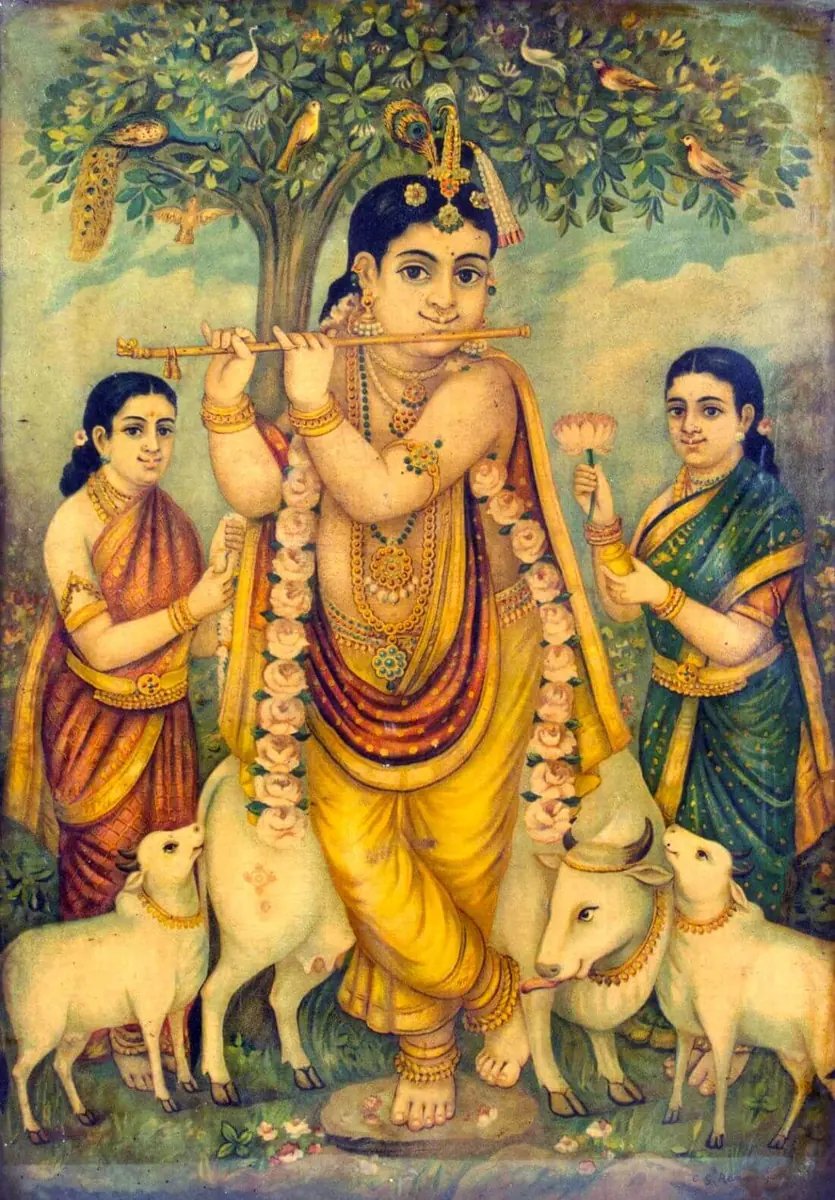
Nine verses in praise of the Yamuna, the dark river of Braj who is seen in the Pushtimarg as one of Krishna's dearest companions.
नमामि यमुनामहं सकलसिद्धिहेतुं मुदा
मुरारिपदपङ्कजस्फुरदमन्दरेणूत्कटाम् ।
तटस्थनवकाननप्रकटमोदपुष्पाम्बुना
सुरासुरसुपूजितस्मरपितुः श्रियं बिभ्रतीम् ॥ १॥
कलिन्दगिरिमस्तके पतदमन्दपूरोज्ज्वला
विलासगमनोल्लसत्प्रकटगण्डशैलोन्नता ।
सघोषगतिदन्तुरा समधिरूढदोलोत्तमा
मुकुन्दरतिवर्धिनी जयति पद्मबन्धोः सुता ॥ २॥
भुवं भुवनपावनीमधिगतामनेकस्वनैः
प्रियाभिरिव सेवितां शुकमयूरहंसादिभिः ।
तरङ्गभुजकङ्कणप्रकटमुक्तिकावालुका
नितम्बतटसुन्दरीं नमत कृष्णतुर्यप्रियाम् ॥ ३॥
अनन्तगुण भूषिते शिवविरञ्चिदेवस्तुते
घनाघननिभे सदा ध्रुवपराशराभीष्टदे ।
विशुद्धमथुरातटे सकलगोपगोपीवृते
कृपाजलधिसंश्रिते मम मनस्सुखं भावय ॥ ४॥
यया चरणपद्मजा मुररिपोः प्रियम्भावुका
समागमनतोऽभवत् सकलसिद्धिदा सेवताम् ।
तया सदृशतामियात्कमलजा सपत्नीव य-
द्धरिप्रियकलिन्दया मनसि मे सदा स्थीयताम् ॥ ५॥
नमोऽस्तु यमुने सदा तव चरित्रमत्यद्भुतं
न जातु यमयातना भवति ते पयः पानतः ।
यमोऽपि भगिनीसुतान्कथमु हन्ति दुष्टानपि
प्रियो भवति सेवनात्तव हरेर्यथा गोपिकाः ॥ ६॥
ममाऽस्तु तव सन्निधौ तनुनवत्वमेतावता
न दुर्लभतमा रतिर्मुररिपौ मुकुन्दप्रिये ।
अतोऽस्तु तव लालना सुरधुनी परं सङ्गमा-
त्तवैव भुवि कीर्तिता न तु कदापि पुष्टिस्थितैः ॥ ७॥
स्तुतिं तव करोति कः कमलजासपत्निप्रिये
हरेर्यदनुसेवया भवति सौख्यमामोक्षतः ।
इयं तव कथाऽधिका सकलगोपिकासङ्गमः ।
स्मरश्रमजलाणुभिः सकलगात्रजैः सङ्गमः ॥ ८॥
तवाऽष्टकमिदं मुदा पठति सूरसूते सदा
समस्तदुरितक्षयो भवति वै मुकुन्दे रतिः ।
तया सकलसिद्धयो मुररिपुश्च सन्तुष्यति
स्वभावविजयो भवेद्वदति वल्लभः श्रीहरेः ॥ ९॥
What it means
Nine verses in praise of the Yamuna, the dark river of Braj who is seen in the Pushtimarg as one of Krishna's dearest companions. The poet bows to her first, shining with the dust of the Lord's lotus feet. She tumbles from the Kalinda mountain, sounds like anklets as she runs, and carries the beauty of the one who is the father of Cupid. Verse four sets her at pure Mathura bank with gopas and gopis around, and asks her to bring peace to the mind. Verse six makes a daring point: even Yama, her brother, cannot punish those who drink her water. The last verse promises that whoever reads these eight verses with joy will lose their sins and find love for Mukunda, and signs off as Vallabha.
How it is sung
Sung in Braj at the river's edge and at home when water is taken from the Yamuna. Pushtimarg families recite it in the morning, and Yamuna Chhath and the days around Kartik are special occasions. Say it slowly, with a small pause at the end of each line, much as the river itself pauses at each ghat.
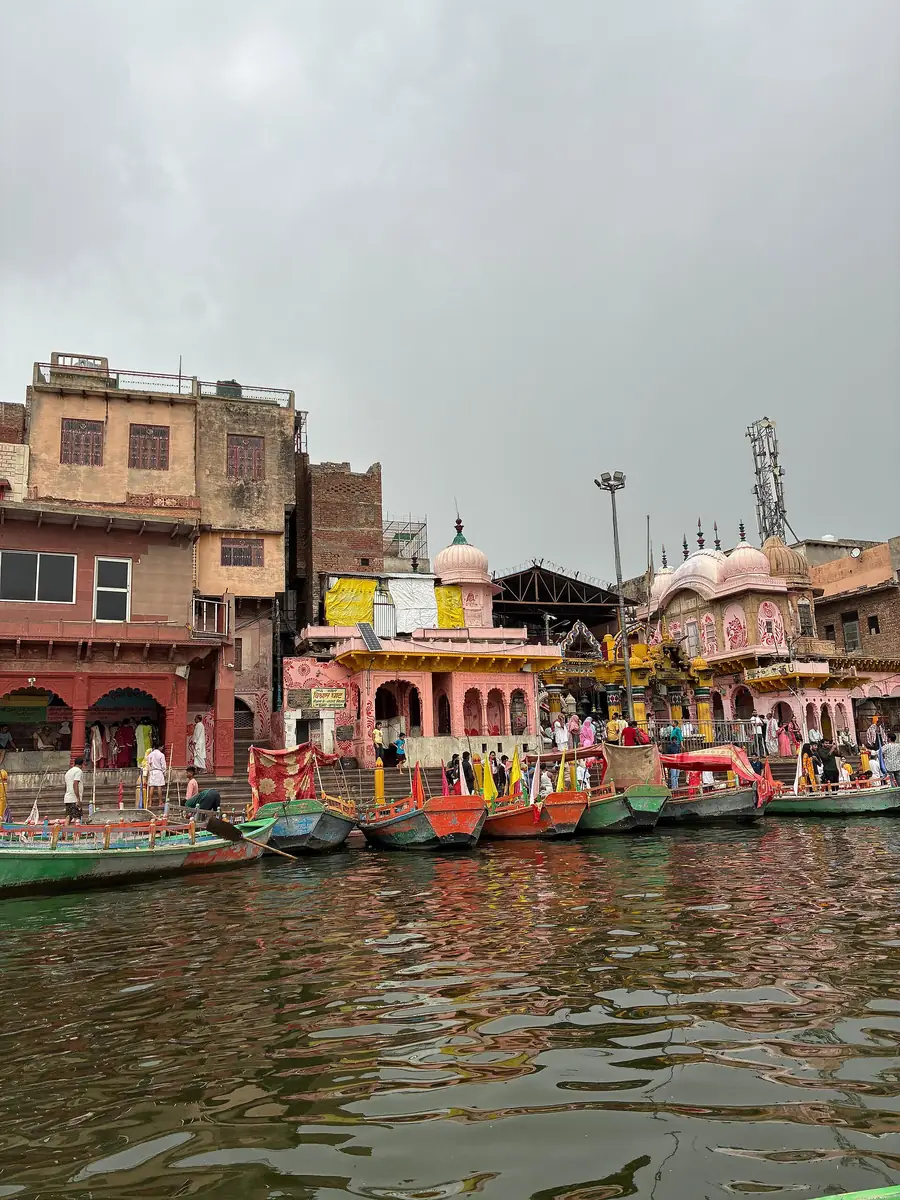
Laladham can pick you up in Delhi and bring you to the Yamuna ghats of Mathura at dusk, when these verses are sung on the water. Plan the trip
Questions, answered
Who wrote the Yamunashtakam?
The colophon names Shri Vallabhacharya, the founder of the Pushtimarg. Several other hymns carry the same title, so check that your text opens with 'Namami Yamunamaham'.
Why does it have nine verses if it is an ashtakam?
Eight verses praise Yamuna and the ninth is the phalashruti, the line that tells the reader what the recitation brings. Many ashtakams follow this habit.
What is special about Yamuna in Braj?
She is the river that Krishna crossed as a newborn and played beside as a boy. In Pushtimarg she is honoured as one of Krishna's dearest companions and as a bestower of grace.