Stotra · Krishna
Venu Geet वेणुगीत
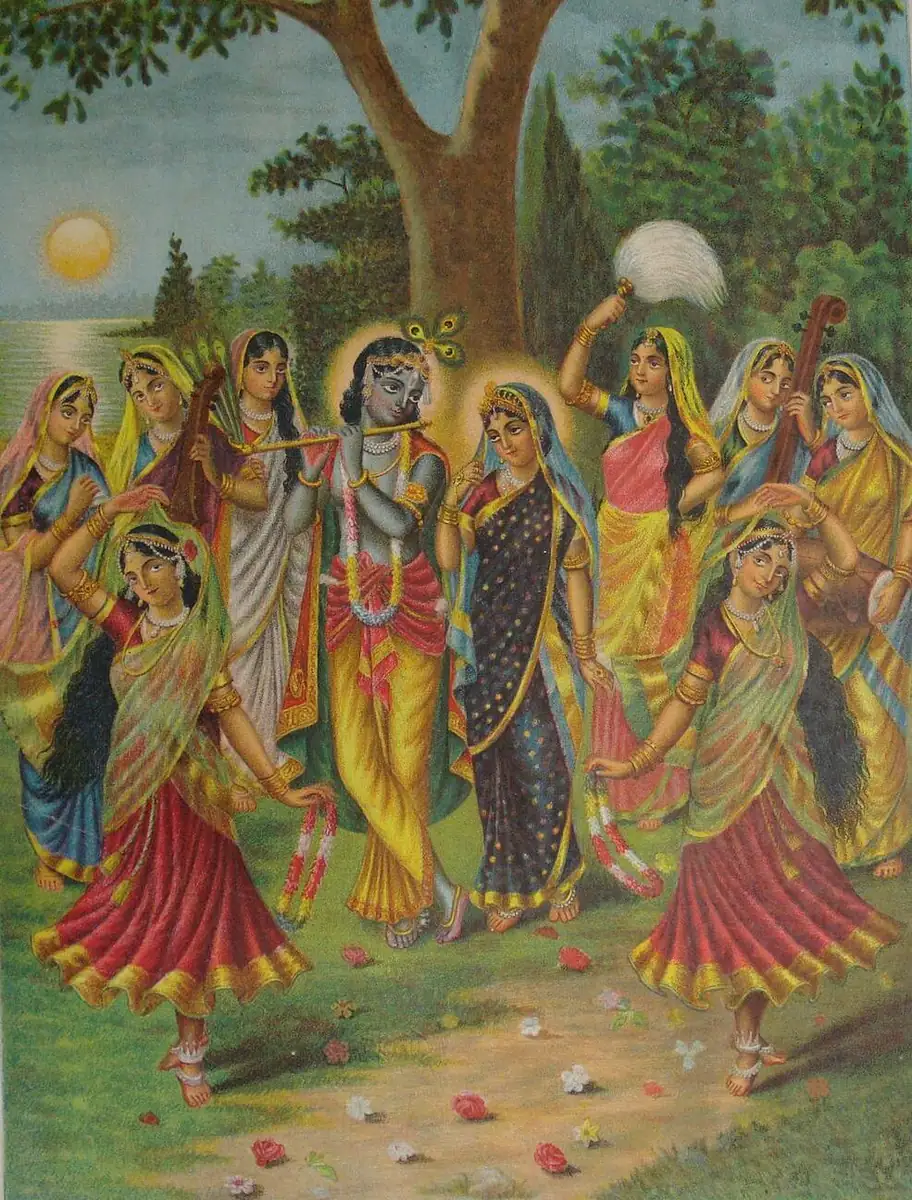
The Venu Geet is what the gopis sing when they hear Krishna's flute drifting from the forest in autumn.
श्रीगोप्य ऊचुः
अक्षण्वतां फलमिदं न परं विदामः
सख्यः पशूननु विवेशयतोर्वयस्यैः ।
वक्त्रं व्रजेशसुतयोरनवेणु जुष्टं
यैर्वा निपीतमनुरक्तकटाक्षमोक्षम् ॥ ७ ॥
चूतप्रवालबर्हस्तबकोत्पलाब्ज-
मालानुपृक्तपरिधानविचित्रवेशौ ।
मध्ये विरेजतुरलं पशुपालगोष्ठ्यां
रङ्गे यथा नटवरौ क्व च गायमानौ ॥ ८ ॥
गोप्यः किमाचरदयं कुशलं स्म वेणु-
र्दामोदराधरसुधामपि गोपिकानाम् ।
भुङ्क्ते स्वयं यदवशिष्टरसं ह्रदिन्यो
हृष्यत्त्वचोऽश्रु मुमुचुस्तरवो यथार्याः ॥ ९ ॥
वृन्दावनं सखि भुवो वितनोति कीर्तिं
यद् देवकीसुतपदाम्बुजलब्धलक्ष्मि ।
गोविन्दवेणुमनु मत्तमयूरनृत्यं
प्रेक्ष्याद्रिसान्ववरतान्यसमस्तसत्त्वम् ॥ १० ॥
धन्याः स्म मूढगतयोऽपि हरिण्य एता
या नन्दनन्दनमुपात्तविचित्रवेशम् ।
आकर्ण्य वेणुरणितं सहकृष्णसाराः
पूजां दधुर्विरचितां प्रणयावलोकैः ॥ ११ ॥
कृष्णं निरीक्ष्य वनितोत्सवरूपशीलं
श्रुत्वा च तत्क्वणितवेणुविविक्तगीतम् ।
देव्यो विमानगतयः स्मरनुन्नसारा
भ्रश्यत्प्रसूनकबरा मुमुहुर्विनीव्यः ॥ १२ ॥
गावश्च कृष्णमुखनिर्गतवेणुगीत-
पीयूषमुत्तभितकर्णपुटैः पिबन्त्यः ।
शावाः स्नुतस्तनपयःकवलाः स्म तस्थु-
र्गोविन्दमात्मनि दृशाश्रुकलाः स्पृशन्त्यः ॥ १३ ॥
प्रायो बताम्ब विहगा मुनयो वनेऽस्मिन्
कृष्णेक्षितं तदुदितं कलवेणुगीतम् ।
आरुह्य ये द्रुमभुजान् रुचिरप्रवालान्
शृण्वन्ति मीलितदृशो विगतान्यवाचः ॥ १४ ॥
नद्यस्तदा तदुपधार्य मुकुन्दगीत-
मावर्तलक्षितमनोभवभग्नवेगाः ।
आलिङ्गनस्थगितमूर्मिभुजैर्मुरारे-
र्गृह्णन्ति पादयुगलं कमलोपहाराः ॥ १५ ॥
दृष्ट्वातपे व्रजपशून् सह रामगोपैः
सञ्चारयन्तमनु वेणुमुदीरयन्तम् ।
प्रेमप्रवृद्ध उदितः कुसुमावलीभिः
सख्युर्व्यधात् स्ववपुषाम्बुद आतपत्रम् ॥ १६ ॥
पूर्णाः पुलिन्द्य उरुगायपदाब्जराग-
श्रीकुङ्कुमेन दयितास्तनमण्डितेन ।
तद्दर्शनस्मररुजस्तृणरूषितेन
लिम्पन्त्य आननकुचेषु जहुस्तदाधिम् ॥ १७ ॥
हन्तायमद्रिरबला हरिदासवर्यो
यद् रामकृष्णचरणस्परशप्रमोदः ।
मानं तनोति सहगोगणयोस्तयोर्यत्
पानीयसूयवसकन्दरकन्दमूलैः ॥ १८ ॥
गा गोपकैरनुवनं नयतोरुदार-
वेणुस्वनैः कलपदैस्तनुभृत्सु सख्यः ।
अस्पन्दनं गतिमतां पुलकस्तरुणां
निर्योगपाशकृतलक्षणयोर्विचित्रम् ॥ १९ ॥
What it means
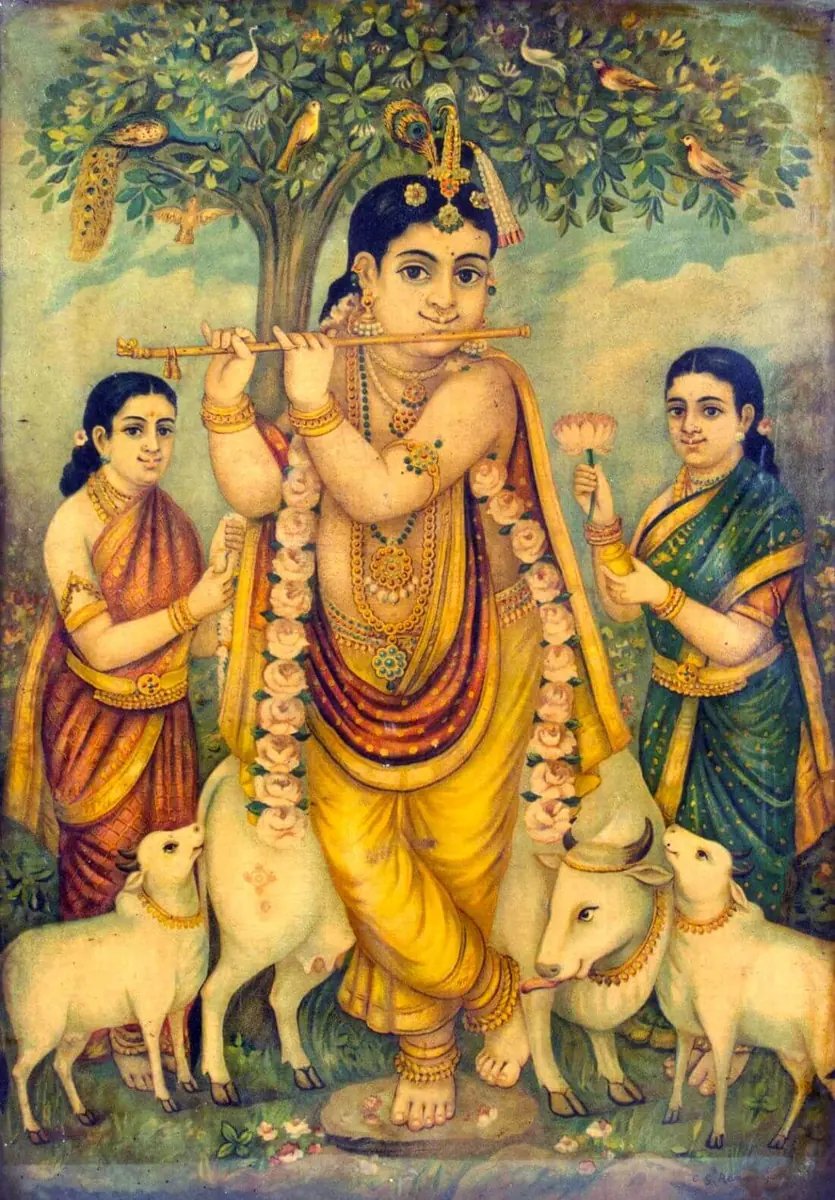
The Venu Geet is what the gopis sing when they hear Krishna's flute drifting from the forest in autumn. Their first words say that eyes are only blessed when they see the faces of the two sons of Braj's king, Krishna and Balarama, walking in with the cattle and flute at the lips. Next they picture the pair dressed in mango sprouts, peacock-feather clusters and lotus garlands, like players on a stage. They wonder what good deed the flute did that it drinks the nectar of Krishna's lips and leaves only the remnant for them, so that even rivers and trees thrill with joy. The remaining verses show the deer, the cows with ears lifted, the birds, the river, the cloud shading him from the sun, the forest women and the hill Govardhan, each one stopped by the music in its own way.
How it is sung
A song to read slowly in the evening, ideally with a flute recording playing softly or none at all, because the verses are the sound. Braj readers take one verse at a time and then pause, so the picture settles before the next one. It pairs naturally with the Gopi Geet, which comes a few chapters later in the same canto.
Questions, answered
Where is the Venu Geet from?
It sits in the twenty-first chapter of the tenth canto of the Shrimad Bhagavata, said to be composed by Vyasa. The gopis sing it in praise of Krishna's flute.
How many verses make the Venu Geet?
The song proper runs from verse seven to verse nineteen, thirteen verses. The six verses before it are narration.
Why do the gopis envy the flute?
The flute touches Krishna's lips all day, so they ask in wonder what the bamboo did in a past life to deserve it. The envy is a loving one.