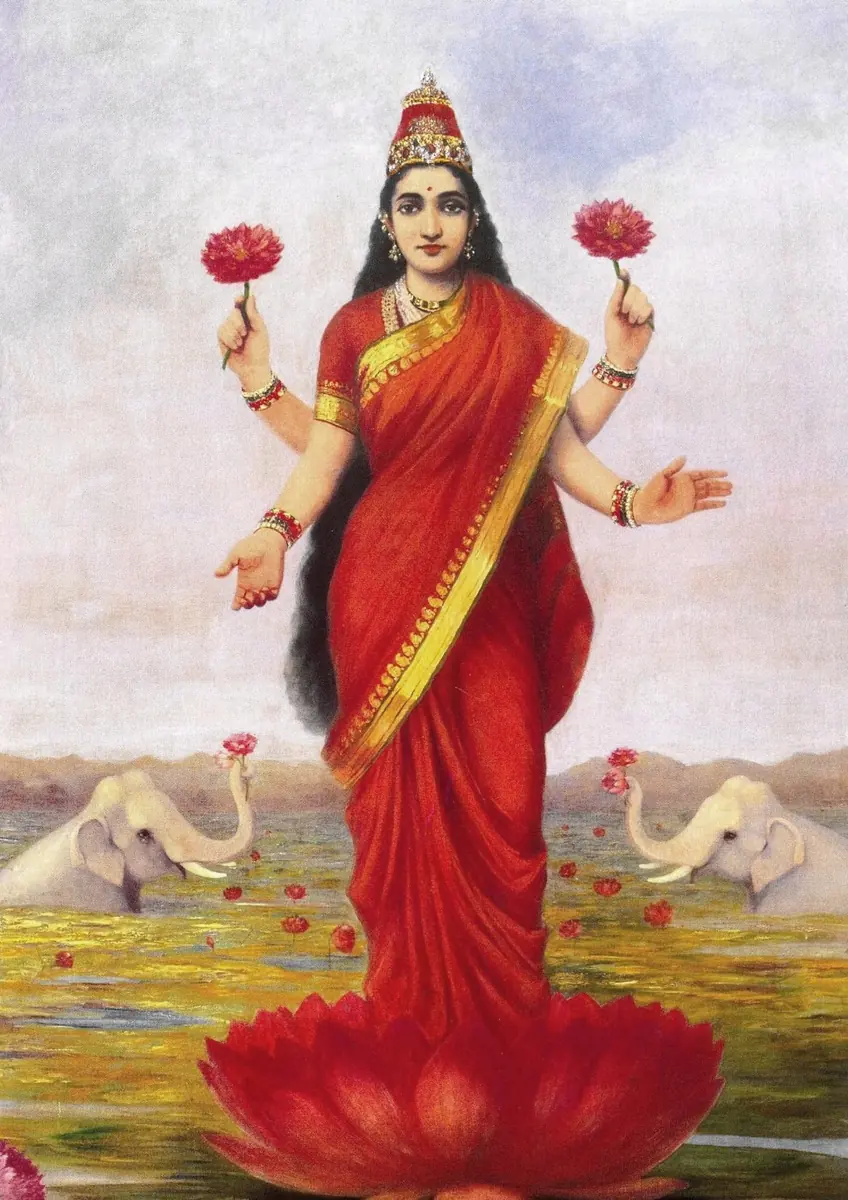
Stotra · Tulsi
Tulsi Namashtak (Vrinda Vrindavani) तुलसी नामाष्टक (वृन्दा वृन्दावनी)
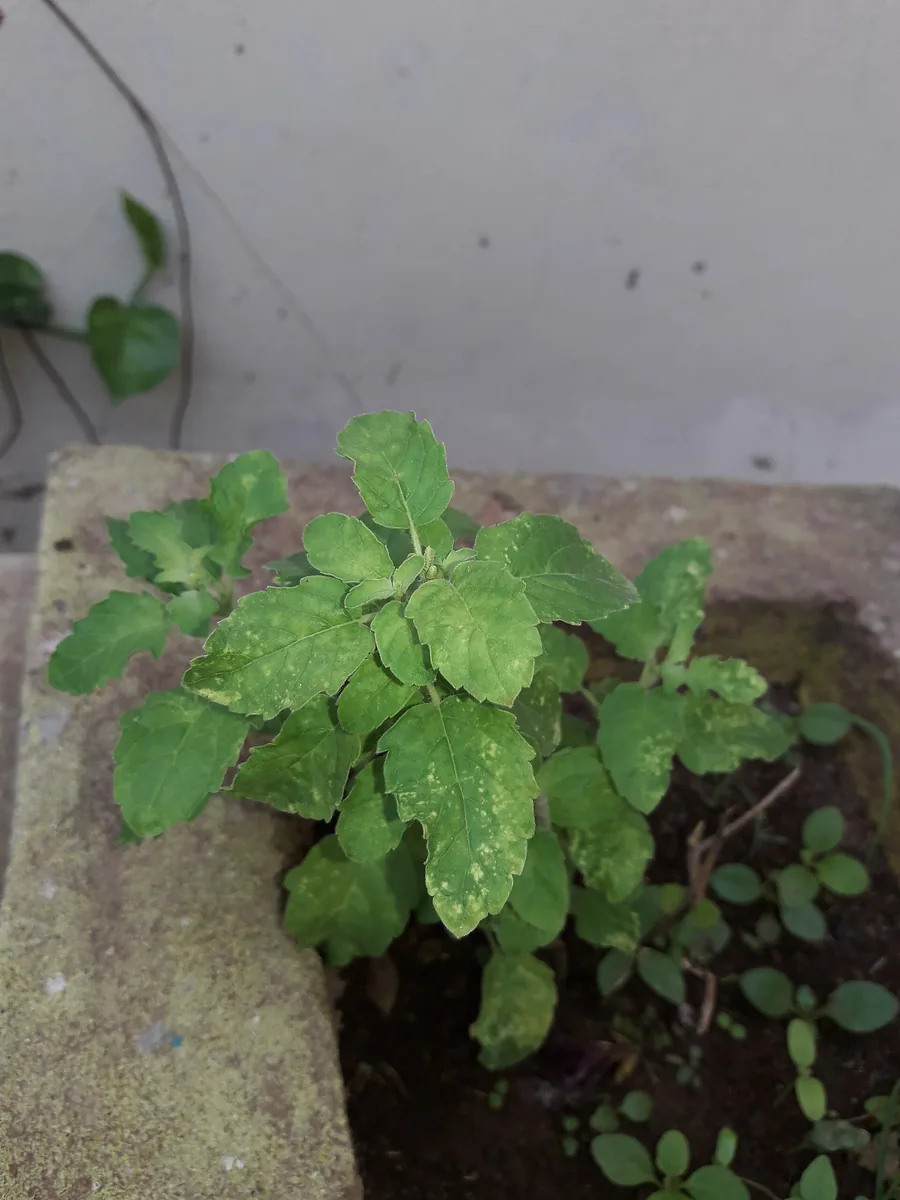
This is a tiny hymn of eight names for the holy basil.
वृन्दा वृन्दावनी विश्वपूजिता विश्वपावनी ।
पुष्पसारा नन्दिनी च तुलसी कृष्णजीवनी ॥
एतन्नामाष्टकं स्तोत्रं पठन्मङ्गलमाप्नुयात् ॥
वृन्दायै नमः । वृन्दावन्यै नमः । विश्वपूजितायै नमः ।
विश्वपावन्यै नमः । पुष्पसारायै नमः । नन्दिन्यै नमः ।
तुलस्यै नमः । कृष्णजीवन्यै नमः ॥
What it means
This is a tiny hymn of eight names for the holy basil. Vrinda is the first, and Vrindavani points to Vrindavan, her home ground. She is worshipped by the whole world and purifies it, she is the finest part of every flower offering, she gives delight, and she is called Tulsi. The eighth name, Krishnajivani, says she is the very life of Krishna. Reading the eight in one breath is said to bring good fortune. In the second part each name is repeated with namah, so the verse becomes eight little offerings.
How it is sung
It is spoken, not sung, by the tulsi plant at the courtyard, at dawn and again at lamp-lighting. In the month of Kartik, when the plant is watered and a lamp is placed beside her, the eight names are read first as the verse and then one by one as the namah list. The whole thing takes under a minute, which is why it is a favourite for busy mornings.
Questions, answered
What are the eight names of Tulsi?
Vrinda, Vrindavani, Vishvapujita, Vishvapavani, Pushpasara, Nandini, Tulasi and Krishnajivani.
When should it be read?
At dawn and at lamp-lighting by the plant. In Kartik, when Tulsi is worshipped daily, it is read more often.
Where does it come from?
It is described in the Puranic literature, in a text of the Padma Purana tradition, and has been passed down with temple and household prayer books as a traditional text.