Aarti · Ram
Aarti Shri Ramayan Ji Ki आरती श्री रामायण जी की
This aarti is for the book itself, the Ramayan, and not for a form of God.
आरती श्री रामायण जी की।
कीरति कलित ललित सिय पी की॥
गावत ब्रह्मादिक मुनि नारद।
बाल्मीकि बिग्यान बिसारद॥
शुक सनकादिक शेष अरु शारद।
बरनि पवनसुत कीरति नीकी॥
गावत वेद पुरान अष्टदस।
छओं शास्त्र सब ग्रंथन को रस॥
मुनि जन धन संतन को सरबस।
सार अंश सम्मत सब ही की॥
गावत संतत शंभु भवानी।
अरु घटसंभव मुनि बिग्यानी॥
ब्यास आदि कबिबर्ज बखानी।
कागभुशुंडि गरुड़ के ही की॥
कलिमल हरनि बिषय रस फीकी।
सुभग सिंगार मुक्ति जुबती की॥
दलनि रोग भव मूरि अमी की।
तात मात सब बिधि तुलसी की॥
What it means
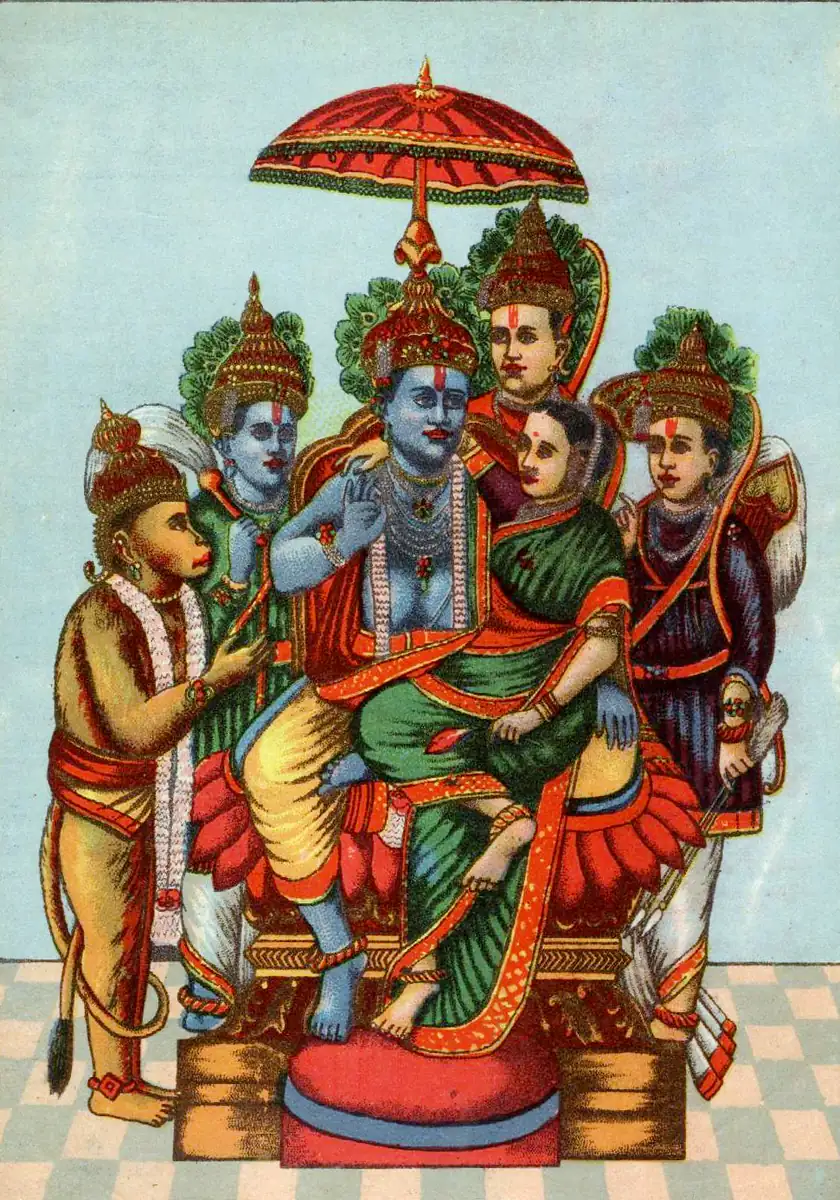
This aarti is for the book itself, the Ramayan, and not for a form of God. It praises the story of Ram and Sita as a famous, lovely thing that Brahma, Narad, Valmiki, Shuk, Sanak and Hanuman have all sung. It gathers the juice of the Vedas, the Puranas and the six schools of thought, and calls it the whole wealth of sages and saints. Shiv and Bhavani sing it, and so do Agastya, Vyas, Kakbhushundi and Garud. It removes the dirt of the dark age, makes worldly tastes seem bland, cures the sickness of rebirth, and the poet says it is mother and father to Tulsi in every way.
How it is sung
Done at the close of a Ramayan or Ramcharitmanas reading, an akhand path, or a Ram Navami katha, with the book kept on a stand before the lamp. The reader and listeners stand and wave the flame together. After each verse of four lines, the first couplet comes back as the answer.
Questions, answered
Is this aarti by Tulsidas?
The last line names Tulsi, and the aarti is printed with his work in the Ramcharitmanas editions. It is traditionally given to him.
Which Ramayan is it for?
It is sung for both Valmiki's Ramayan and Tulsidas's Ramcharitmanas. The words mention Valmiki and Kakbhushundi, who tell the story in each.
When should we sing it?
At the end of a reading of the book, whether a short sitting or a nine-day path.