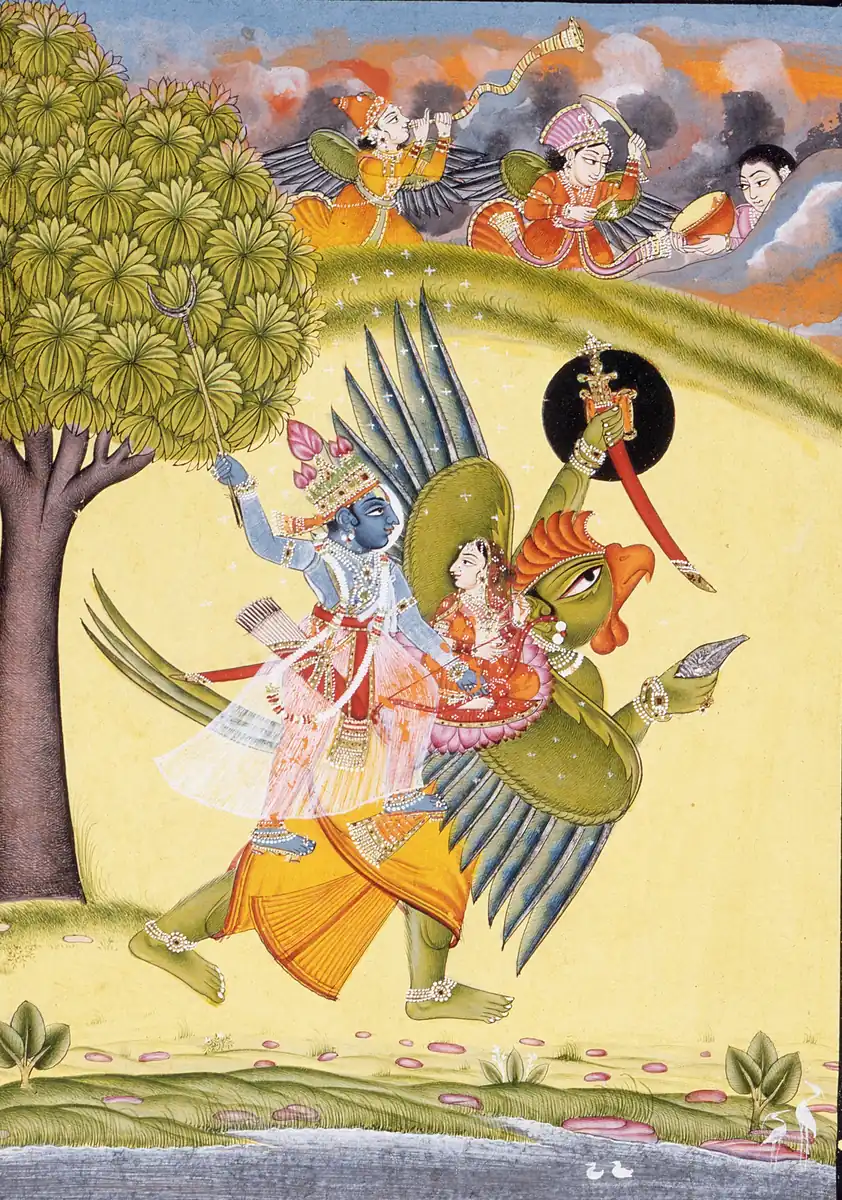
Aarti · Ram
Om Jai Janakinatha ॐ जय जानकीनाथा
Here the singer talks to Rama as lord of Janaki.
ॐ जय जानकीनाथा,
जय श्री रघुनाथा ।
दोउ कर जोरें बिनवौं,
प्रभु! सुनिये बाता ॥
ॐ जय..॥
तुम रघुनाथ हमारे,
प्राण पिता माता ।
तुम ही सज्जन-संगी,
भक्ति मुक्ति दाता ॥
ॐ जय..॥
लख चौरासी काटो,
मेटो यम त्रासा ।
निशदिन प्रभु मोहि रखिये,
अपने ही पासा ॥
ॐ जय..॥
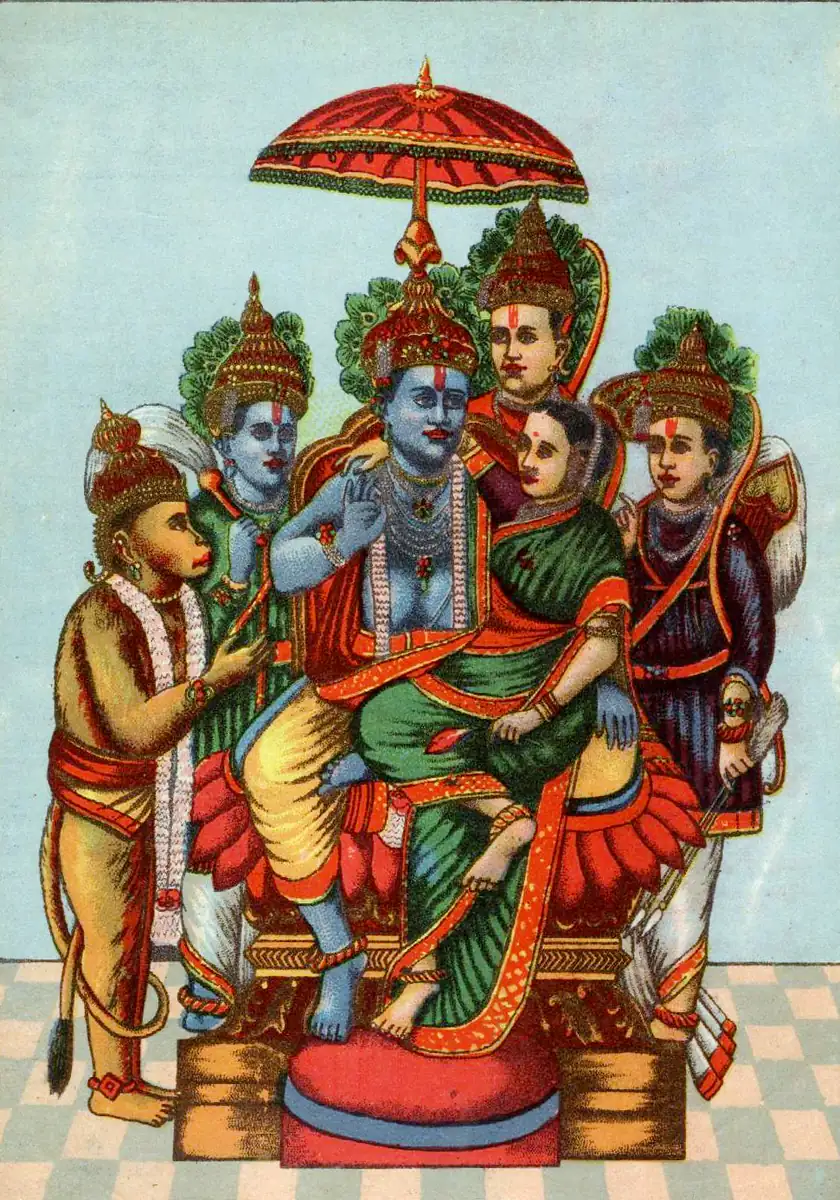
राम भरत लछिमन,
सँग शत्रुहन भैया ।
जगमग ज्योति विराजै,
शोभा अति लहिया ॥
ॐ जय..॥
हनुमत नाद बजावत,
नेवर झमकाता ।
स्वर्णथाल कर आरती,
करत कौशल्या माता ॥
ॐ जय..॥
सुभग मुकुट सिर, धनु सर,
कर शोभा भारी ।
मनीराम दर्शन करि,
पल-पल बलिहारी ॥
ॐ जय..॥
What it means
Here the singer talks to Rama as lord of Janaki. He joins his hands and asks the Lord to listen. The next verses are close: you are my father and mother, my breath, my good friend and the giver of devotion and release. He asks to be cut free from the cycle of eighty-four lakh births and the fear of Yama, and to be kept near at all times. Then the scene opens on the four brothers, shining together, Hanuman playing the instrument, and Mother Kaushalya waving the golden aarti plate. The last verse sees the crown, the bow and arrows, and the poet, signing as Maniram, offers his life at each moment.
How it is sung
Sung in the evening at Ram temples and in homes on Ram Navami, to the same easy tune as Om Jai Jagdish Hare. A leader takes two lines, the group joins at Om jai, and the pace stays slow enough for the lamp to turn once for each line.
Questions, answered
Who wrote Om Jai Janakinatha?
It is a traditional aarti. The last verse carries the old signature Maniram, and no modern author is known.
What does 'lakh chaurasi' mean?
It is the tradition of 84 lakh forms of life that a soul passes through before it is released. The singer asks to be freed from that round.
When is it sung?
In evening aarti at Ram shrines, and especially on Ram Navami.