Aarti · Krishna
Jai Bhagvad Gite Aarti जय भगवद् गीते आरती
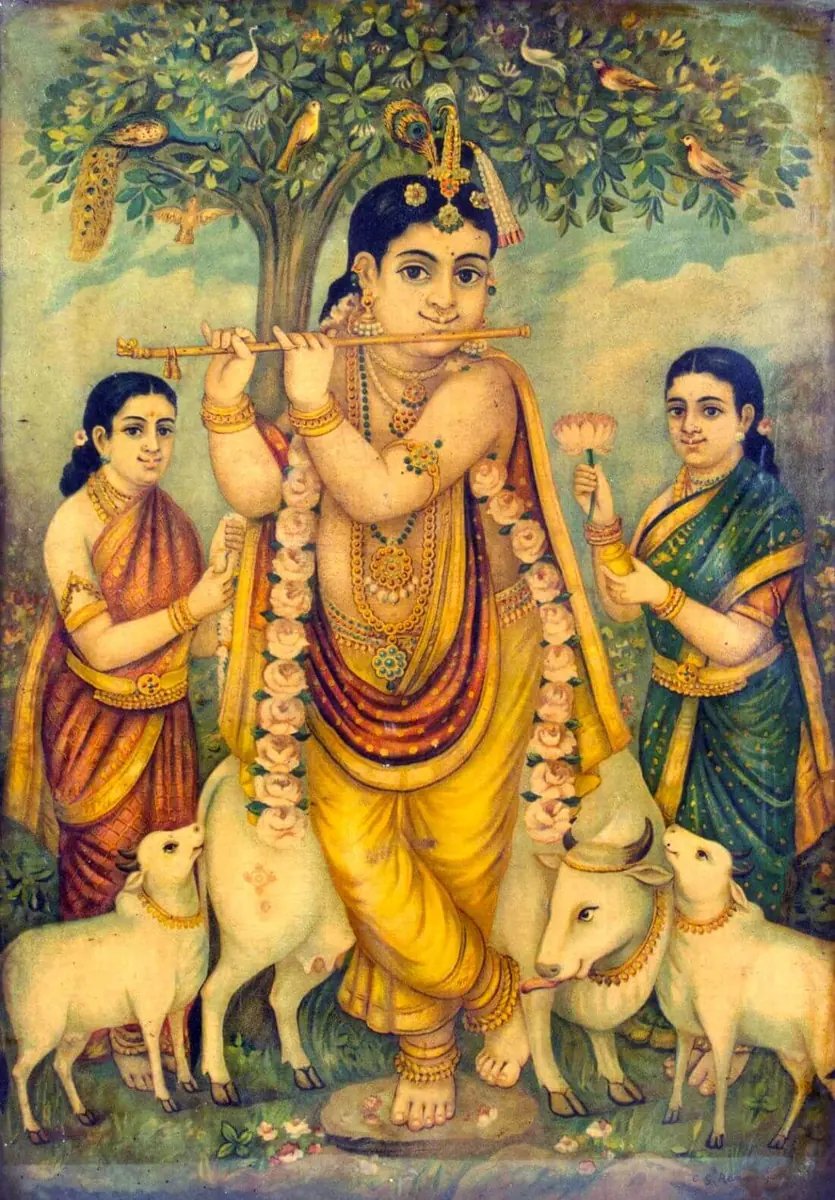
The Gita is addressed here as a mother who lives in the lotus heart of Krishna.
जय भगवद् गीते,
माता जय भगवद् गीते ।
हरि-हिय-कमल-विहारिणि,
सुन्दर सुपुनीते ॥
कर्म-सुमर्म-प्रकाशिनि,
कामासक्तिहरा ।
तत्त्वज्ञान-विकाशिनि,
विद्या ब्रह्म परा ॥
जय भगवद् गीते...॥
निश्चल-भक्ति-विधायिनि,
निर्मल मलहारी ।
शरण-रहस्य-प्रदायिनि,
सब विधि सुखकारी ॥
जय भगवद् गीते...॥
राग-द्वेष-विदारिणि,
कारिणि मोद सदा ।
भव-भय-हारिणि,
तारिणि परमानन्दप्रदा ॥
जय भगवद् गीते...॥
आसुर-भाव-विनाशिनि,
नाशिनि तम रजनी ।
दैवी सद्गुणदायिनि,
हरि-रसिका सजनी ॥
जय भगवद् गीते...॥
समता, त्याग सिखावनि,
हरि-मुख की बानी ।
सकल शास्त्र की स्वामिनी,
श्रुतियों की रानी ॥
जय भगवद् गीते...॥
दया-सुधा बरसावनि,
मातु! कृपा कीजै ।
हरिपद प्रेम दान कर,
अपनो कर लीजै ॥
जय भगवद् गीते...॥
जय भगवद् गीते,
माता जय भगवद् गीते ।
हरि-हिय-कमल-विहारिणि,
सुन्दर सुपुनीते ॥
What it means
The Gita is addressed here as a mother who lives in the lotus heart of Krishna. Each verse names one gift of the book: it explains the secret of right action, loosens the hold of craving, grows true knowledge, and gives steady devotion. It clears away the habits that pull us down, anger, envy and fear, and brings in the qualities of the gentle and the wise. The last verses call the Gita the queen of the scriptures and the voice that came from Krishna's own mouth, and ask her to pour kindness on the singer and take him in as her own.
How it is sung
It is sung on Gita Jayanti, at Gita path gatherings and at the close of a reading of the chapters, with the book placed on a stand and a lamp turned before it. The tune is a simple, even one in which the opening line works as the refrain, so a group can pick it up after hearing it once.
Questions, answered
When is the Gita aarti sung?
On Gita Jayanti, at the end of a Gita reading, and any time a group finishes a path of the chapters.
Who wrote Jai Bhagvad Gite aarti?
It is printed without a named author in the sites I checked, so it is given here as traditional.
Why is the Gita called a mother here?
The poet follows the old habit of calling a revered scripture mother, since it feeds and guides the one who turns to it.