Stotra · Vishnu
Dashavatara Stotra, Pralaya Payodhi Jale दशावतार स्तोत्र (प्रलयपयोधिजले)
This is the first great hymn of Jayadeva's Gita Govinda, a poem from medieval Bengal that Braj and Odisha have sung for centuries.
प्रलयपयोधिजले धृतवानसि वेदं, विहितवहित्रचरित्रमखेदम् ।
केशव धृतमीनशरीर, जय जगदीश हरे ॥ १॥
क्षितिरतिविपुलतरे तव तिष्ठति पृष्ठे,
धरणिधरणकिणचक्रगरिष्ठे ।
केशव धृतकच्छपरूप जय जगदीश हरे ॥ २॥
वसति दशनशिखरे धरणी तव लग्ना,
शशिनि कलङ्ककलेव निमग्ना ।
केशव धृतसूकररूप, जय जगदीश हरे ॥ ३॥
तव करकमलवरे नखमद्भुतशृङ्गं,
दलित हिरण्यकशिपुतनुभृङ्गम् ।
केशव धृतनरहरिरूप, जय जगदीश हरे ॥ ४॥
छलयसि विक्रमणे बलिमद्भुतवामन,
पदनखनीरजनितजनपावन ।
केशव धृतवामनरूप, जय जगदीश हरे ॥ ५॥
क्षत्रियरुधिरमये जगदपगतपापं,
स्नपयसि पयसि शमितभवतापम् ।
केशव धृतभृगुपतिरूप, जय जगदीश हरे ॥ ६॥
वितरसि दिक्षु रणे दिक्पतिकमनीयं,
दशमुखमौलिबलिं रमणीयम् ।
केशव धृतरामशरीर, जय जगदीश हरे ॥ ७॥
वहसि वपुषि विशदे वसनं जलदाभं,
हलहतिभीतिमिलितयमुनाभम् ।
केशव धृतहलधररूप, जय जगदीश हरे ॥ ८॥
निन्दसि यज्ञविधेरहह श्रुतिजातं,
सदयहृदयदर्शितपशुघातम् ।
केशव धृतबुद्धशरीर, जय जगदीश हरे ॥ ९॥
म्लेच्छनिवहनिधने कलयसि करवालं,
धूमकेतुमिव किमपि करालम् ।
केशव धृतकल्किशरीर, जय जगदीश हरे ॥ १०॥
श्रीजयदेवकवेरिदमुदितमुदारं,
शृणु सुखदं शुभदं भवसारम् ।
केशव धृतदशविधरूप, जय जगदीश हरे ॥ ११॥
वेदानुद्धरते जगन्निवहते भूगोलमुद्बिभ्रते
दैत्यं दारयते बलिं छलयते क्षत्रक्षयं कुर्वते ।
पौलस्त्यं जयते हलं कलयते कारुण्यमातन्वते
म्लेच्छान् मूर्च्छयते दशाकृतिकृते कृष्णाय तुभ्यं नमः ॥ १२॥
What it means
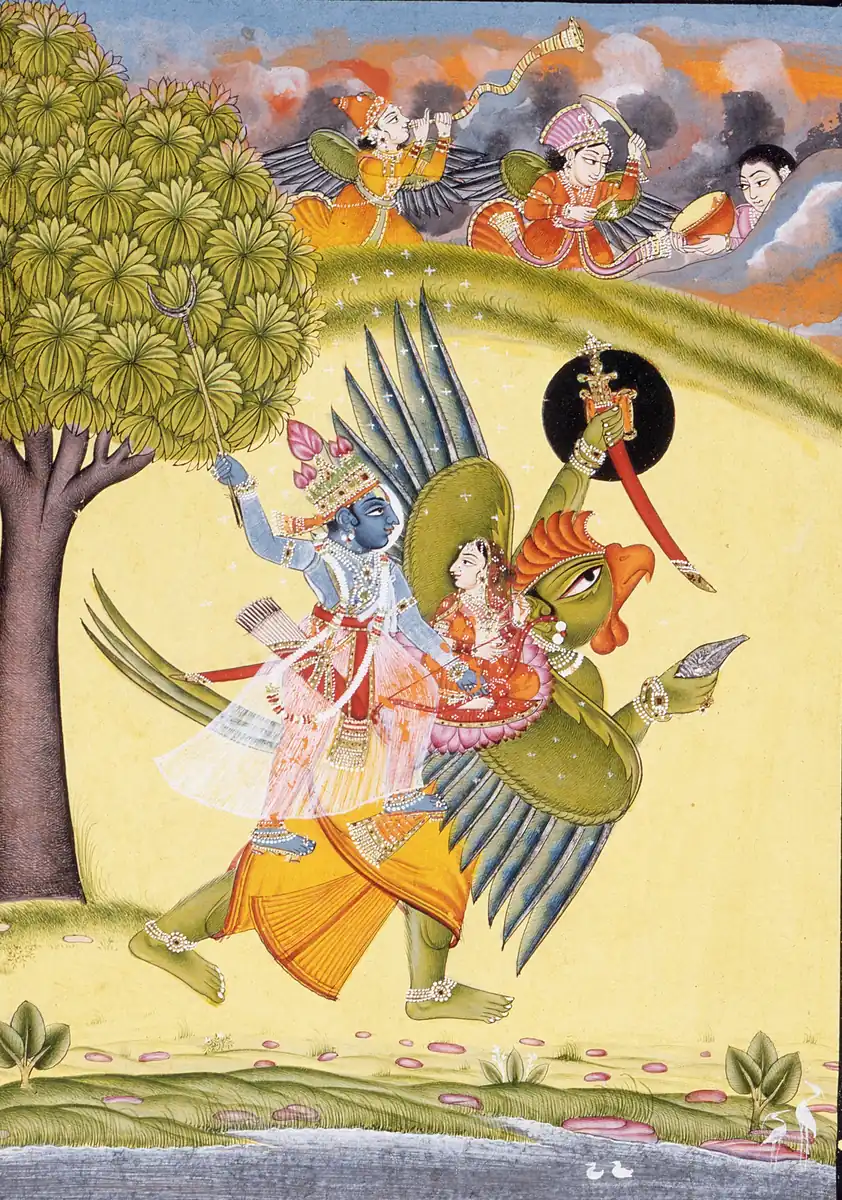
This is the first great hymn of Jayadeva's Gita Govinda, a poem from medieval Bengal that Braj and Odisha have sung for centuries. Ten verses praise ten forms of Vishnu, each ending with the refrain 'Keshava, you who took this form, victory, Lord of the world, Hari'. The fish saves the Vedas in the flood, the tortoise holds up the world, the boar raises the earth on his tusk, the man-lion tears Hiranyakashipu, the dwarf cheats Bali with three steps, Parashurama washes the world in the blood of warrior kings, Rama defeats the ten-headed Ravana, Balarama carries a plough, the Buddha speaks of compassion and Kalki rides with a sword. Verse eleven is the poet's signature and verse twelve a short summary of all ten.
How it is sung
Sung in the Jagannath temple at Puri as part of the Gita Govinda seva and in Vaishnava temples across Braj as an evening hymn. The refrain makes it easy for a group: one person leads each verse and everyone joins on 'Jaya Jagadisha Hare'.
Questions, answered
Who was Jayadeva?
Jayadeva was a twelfth century poet of the Sena court in Bengal who wrote the Gita Govinda, a long poem on Radha and Krishna. This hymn is the first section of it.
Is the refrain the same as the Om Jai Jagdish Hare aarti?
The words 'Jaya Jagadisha Hare' are shared, but the aarti was composed centuries later in Hindi. The refrain here comes straight from Jayadeva's Sanskrit verses.
Why does the Buddha appear among the ten forms?
Gita Govinda follows the older list in which Vishnu's ninth form is the Buddha, who calls for compassion and ends animal sacrifice.