Pitru · पितृ कर्म
श्राद्ध विधि
Shraddh at Home
How a family keeps shraddh at home on the death tithi or in Pitru Paksha: sankalp, pind, panchbali, feeding a brahmin, tarpan, as the Garuda Purana based guides describe it.
On the lunar date (tithi) on which the person passed away, most often within Pitru Paksha, the dark fortnight that runs from Bhadrapada Purnima to Ashvin Amavasya in North India. The rite is done in the middle of the day: the Kutup and Rohina muhurats, and then on until the Aparahna kaal ends. Check drikpanchang.com for your city.
Traditionally the eldest son, or another male relative of the father's line who has had the sacred thread ceremony. Where there is no male heir, family custom and your priest decide; some guides allow a daughter's son, on the last day of the fortnight, for the maternal side.
about 3 to 4 hours including the meal
सामग्री Samagri checklist
For the rite
For the pind
Food for the meal
तैयारी Before you begin
- Bathe early and wear fresh, washed clothes; men wear a dhoti where the family does.
- Clean the kitchen and the place of the rite with Ganga jal or plain water sprinkled over it.
- Cook only satvik food, and cook it on the same day; no onion, garlic, meat or alcohol in the house that day.
- Fix the tithi from a panchang. If the exact death date is unknown, plan the rite for Sarva Pitru Amavasya.
- Invite one brahmin, or three if the family follows that custom, a day before.
- Make a small family chart of father, grandfather and great-grandfather and their wives so that no name is missed.
पूजा विधि Step by step
आचमन Achaman, sipping water to purify
about 2 minutes
Sit on your asan facing east or north with a small cup (a copper or steel panchpatra if you have one) of clean water and a spoon. Pour a little water into your right palm and sip it three times, each time with one name of Vishnu, without a sound of slurping. Then wash the right palm, touch your lips, and touch water to the eyes, nose, ears and heart with the fingers, as your family does. Take only a small sip each time, not a mouthful. Do it before sankalp, and again whenever you leave the seat and return.
ॐ केशवाय नमः। ॐ नारायणाय नमः। ॐ माधवाय नमः।
Om Keshavaya namah. Om Narayanaya namah. Om Madhavaya namah.
Meaning: Salutations to Keshava, Narayana and Madhava, three names of Vishnu, one for each sip. Many Vedic households say 'svaha' in place of 'namah' for these three sips, and the Sandhya text does the same.
ॐ गोविन्दाय नमः
Om Govindaya namah
Meaning: A fourth name of Vishnu, said as the hand is washed after the three sips.
पवित्री धारण (हाथ में कुश) Pavitri dharan, wearing the kusha ring
about 2 minutes
Pavitri is a ring made of two kusha (darbha) grass blades, worn on the ring finger of the right hand, and in some families a second one on the left. If you have no ready-made ring, fold two kusha blades into a small loop with the tips pointing up, as a priest shows you. Wear it before sankalp and keep it on till the puja ends. If kusha is not found, a gold or silver ring on the ring finger is commonly used instead. Before wearing, sprinkle a little water on your head, the seat and the puja things, so that body and place are both purified.
ॐ अपवित्रः पवित्रो वा सर्वावस्थां गतोऽपि वा। यः स्मरेत्पुण्डरीकाक्षं स बाह्याभ्यन्तरः शुचिः॥
Om apavitrah pavitro va sarvavasthaam gato 'pi va. Yah smaret pundarikaksham sa bahyabhyantarah shuchih.
Meaning: Whether impure or pure, in any state at all, whoever remembers the lotus-eyed Vishnu becomes clean outside and inside. This is the usual verse said while sprinkling water for self-purification. The wording of the special pavitri verse differs between traditions, so ask your family priest for that one.
For shraddh the kush ring goes on the right ring finger and a few blades are kept pointing south.
यज्ञोपवीत अपसव्य Thread over the right shoulder
about 2 minutes
Move the sacred thread so that it rests over the right shoulder and under the left arm. Guides call this apasavya, and the pitru work is done in it. Sit on the seat facing south, the direction tied to Yama and the ancestors.
संकल्प Sankalp, the vow of intent
about 3 minutes
Sit facing east or north. In your right palm take water, a few whole rice grains (akshat), a flower and, if you like, a coin. Hold your right wrist with your left hand. Say the sankalp slowly: it names the cosmic time, the place, the Hindu year, month, fortnight, tithi, weekday and nakshatra, then your gotra, your name and the puja you are about to do. Where the blanks below say 'अमुक', fill your own details; for the panchang parts use a panchang for your city. At the end let the water fall on the ground or into a copper plate, then begin the puja. If you do not know your gotra, many priests say to use 'Kashyap' as the gotra of an unknown line; confirm this with your family priest.
ॐ विष्णुः विष्णुः विष्णुः। अद्य ब्रह्मणो द्वितीये परार्धे श्रीश्वेतवाराहकल्पे वैवस्वतमन्वन्तरे अष्टाविंशतितमे कलियुगे कलिप्रथमचरणे जम्बूद्वीपे भरतवर्षे भरतखण्डे अमुकदेशे अमुकनामसंवत्सरे अमुकमासे अमुकपक्षे अमुकतिथौ अमुकवासरे अमुकगोत्रोत्पन्नः अमुकनामाहं अमुकपूजनं करिष्ये।
Om Vishnur Vishnur Vishnuh. Adya Brahmano dvitiye parardhe Shri-Shvetavarahakalpe Vaivasvatamanvantare ashtavimshatitame Kaliyuge Kaliprathamacharane Jambudvipe Bharatavarshe Bharatakhande amuka-deshe amuka-nama-samvatsare amuka-mase amuka-pakshe amuka-tithau amuka-vasare amuka-gotrotpannah amuka-namaham amuka-pujanam karishye.
Meaning: Vishnu, Vishnu, Vishnu. Today, in the second half of Brahma's life, in the Shveta-Varaha kalpa, in the Vaivasvata manvantara, in the 28th Kali yuga, in its first quarter, in Jambudvipa, Bharata-varsha, Bharata-khanda, in this place, in this named year, month, fortnight, tithi and weekday, I of this gotra and this name will perform this puja. This is the commonly given template: the cosmic-time lines agree in the sources we read, but the wording differs a little between books (one source says 'second half of the second watch' in place of 'second half of Brahma's life'), and a puja often adds a line naming the wish, such as long life, health or prosperity. Use the line your priest gives.
Take kush, sesame and water in the right palm. Name the tithi, your gotra, your name, and the ancestors for whom the shraddh is kept, then let the water fall from the Pitru Tirtha, the line between thumb and index finger.
विश्वेदेव एवं आवाहन Inviting the Vishvedevas and the ancestors
about 10 minutes
Place a little barley and water for the Vishvedevas first, then call the ancestors by name and gotra, father's line first, mother's line next. Where names are not known, say 'all the pitrus of my kul, known and unknown'. Keep the lamp lit through the rite.
पिण्ड निर्माण Making the pinds
about 15 minutes
Knead cooked rice with milk, a little ghee and black sesame into firm round balls. A full parvan shraddh uses three pinds for the three generations, set on kush or a leaf plate in a row. Other guides list more pinds for tirtha shraddh, so ask your priest which count your family keeps.
पिण्ड दान Offering the pinds
about 15 minutes
Hold each pind in the right hand, let it pass over the Pitru Tirtha and set it down on the leaf while saying the name and gotra. Pour a little milk, then honey, over the pinds, and bow. Water with sesame is poured beside each one.
पितृ वंदना Salutation to the pitrus
about 2 minutes
Fold your hands and recite the verse of salutation to the devas, ancestors and great yogis. The Garuda Purana source quoted by one site asks for it to be said three times.
ॐ देवताभ्यः पितृभ्यश्च महायोगिभ्य एव च । नमः स्वाहायै स्वधायै नित्यमेव नमो नमः ॥
Om devatabhyah pitribhyashcha mahayogibhya eva cha, namah svahayai svadhayai nityameva namo namah.
Meaning: Salutations to the gods, to the ancestors and to the great yogis; salutations always to Svaha and Svadha, again and again.
पंचबलि Panchbali, five portions of food
about 10 minutes
Before the brahmin eats, take a little of every dish and put it in five places on leaves: for the cow, the dog, the crow, the devatas and the ants. The crow's portion is placed with 'vayasebhyo namah' and the cow's, in one description, to the west with 'gaubhyo namah'. Wait quietly while a crow, dog or cow takes it.
ब्राह्मण भोजन Feeding the brahmin
about 45 minutes
Seat the brahmin facing the east or north, wash his feet, and serve food with respect, the kheer first. He should eat in silence and without praising the dishes. Serve a second time without being asked, and let him rise only when he has finished.
तर्पण Tarpan at the end
about 15 minutes
Drik Panchang says tarpan is done at the end of the shraddh. Sit again facing south with sesame water and offer it three times for each ancestor from the Pitru Tirtha, saying 'tripyatam' with the name. Do this after the brahmin has eaten and before you eat.
दान दक्षिणा Daan and dakshina
about 5 minutes
Give the brahmin dakshina with clothes, a copper vessel or oil, as your means allow; the Vishnu Dharmasutra is cited for the copper, cloth and oil. Touch his feet and ask for his blessing for the family.
कुल का भोजन The family meal
about 30 minutes
Only after all the above does the family sit and eat the same food. Return the thread to its ordinary position over the left shoulder before you sit down.
क्षमा प्रार्थना / पूजा समापन Kshama prarthana, asking forgiveness and closing
about 3 minutes
At the very end, after aarti and pradakshina, stand or sit with folded hands and ask pardon for every lack in the puja: wrong words, missed steps, thin devotion. This is not a formality; it is said that even a puja done with errors becomes complete by this prayer. Then offer a little water and flowers, say 'sarvam shri bhagavat arpanam' (all this is offered to the Lord), and take the water on the kalash as prasad. Do not rush away; sit a minute in silence. Close by saying the deity may go where he or she pleases (utthapan or visarjan) only if you called the deity into a fresh murti. A home murti or picture that lives on your altar is not sent away: you only bow and cover the offerings.
आवाहनं न जानामि न जानामि विसर्जनम्। पूजां चैव न जानामि क्षमस्व परमेश्वर॥ मन्त्रहीनं क्रियाहीनं भक्तिहीनं सुरेश्वर। यत्पूजितं मया देव परिपूर्णं तदस्तु मे॥
Avahanam na janami na janami visarjanam. Pujam chaiva na janami kshamasva Parameshvara. Mantra-hinam kriya-hinam bhakti-hinam Sureshvara. Yat pujitam maya deva paripurnam tad astu me.
Meaning: I do not know how to invite you, how to send you off, or how to worship; forgive me, O Supreme Lord. Whatever I have worshipped with lack of mantra, lack of action and lack of devotion, O Lord of the gods, let it be made complete. Two sources agree on this pair of verses; one prints 'tava archanam' (your worship) in the first line in place of 'pujam'.
आरती और विसर्जन Aarti and closing
There is no festival aarti in a shraddh. Many families end with a short prayer to Vishnu or Narayan and a ghee lamp left burning, then fold hands for the departed.
The pind leaves are taken to a river or put under a peepal or other tree, and the sesame water goes to the roots of a tulsi or a clean tree, never down a drain. The leaves of the panchbali are given to the animals.
क्या करें · Do
- Keep the rite on the tithi of the passing, not on a convenient weekend
- Use fresh satvik food in copper, brass or silver vessels where possible
- Keep your mind calm and your voice low
- Eat only one meal that day, as the older guides say
क्या न करें · Avoid
- Do not use onion, garlic, meat or alcohol
- Do not serve stale food or leftovers
- Do not cut hair, beard or nails on shraddh day
- Do not start something new such as a house or a vehicle in these days
- Do not use iron vessels for the offering
परंपराएँ Variations and Braj
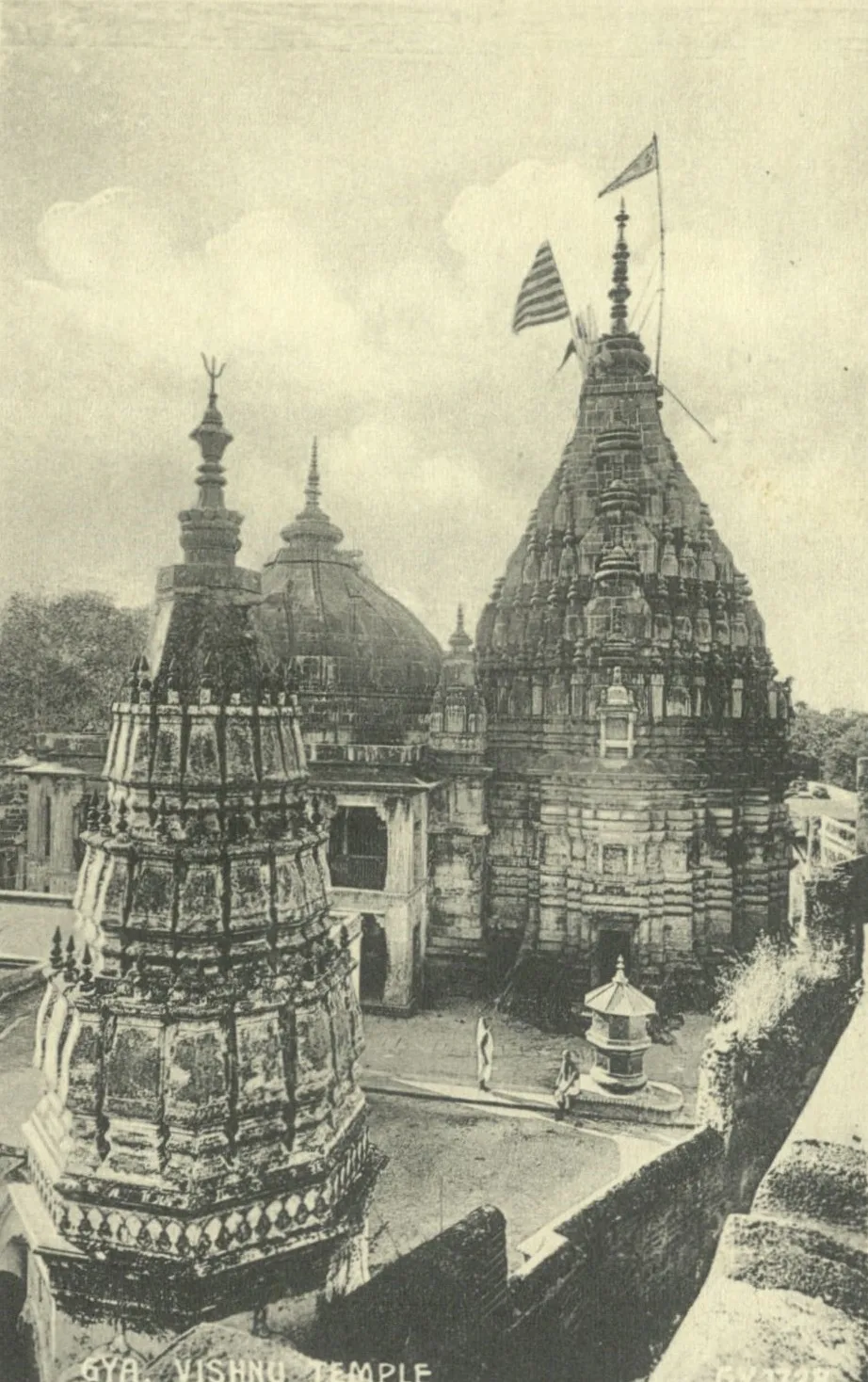
- Gaya-style pind daan with a larger pind set is done at tirthas such as Gaya on the Phalgu river; a home shraddh keeps the simple three-pind parvan form.
- Some families offer to three brahmins, others to one; some keep a symbolic invitation when no brahmin is available and give the food as daan.
- In South India and Maharashtra the dark fortnight falls in Bhadrapada right after Ganeshotsav; in North India the same fortnight is called Ashvin Krishna Paksha.
- Smarta, Vaishnav and Vedic shakha families differ in mantras and in how many pinds are made, so follow your family priest.
Seekers in Mathura commonly go to the Yamuna ghats for tarpan and pind visarjan, and Vishram Ghat is the central ghat of the city. A pandit-booking page lists Vishram Ghat, Mukti Dham and Bodhini Kund as places where such rites are arranged, but this is not backed by a classical source, so ask a Mathura priest about local practice before you travel.
Doing pind daan at Gaya or the Yamuna ghats of Mathura means a long day on the road with elders, so Laladham can pick you up in Delhi and take care of the whole trip, from the car to the priest. Plan this trip
प्रश्न Questions, answered
Can women perform shraddh?
Older guides name the son and the male line first. Many modern families, when there is no son, let a daughter, wife or daughter's son perform it with a priest. Ask your family priest, as the shastric opinion and family custom differ.
What if I do not know the death date?
Keep the shraddh on Sarva Pitru Amavasya, the closing day of Pitru Paksha. Drik Panchang says that day serves all ancestors, known and unknown, and anyone who missed a date.
Which time of day is right?
Midday. Drik Panchang says to start with the two midday windows named above and carry on to the close of Aparahna. They change with the city and the day, so read them off a panchang.
Why is a crow fed?
A crow is held to be a messenger of the ancestors, and the food set out for it is part of the panchbali. If a crow eats it, the family takes it as a sign that the offering has been accepted.
Is a priest needed?
A short tarpan can be done by the householder alone. A full shraddh with pind, panchbali and brahmin bhojan is best done with a priest, especially the first time.
यह संस्कार और कर्म अपने कुल पुरोहित के मार्गदर्शन में करना सबसे उत्तम है। A family priest knows your kul parampara; use this page to understand and prepare.
Check locally
- The tithi of the death and the Kutup, Rohina and Aparahna times for your city, from a panchang
- How many pinds your family makes, and the Veda shakha mantras your priest uses
- Whether your family offers to one or three brahmins
- The wording of the panchbali mantras: the two names quoted here come from a single source
- Who is entitled to perform the rite in your family when there is no son
Doing this in Braj? Seekers often bring a puja to Vrindavan, Govardhan or Mathura. A Laladham driver who knows the ghats and the timings is one message away.
Plan my trip