Family · पर्व और त्योहार
रक्षा बंधन पूजा विधि
Raksha Bandhan, Rakhi Puja
Rakhi puja at home, the Shravan full moon: the thali, tilak, three knots on the right wrist, aarti and sweets, and why the Bhadra hours are avoided.
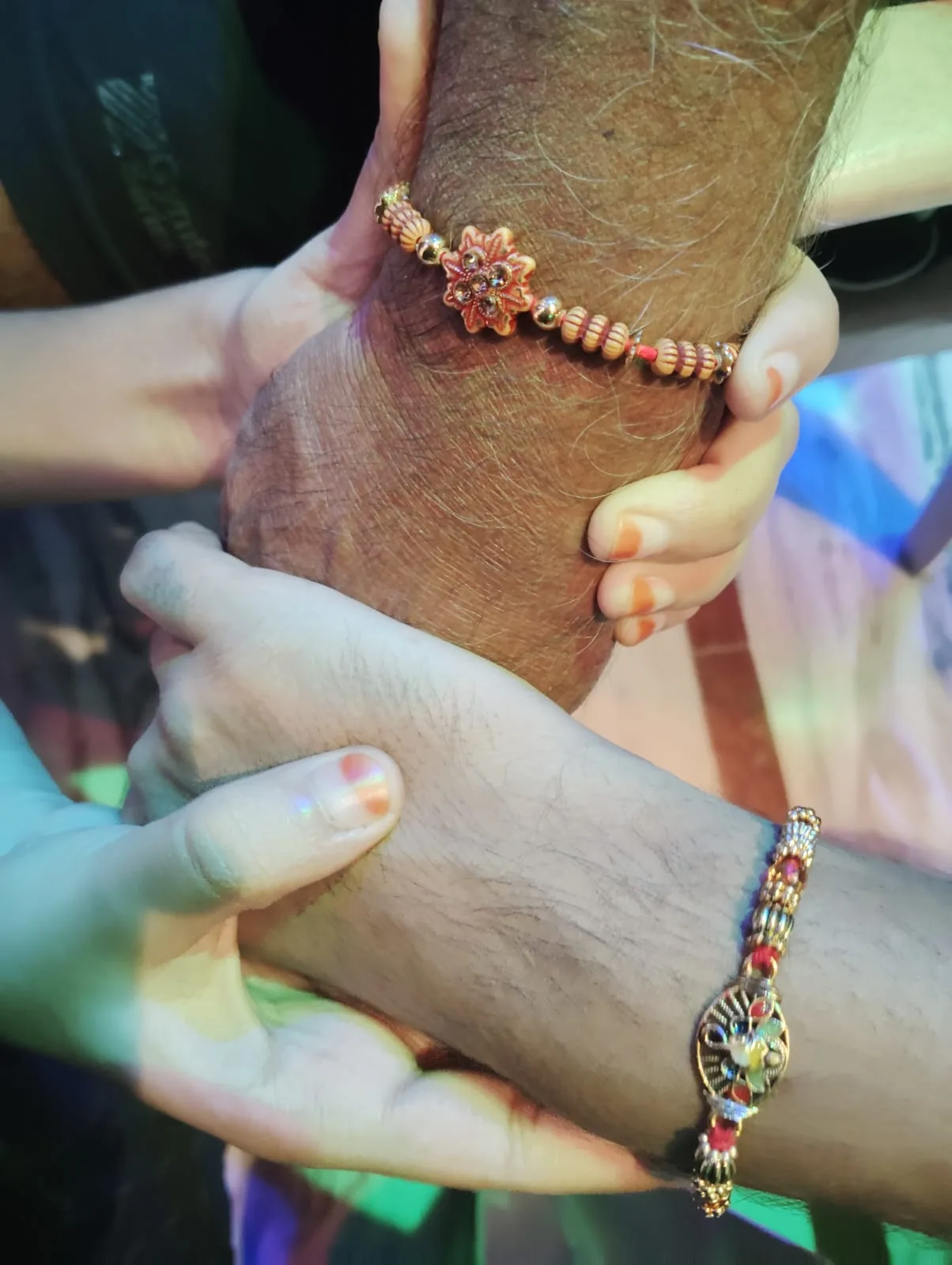
On Shravan Purnima, the full moon of the month of Shravan. Rakhi is tied once Bhadra has ended, a period that usually falls in the opening half of the tithi. Afternoon after Bhadra is called best, and evening Pradosh kaal is the second choice. Check a panchang for your city, because Bhadra changes every year.
A sister for her brother, and by custom anyone who wants to bind a protective thread: cousins, friends, a daughter for her father. The Lakshmi and Bali story is quoted to show the bond is not limited to blood.
about 30 minutes
सामग्री Samagri checklist
Rakhi thali
Optional raksha potli
तैयारी Before you begin
- Bathe before sunrise; some guides add a morning tarpan to the devas and the pitrus.
- Check the Bhadra window on your city's panchang and plan the tying after it ends.
- Worship your ishta devata first, then keep the thali covered until the brother sits.
- Sisters in many homes keep a light fast until the rakhi is tied.
- Make a sweet in the house and keep a gift ready for her.
पूजा विधि Step by step
आचमन Achaman, sipping water to purify
about 2 minutes
Sit on your asan facing east or north with a small cup (a copper or steel panchpatra if you have one) of clean water and a spoon. Pour a little water into your right palm and sip it three times, each time with one name of Vishnu, without a sound of slurping. Then wash the right palm, touch your lips, and touch water to the eyes, nose, ears and heart with the fingers, as your family does. Take only a small sip each time, not a mouthful. Do it before sankalp, and again whenever you leave the seat and return.
ॐ केशवाय नमः। ॐ नारायणाय नमः। ॐ माधवाय नमः।
Om Keshavaya namah. Om Narayanaya namah. Om Madhavaya namah.
Meaning: Salutations to Keshava, Narayana and Madhava, three names of Vishnu, one for each sip. Many Vedic households say 'svaha' in place of 'namah' for these three sips, and the Sandhya text does the same.
ॐ गोविन्दाय नमः
Om Govindaya namah
Meaning: A fourth name of Vishnu, said as the hand is washed after the three sips.
इष्ट पूजन Worship of the family deity
about 5 minutes
A guide says to begin by worshipping the deity of the house. Light the diya before the family altar, place the rakhi in the thali beside it, and offer a flower and a pinch of rice to the deity before the rakhi is used.
थाली सजाना Arranging the thali
about 5 minutes
Set the rakhi, kumkum, rice, lamp, flowers, incense, coconut and sweets on the plate. If the family makes a raksha potli, tie rice, mustard and the golden thread in the cloth and keep it on the plate too.
भाई की दिशा Seating the brother
about 2 minutes
The brother sits facing east or north, so that his back is to the west or south. He holds some rice or a coin in a closed right fist while the sister works.
सिर ढकना Covering heads
about 1 minute
Both brother and sister cover their heads, with a handkerchief, dupatta or a topi, before the tilak. This is a custom in several North Indian homes and is not a fixed rule in all.
तिलक Tilak and akshat
about 2 minutes
Apply the kumkum tilak on the forehead, then press a few grains of rice on it. Rice that is whole and unbroken is a sign that the blessing is whole as well.
रक्षा सूत्र बांधना Tying the thread
about 3 minutes
Place the coconut in the brother's hand and tie the rakhi on his right wrist. Three knots are considered auspicious. A short verse about King Bali is traditionally said here, and since the published wordings differ, say your family's or simply say your wish aloud.
आरती Aarti
about 3 minutes
Circle the thali clockwise before his face three times, then touch the lamp's warmth to your eyes. Sing a short aarti or say a quiet blessing.
मिठाई Sweets
about 2 minutes
Feed the brother a sweet from your hand. He may feed one back. Elders present are fed too, and bless both.
वचन और उपहार Promise and gift
about 3 minutes
The brother touches his sister's feet, promises protection and gives a gift. Where the sister is the elder, she receives his pranam.
भद्रा नियम Handling the Bhadra rule
about 5 minutes
Most guides say not to tie during Bhadra, so the muhurat is set after it ends. Some scholars say Bhadra puchha, its tail, may be used if Bhadra mukh, the face, is avoided. Your family priest will tell you which view your home follows.
क्षमा प्रार्थना / पूजा समापन Kshama prarthana, asking forgiveness and closing
about 3 minutes
At the very end, after aarti and pradakshina, stand or sit with folded hands and ask pardon for every lack in the puja: wrong words, missed steps, thin devotion. This is not a formality; it is said that even a puja done with errors becomes complete by this prayer. Then offer a little water and flowers, say 'sarvam shri bhagavat arpanam' (all this is offered to the Lord), and take the water on the kalash as prasad. Do not rush away; sit a minute in silence. Close by saying the deity may go where he or she pleases (utthapan or visarjan) only if you called the deity into a fresh murti. A home murti or picture that lives on your altar is not sent away: you only bow and cover the offerings.
आवाहनं न जानामि न जानामि विसर्जनम्। पूजां चैव न जानामि क्षमस्व परमेश्वर॥ मन्त्रहीनं क्रियाहीनं भक्तिहीनं सुरेश्वर। यत्पूजितं मया देव परिपूर्णं तदस्तु मे॥
Avahanam na janami na janami visarjanam. Pujam chaiva na janami kshamasva Parameshvara. Mantra-hinam kriya-hinam bhakti-hinam Sureshvara. Yat pujitam maya deva paripurnam tad astu me.
Meaning: I do not know how to invite you, how to send you off, or how to worship; forgive me, O Supreme Lord. Whatever I have worshipped with lack of mantra, lack of action and lack of devotion, O Lord of the gods, let it be made complete. Two sources agree on this pair of verses; one prints 'tava archanam' (your worship) in the first line in place of 'pujam'.
आरती और विसर्जन Aarti and closing
A ghee diya on the thali is circled around the brother's face three times, clockwise, while the family sings or hums. A small camphor flame is also fine.
Keep the rakhi on for some days and then let it go to a tree or running water, not the rubbish. Customs on the day of removal vary by family.
क्या करें · Do
- Use a rakhi of bright colour or plain cotton
- Tie it on the right wrist
- Keep the rice whole
- Tell the festival story to the children
क्या न करें · Avoid
- Do not tie in the Bhadra hours
- Do not use a black thread
- Do not tie with an empty thali, even a coin and a sweet will do
परंपराएँ Variations and Braj
- Maharashtra keeps it with Narali Purnima, the day of the coconut offering to the sea.
- South Indian brahmin families keep Avani Avittam, the changing of the sacred thread, on the same day.
- In Nepal it is called Janai Purnima.
For Krishna's devotees the festival recalls Draupadi tying cloth on Krishna's injured finger, and his promise to protect her. The story is from the Mahabharata and not tied to a single Braj place, so celebrate it at home or at any Krishna mandir.
प्रश्न Questions, answered
What is Bhadra and why does it matter?
Bhadra is a period that almanacs mark as unsuitable for new work. It generally falls early in the Purnima, so the muhurat for rakhi is fixed after it closes.
Which wrist does the rakhi go on?
The right one, with three knots, as the guides describe.
Where does the festival come from?
Stories include Indrani tying a thread on Indra before battle with asuras (Bhavishya Purana), Lakshmi tying a raksha sutra on King Bali (Bhagavata Purana), and Draupadi and Krishna in the Mahabharata.
Can a sister living abroad do it?
Yes, many families send the rakhi by courier or do it on a video call, and keep the puja thali at both homes.
Is the verse about Bali required?
It is traditional, but wordings differ between sources, so we have not printed one. Use the version from your priest or family.
कुल की परंपरा सर्वोपरि है। Where your family custom differs, follow it, and ask your priest when in doubt.
Check locally
- The Bhadra start and end time for your city, and whether your priest allows Bhadra puchha
- The wording of the Bali verse: three sources gave three different third lines (abhibadhnami, abhivadhnami, anubadhnami), so none is printed
- Whether the head covering and the east or north direction are your family's custom
- Family rule on taking off the rakhi and where to leave it
Doing this in Braj? Seekers often bring a puja to Vrindavan, Govardhan or Mathura. A Laladham driver who knows the ghats and the timings is one message away.
Plan my trip