Ram राम
the one who delights, Rama of Ayodhya
From: Rama, the root of every name in the 108 (names 1 to 3)
The simplest and most loved choice, short and easy abroad. Often used in a pair, as in Sitaram or Rajaram, or as a surname-free first name.
नामकरण · लड़कों के नाम
Sixty baby boy names inspired by Shri Ram and his 108 names, from Raghav and Raghu to Vedant, with Devanagari spelling, meaning and a note for each.
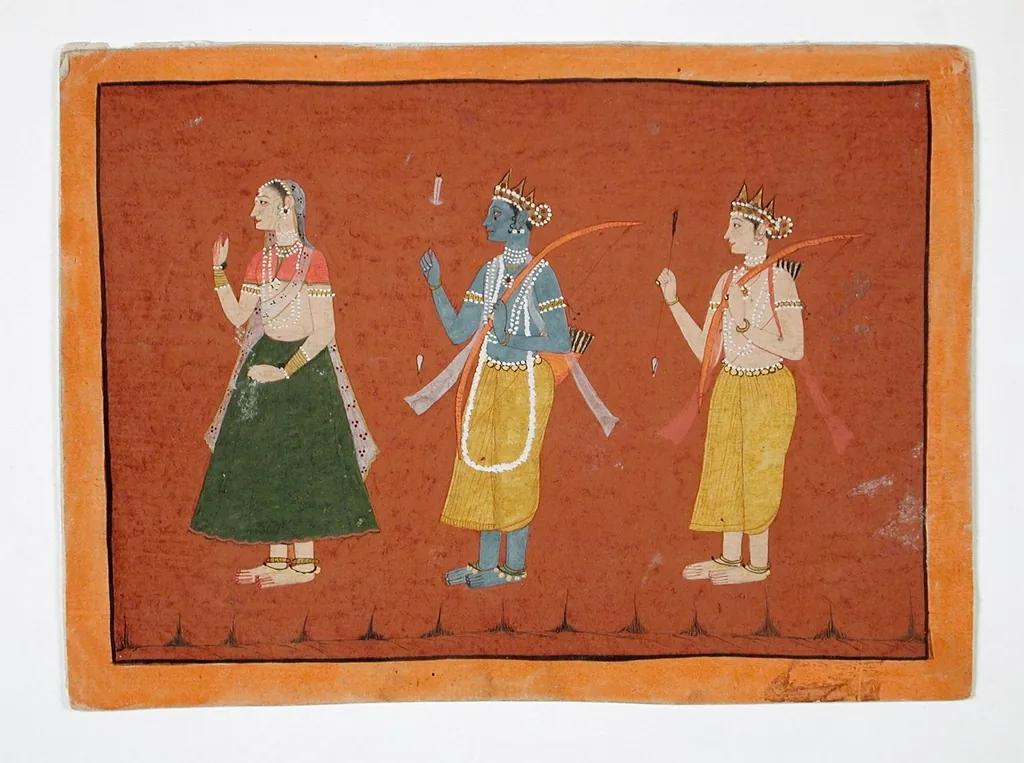
Parents have always reached into the epithets of Ram when naming a son. A child who is called Raghav, Kaushal or Shashvat carries a piece of the Ramayana in everyday speech, and the family recalls a virtue each time the name is called out.
The names below are taken from the Ashtottara Shatanamavali of Ram, the 108 names, and from a few well known epithets of the Raghu line. Each entry shows the common spelling, the Devanagari form, the meaning, the exact name it comes from and a short practical note. Where a name is a close relative rather than a direct match, we say so.
60 of 60 names
the one who delights, Rama of Ayodhya
From: Rama, the root of every name in the 108 (names 1 to 3)
The simplest and most loved choice, short and easy abroad. Often used in a pair, as in Sitaram or Rajaram, or as a surname-free first name.
descendant of King Raghu
From: Raghava (name 78 of the 108)
Very popular and carries the dignity of the Raghu clan. Easy to say in any language, and works equally well with a short or long surname.
swift, the ancestor of Rama's clan
From: Raghupungava and Raghava (names 8 and 78), from the ancestor Raghu
Short, crisp and affectionate. Common as a pet form of Raghav or Raghunandan, and also as a complete name for a young boy.
joy of the Raghu family
From: Epithet of Ram, not one of the 108 but used throughout the Ramayana tradition
Traditional and four syllables long. Families who like a full classical name often shorten it to Nandu or Raghu at home.
hero of the Raghus
From: Epithet linked to Raghava and Shura (name 89)
A strong name with a martial ring, widely used in North India. Spellings Raghuvir and Raghubir are both seen on school records.
lord of the Raghu line
From: Epithet of Ram used in the Raghupati Raghav bhajan, tied to Raghava (name 78)
Familiar from the well loved bhajan, so elders recognise it at once. A little formal, and fits best as a full name rather than a nickname.
Rama the auspicious, blessed
From: Ramabhadra (name 2 of the 108)
Rare as a first name but beautiful. Choose this if you want a name from the list that is not heard in every classroom.
Rama with a moon like calm
From: Ramachandra (name 3 of the 108)
A grand traditional name. Often shortened to Ramu or Chandra, and sometimes used as the older family name carried through generations.
the moon, cool and bright
From: Second part of Ramachandra (name 3)
Works as a short modern name or as a middle name after a first name like Ram. Note it is also the name of the Moon god.
eternal, everlasting
From: Shashvata (name 4 of the 108)
A modern favourite that feels timeless. Spelled Shashwat or Shaswat as well, so decide the spelling early for documents.
lotus, the lotus eyed
From: Rajivalochana (name 5 of the 108)
Popular since the last century and easy for everyone to pronounce. Also spelled Rajiv, and Rajiv Lochan makes a fuller form.
glorious, blessed with grace
From: Shrimate (name 6 of the 108)
Elegant but uncommon today. Some families use Shriman, which is the standard form of the same word and slightly easier to say.
king of kings
From: Rajendra (name 7 of the 108)
Very common among older generations, so a young Rajendra may share a name with a grandfather. Rajan or Raja make good short forms.
victory
From: Jaitra (name 10 of the 108), from the root ji, to conquer
Short and cheerful, in use across India. The cry Jai Shri Ram makes it feel natural. Spelling Jay is common outside India.
the victorious, bringer of triumph
From: Jaitra (name 10 of the 108)
Strikingly rare and meaningful. Say it aloud a few times before deciding, since the first syllable can be mispronounced as Jai-tra.
one people turn to for their wishes
From: Janardana (name 12 of the 108)
A classic name shared with Vishnu and Krishna. Used often in southern families; shorter forms are Janu or Jana.
self controlled, calm
From: Danta (name 14 of the 108)
Looks unfamiliar in Roman letters and may be read as the English word dent. Better as a middle name in a Hindi speaking home.
refuge, shelter
From: Sharanatranatatpara (name 15 of the 108)
Short, soft sounding and used in many regions. The name also appears on its own for a boy born after a long wait.
truth
From: Satyavache and Satyavikrama (names 18 and 19)
Strong and simple. It works as a first name and as the opening of longer names like Satyam or Satyendra.
firm in the vow of truth
From: Satyavrata (name 20 of the 108)
A bit long but dignified. The name is also borne by a king in the older flood story, so some families recognise it.
valour founded on truth
From: Satyavikrama (name 19 of the 108)
Rare and impressive. Friends will probably shorten it to Vikram, which is lovely in its own right.
a sacred vow, firm resolve
From: Vratadhara (name 21 of the 108)
Neat one syllable name that suits modern taste. Spelling varies, with Vrath seen often, so fix one form early.
skill, also Kosala born
From: Kausaleya (name 23 of the 108), son of Kausalya
Common and easy. The word also means skill in Hindi, which parents often like. Kaushalendra is a longer form.
the bow of Rama
From: Harakodandakhandana (name 27 of the 108)
Distinctive and bold, taken from the name of Rama's bow. Rare enough to stand out and easy to spell.
the culmination of the Vedas
From: Vedantasara (name 32 of the 108)
One of the most popular spiritual names for boys today. It comes with strong associations of knowledge and calm.
soul of the Vedas
From: Vedatma (name 33 of the 108)
Rare and scholarly, not easy for everyone to say. Parents who love Sanskrit may enjoy it more as a middle name.
the one who strode three worlds
From: Trivikrama (name 38 of the 108)
Strong, long and rooted in the Vamana story. Expect people to need the spelling once, then they remember it.
the three worlds
From: Trilokatma and Trilokarakshaka (names 39 and 41)
Short for a Sanskrit compound, and used as Trilok, Trilochan or Trilokinath in different families.
the one with a bow, archer
From: Dhanvine (name 42 of the 108)
A newer pick for modern parents because it looks fresh in Roman letters. Pronounce with a clear v, as in dhan-vin.
a bow
From: Dhanvine and Dhanurdhara (names 42 and 91)
Popular in the south and the north alike. The spelling is used as a given name, and the sound is crisp and easy.
bearer of the bow, archer
From: Dhanurdhara (name 91 of the 108)
A grand, slightly heavy name. Families sometimes call the boy Dhanu or Dhanur in daily life.
giver of boons
From: Varaprada (name 46 of the 108)
Common in Maharashtra and widely liked. It is also a name of Ganesh, so a family that worships both may enjoy it.
master of the senses, conqueror of Indra
From: Jitendriya (name 47 of the 108), a close cousin
Very common in older generations. Strictly the name means victor over Indra, so Jitendriya is the true name from the list.
lord of the world
From: Jagadguru (name 50 of the 108), a close epithet
A traditional name with a familiar aarti attached. Mostly given to boys born in the past decades, so it feels classic.
victorious
From: Jayantatranavarada (name 53 of the 108)
Note that the Jayanta in the Ramayana was a crow like form of Indra's son, but the name itself is purely about victory.
the great God
From: Mahadeva (name 58 of the 108)
A name shared with Shiva, so a family that worships both can use it freely. Common in Maharashtra and Gujarat.
mighty armed
From: Mahabhuja (name 59 of the 108)
Distinctive but weighty. Can be short as Bahu or Mahi, though some families prefer to keep it intact.
gentle, serene
From: Saumya (name 61 of the 108)
A soothing sounding name that is popular and easy to spell. Also exists for girls in some regions, so it is neutral in usage.
the great yogi
From: Mahayogi (name 64 of the 108)
Very strong, lofty meaning. Some parents hesitate to place such a big title on a child and choose it as a second name.
first, primal
From: Adipurusha (name 69 of the 108)
Short and sweet, easy anywhere in the world. Adi is also used in the south as a short form of Aditya.
the primal being
From: Adipurusha (name 69 of the 108)
Powerful, but the long form can be heavy for a child. The short form Adi is the natural nickname.
supreme, highest
From: Paramapurusha and Paramatma (names 70 and 97)
Gentle but strong, and popular in Punjab and Gujarat. Shortened forms like Paru are for babies only.
best among persons
From: Puranapurushottama (name 74 of the 108)
Respected name often given to boys with deep faith. Purshottam without the u is another spelling. Short form Puru.
smile, gentle laughter
From: Smitavaktra (name 75 of the 108)
Suits a cheerful child and is easy to say. Widely used in Gujarat, and the spelling Smit is the usual one.
endless, infinite
From: Anantagunagambhira (name 79 of the 108)
Contemporary and popular, one of the most chosen devotional names for baby boys. Sounds cool in school and office.
steady, patient and wise
From: Dhirodattagunottama (name 80 of the 108)
Simple, strong and a good pairing with surnames of three syllables or more. Dhir is the usual spelling in records.
bridge
From: Setukrit (name 83 of the 108)
Unisex and modern. For a baby it carries the message of connecting people, which parents often find sweet.
the one who removes sorrow
From: Hari (name 86 of the 108)
Ageless and short. Also a name of Vishnu and Krishna, so quite common, and goes well as a middle name.
dark, the dusky one
From: Shyamanga (name 87 of the 108)
Beloved for its link to the dark blue Rama and Krishna alike. Very common, so a middle name or double form like Ghanshyam helps.
beautiful
From: Sundara (name 88 of the 108)
Timeless but a little old fashioned now. In the south the longer form Sundaram is more common, and both spellings are valid.
brave, valiant
From: Shura (name 89 of the 108)
Rare and spirited. Spelled Shur or Shoor, so check which looks best with the surname you plan.
wearing yellow clothes
From: Pitavasa (name 90 of the 108)
Familiar from images of Vishnu and Krishna. Traditional, a bit long, and nicknamed Pitu or Ambar.
lord of the sacrifice
From: Sarvayajnadhipa (name 92 of the 108)
Common in Gujarat and well liked. Spelled Yajnesh in Sanskrit style. Pairs well with a short surname.
the supreme light
From: Parasmai Jyotishe (name 100 of the 108)
Often used in Punjabi families as Paramjot. A shorter form is Jyot. Choose the spelling that suits your documents.
beyond the highest
From: Paratpara (name 103 of the 108)
Deeply philosophical, heavy as a name for a boy. Some families keep it as a ritual name and use a shorter one daily.
lord of the beyond
From: Paresha (name 104 of the 108)
Common in Gujarat and Maharashtra, with a friendly sound. Many Pareshes are now adults, so it feels grown up and established.
truth, awareness and bliss
From: Sachchidanandavigraha (name 99 of the 108)
Long and spiritual. Families usually shorten to Sachin or Anand. Spelled Satchidanand too.
essence of compassion
From: Dayasara (name 73 of the 108)
Seldom heard today, and unusual in all the right ways. Parents who like uncommon Sanskrit may enjoy this.
lord of the Raghus
From: Epithet of Ram, tied to Raghava (name 78)
Warm, old and respected. Found across all regions, and often paired with Raghu at home for the boy's pet name.
Sita and Rama together
From: Epithet linking Janakivallabha (name 9) with Sita
Not a single deity name but a joint greeting, used widely in Awadh and Bihar. Gentle and heartfelt for a first name.
Many Hindu families pick the first syllable from the janma nakshatra of the child, which a pandit reads from the birth chart. If that syllable is Ra, Ja, Sa, Ka or Va, the list above has choices for each, so you can honour both the nakshatra and the epithet of Ram.
Say the full name with the surname aloud several times before settling. Short names such as Ram or Jai pair well with long surnames, while longer names like Raghunandan or Satyavikram suit a short surname. Write the spelling you will use for every document and keep it the same.
Some families avoid naming a child with the exact name of the deity, like Ram alone, and prefer a derived name such as Raghav or Kaushal. Others give the name freely because they feel each call becomes a prayer. Both views are respected, so follow your family custom.
Raghav, Raghu, Kaushal, Shashvat, Vedant, Satya, Rajeev and Anant are popular. They come from the 108 names of Ram or from his clan epithets and are easy to say in India and abroad.
Raghav means a descendant of King Raghu. It is name 78 in the 108 names of Ram and also describes the whole royal family of Ayodhya. It is among the most chosen Ram names today.
Yes. Ram is one of the most common names across India and is given to boys of all communities. Some families add a second word, like Rajaram or Ramchandra, to make the name unique.
Ram, Raghav, Raghu, Raghunandan, Raghuveer, Raghupati, Rajeev, Rajendra and Rambhadra all begin with R. Rajeev means lotus, and Rajendra means king of kings.
Yes. Ask your pandit for the starting syllable from the birth star, then look for a Ram epithet beginning with it. The list above covers many syllables, such as Ja for Jai, Sa for Satya and Va for Vedant.
नाम का अर्थ और वर्तनी बदल सकती है; पंडित जी या कुल की परंपरा से नक्षत्र के अक्षर की पुष्टि कर लें। Meanings and spellings vary a little between regions, so confirm the starting letter for your child's nakshatra with your priest.