Imagine a narrow pass between two hills, and a line of girls walking through it with pots of curd and butter on their heads, bound for the market at Mathura. In the middle of the pass, with a stick in his hand and a very serious face, stands a boy who has appointed himself a tax officer. This is the daan leela, and it is the sweetest quarrel in Braj.
It is said that the toll he asked was not money. Let us tell the story, and be honest about its source.
The story as the tradition tells it
Radha and her friends were bringing curd, butter and milk to sell in Mathura, and they walked through the narrow gap in the Govardhan hills. Krishna and his friends stood in the pass, blocking the way, and said that they were officers of the king of this hill and that the gopis would have to pay a toll, a daan, to cross. The gopis laughed, argued, scolded and played, and in the end the toll he wanted was their love.
The Bhagavata Purana does not tell this lila directly. It belongs to later literature and local tradition. The word ghati means a pass or a narrow place, and the story is a playful one: love is the only coin Krishna ever takes.
Surdas, the blind poet of Braj, is often remembered for the way he describes Krishna's face. Folk singers still use his lines for the daan scene, adding verses that make the gopis answer the toll officer with wit and humour. In most versions, the gopis win the argument and lose the cream.
Where it comes from
Rupa Goswami, a 16th-century disciple of Chaitanya, wrote a Sanskrit play on the theme called the Dana-keli-kaumudi. Folk songs of the Daan Lila, sung in Braj, are enjoyed to this day, and Sur Sagar, the collection of the poet Surdas, is also cited in our research. The Brahma Vaivarta Purana is named for the Radha-Krishna meetings in general, and the daan lila as told in Braj is local tradition.
So the story is honest about what it is: a beloved tale, not a verse.
Where in Braj it happened
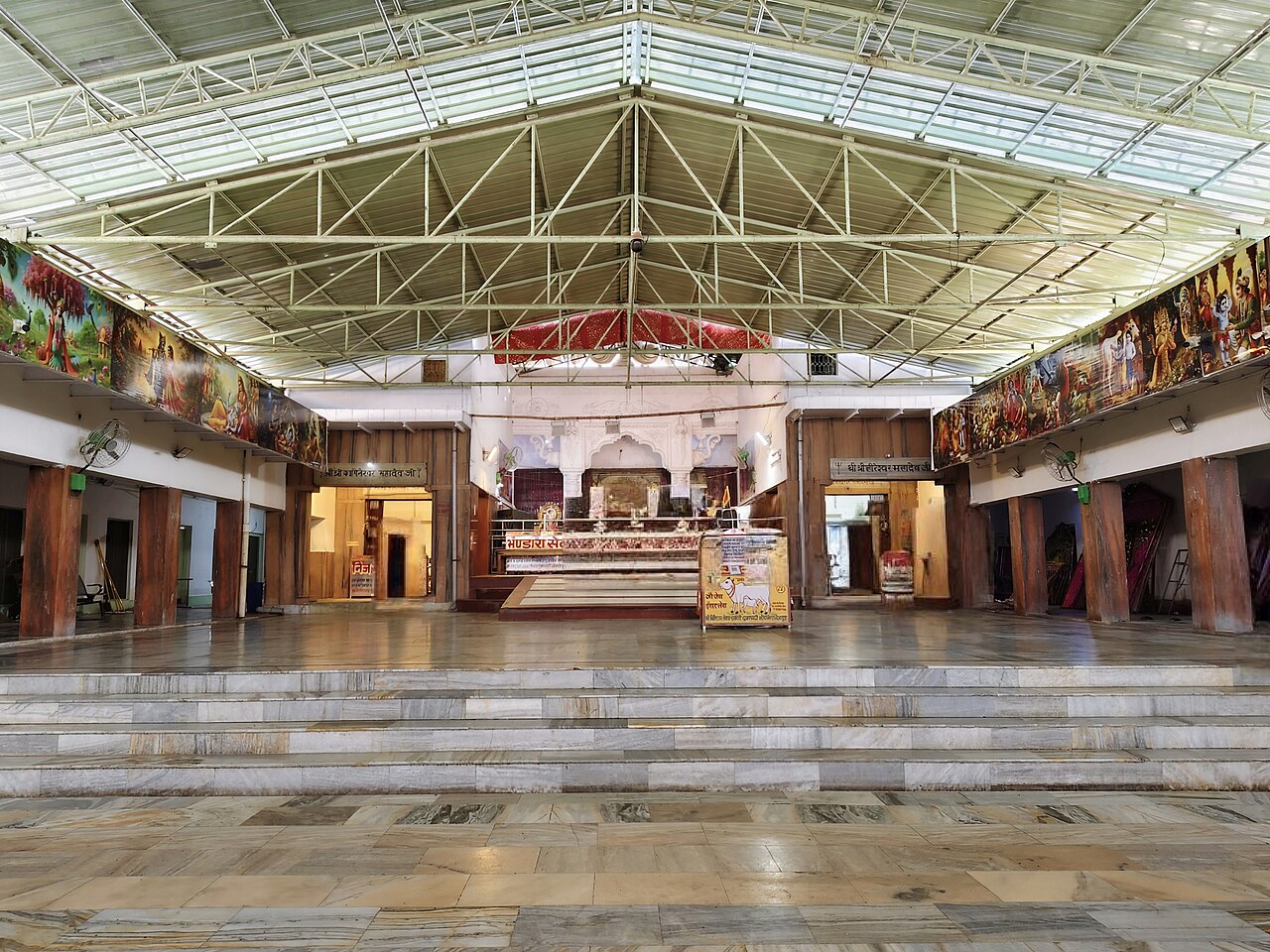
Daan Ghati Temple stands at the pass where the Govardhan parikrama begins. The deity is Daan Bihari ji, and there is a Giriraj stone that pilgrims bathe with milk. Other places in Braj, including Barsana and Nandgaon, have their own daan traditions, and a local guide will tell them.
The present building is of recent centuries, and its exact date is to be checked locally. The temple is about 22 km from Mathura Junction and 25 km from Banke Bihari, by the guide.
Travellers who begin the parikrama at dawn can pause here for a moment of reflection. The pass is narrow, the stone is old and the story fits the place well. A small offering of milk or a coin is enough, and nobody should press you for more.
What it means to the people who live here
For Braj, daan is both a toll and a gift. Pilgrims give daan at the pass, in the form of milk poured on the stone and a few coins, and think of the day as a toll paid in love. The story turns a roadblock into a blessing.
It also reminds those who give that Krishna is the one who asks first. The sweet quarrel with the gopis is a teaching about the heart: you cannot pass this way without giving something of yourself.
Folk songs
In many villages, women sing daan songs in the weeks before Holi and on festival evenings, in Braj bhasha, often with a dholak. The words are playful: the gopis say they have no tax to pay, the boy insists, and everyone ends laughing. If you have the chance to hear one, stop and listen.
You can find recordings of Braj folk songs online, but a live performance in a courtyard is better.
If you want to hear the songs, ask your guide or a local priest whether any group is singing in the evening. During Kartik and around Holi, groups of singers sometimes gather near the temples, and visitors are welcome to sit quietly at the back.
How to read it before you go
Start with a summary of that play, available in English translations from Gaudiya publishers, and a selection from Surdas. Since we have not checked a specific edition, we do not cite page numbers. Then read the Govardhan chapters of the Bhagavatam (10.24 to 10.27), since the pass is part of the same hill.
A short reading list is better than a long one. Pick one text and one song.
Visit the place
Daan Ghati is where most pilgrims begin the parikrama, ideally at dawn, with a stop to pour milk on the stone. Indicative hours are about 5:00 am to 12:00 pm and 4:00 pm to 9:00 pm in summer. Parking is along the Mathura–Govardhan road for about Rs 30 to 80. Pujaris may ask for a large puja donation, and you can decline. Crowds peak on Guru Purnima.
Takeaway: carry the story, not the worry
At every gate of life there is someone who asks for a toll. In Braj the joke is that the officer is God, and the fee is affection. Pay it gladly, and walk on.
Questions, answered
Does the Bhagavatam tell the daan leela?
No. It is told in later Gaudiya literature, such as Rupa Goswami's Dana-keli-kaumudi, and in folk tradition.
Where is Daan Ghati?
At the Govardhan pass, where the circuit starts, about 22 km from Mathura.
What does daan mean here?
A toll. In the story, the toll Krishna wanted was the gopis' love.
Who was Surdas?
A poet of Braj whose collection Sur Sagar is named as a source for the tradition.
Timings, entry rules and fees change. Please confirm on the day with the temple or your driver.
- Timings and parking at Daan Ghati
- Present building date
- Sur Sagar passages on the daan lila
- Other places claiming the daan lila
- Dana-keli-kaumudi by Rupa Goswami (Gaudiya tradition)
- Sur Sagar by Surdas (tradition; edition not cited)
- Wikipedia: Govardhan
- Srimad Bhagavatam 10.24-10.27 (Vedabase)
Walking this path soon?
If you would like a driver who knows the lanes and the timings, the lala:Cab app is there when you are ready. No advance, no pressure.