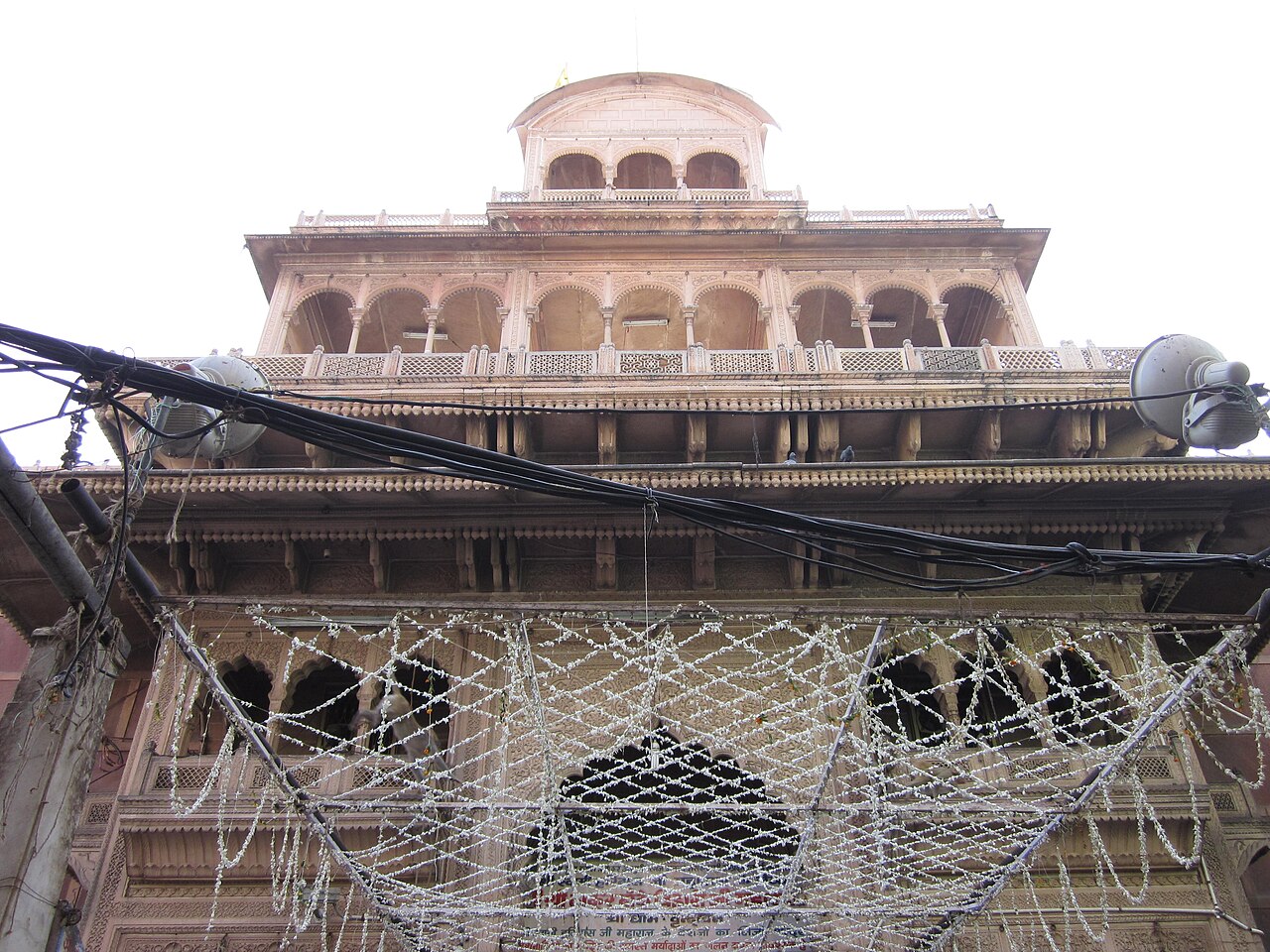
Before the bells ring at Banke Bihari, the lane is already awake with the sound of hot oil. A man bends over a wide iron pan, spinning rings of batter into sizzling ghee, and the smell of jalebi and heeng fills the cold air. This is how a Vrindavan morning begins.
Here is a plain guide to what to eat in these lanes, what is only a lead and not a promise, and how to eat well without trouble.
What to eat and why it is famous here
The classic breakfast is kachori with thin aloo sabzi, eaten standing, early. The ghee-fried urad dal kachori is the local style, often with heeng. Bedai, a spicier puffed bread, sits beside it. Then comes hot jalebi, and in winter evenings the rabri and kulfi of Loi Bazaar.
Khoya barfi and peda from the lane shops are richer and more milk-forward than Mathura's peda, by one account. Makhan-mishri and peda are offered as bhog at Radha Vallabh temple, per Wikipedia, and Incredible India notes that Banke Bihari offers makhan-mishri daily. Chhappan bhog, the fifty-six dishes, is tied to the Govardhan story by tradition.
Winter brings its own flavours. Hot gajar halwa and soft rabri appear in the cold months, and in summer thin buttermilk and lassi are the favourites. Whatever the season, the pattern is the same: fresh, hot, small portions and eaten on the spot.
Named places, all to be checked locally
These names come from travel blogs and listings, and none has been verified on site. Radha Bihari Misthan Bhandar, in the Banke Bihari market, says it has been a sweet shop since 1965, which is its own claim. Purohit Ji's kachori is mentioned in the Banke Bihari gali, with a price of Rs 25 each quoted, which may be stale. Lakshman Prasad Kachori Wale is described as a generations-old stall with khasta kachori and aloo sabzi.
Agarwal Mithai Wale, near the police chowki at Banke Bihari, is described for urad-dal kachori in desi ghee. Radhika Misthan Bhandar or Radhika Sweets is named in one source with conflicting detail. A six-generation peda shop in the gali is mentioned with no name. We have not listed shops that we could not find.
How to eat safely and sattvik
Eat food cooked in front of you and served hot. Choose kulhad over plastic and ask for chutney on the side. Sealed water only. In peak crowds, eat before the temple queue, not after, and avoid food that has sat under glass.
For strict sattvik eaters, remember that market stalls often differ from temple kitchens. Kachori made with heeng suits a no-onion-no-garlic diet, but fried snacks may share oil with onion items. Ask at each stall, and see our onion-garlic guide.
A small tip about money: carry small notes and coins, because stall owners often cannot change large bills in the morning, and a crowd behind you is not the moment to look for change. Many stalls now accept UPI, but connection can fail in the lanes.
Loi Bazaar and the lanes
Loi Bazaar is the old-town strip near the temple, with sweets, garlands and temple goods. The lanes are liveliest between 5 and 8 pm in winter, by one source. Hot jalebi, aloo tikki chaat, rabri and kulfi are sold here.
The lanes are narrow and crowded, so keep your belongings in front, and hold the hands of children. Monkeys target food bags, so eat in a corner and keep the bag closed.
Prices and timings, as last checked
A tour-operator guide put the temple-lane stalls at about Rs 20 to 150 per person, from around 6 am to 9 pm. A promotional guide gave aloo tikki chaat at Rs 40 to 80, jalebi Rs 30 to 60 and rabri Rs 60 to 120. These are commercial sources and may be out of date, so check locally.
Kachori stalls begin in the early morning and sell out by late morning, so go early.
Sweets for the road are best bought on the way out of the town, not on the way in, so that they stay fresh. Ask for a sealed box and a date, and keep it cool in the cab. If you are flying, carry sweets in hand luggage in a firm box.
A walk that works
Reach the lane around the time the temple opens, take your darshan first on an empty stomach, as many devotees do, and then eat. In winter, a cup of hot tea with kachori makes a good break after the cold marble. In summer, lassi and cool rabri are better after noon.
If you want a seated meal, Govinda's at ISKCON is described as sattvic with no onion or garlic, and is about 4 km from the lanes.
Related guide pages
Read the Banke Bihari page and the post on the lane's parking and queue. For Mathura's sweets, see the peda buying guide. lala:Cab drivers can walk you to a stall they have eaten at themselves.
Questions, answered
What is the best breakfast near Banke Bihari?
Hot kachori with aloo sabzi, then jalebi, from a busy stall early in the morning.
Is the food sattvik?
Temple prasad is. Market stalls vary, so ask about onion, garlic and shared oil.
What does it cost?
Roughly Rs 20 to 150 per person by a tour-operator guide. Prices vary, so check locally.
When is the lane liveliest?
Early morning for kachori, and 5 to 8 pm in winter for chaat and sweets.
Timings, entry rules and fees change. Please confirm on the day with the temple or your driver.
- Every shop name, price and timing
- Whether any stall uses onion or garlic or shared oil
- Radhika shop name and place (conflicting sources)
- Chhappan bhog tradition
Walking this path soon?
If you would like a driver who knows the lanes and the timings, the lala:Cab app is there when you are ready. No advance, no pressure.