A week after he was born, say the elders of Gokul, the baby Krishna was visited by a beautiful woman who walked into the house as if she had always lived there. She picked up the child, smiled and held him to her breast. Everyone in the house thought it was a kindness. It was the most dangerous visit of his life, and he was perfectly calm.
It is said that this is the first of the great leelas. Let us tell it as the scripture does, and then ask where it is remembered.
The story as the scripture tells it
The tale of Putana is told in the Bhagavata Purana, in chapter 6 of the tenth canto. Kansa, afraid of the prophecy, sent demons across the land to kill newborn children. Putana took the form of a beautiful woman and entered Nanda's house in Gokul. She lifted the infant Krishna, and smeared poison on her breast to nurse him.
Krishna took the milk and with it drew out her life. Putana fell, in her true gigantic form, shrieking, and the whole village came running. The gopis, in alarm, performed protective rites over the child, using the dust of the cow's hooves and the holy names. The Purana tells that although she came to kill, she received the destination of a mother, because she had nursed him.
The Purana also records that Krishna, as a baby, showed no sign of distress, and slept peacefully through the rites. The elders took this as a sign that he was no ordinary child, and Nanda, hearing the story from the gopis, understood the first of many such signs.
Where in Braj it happened
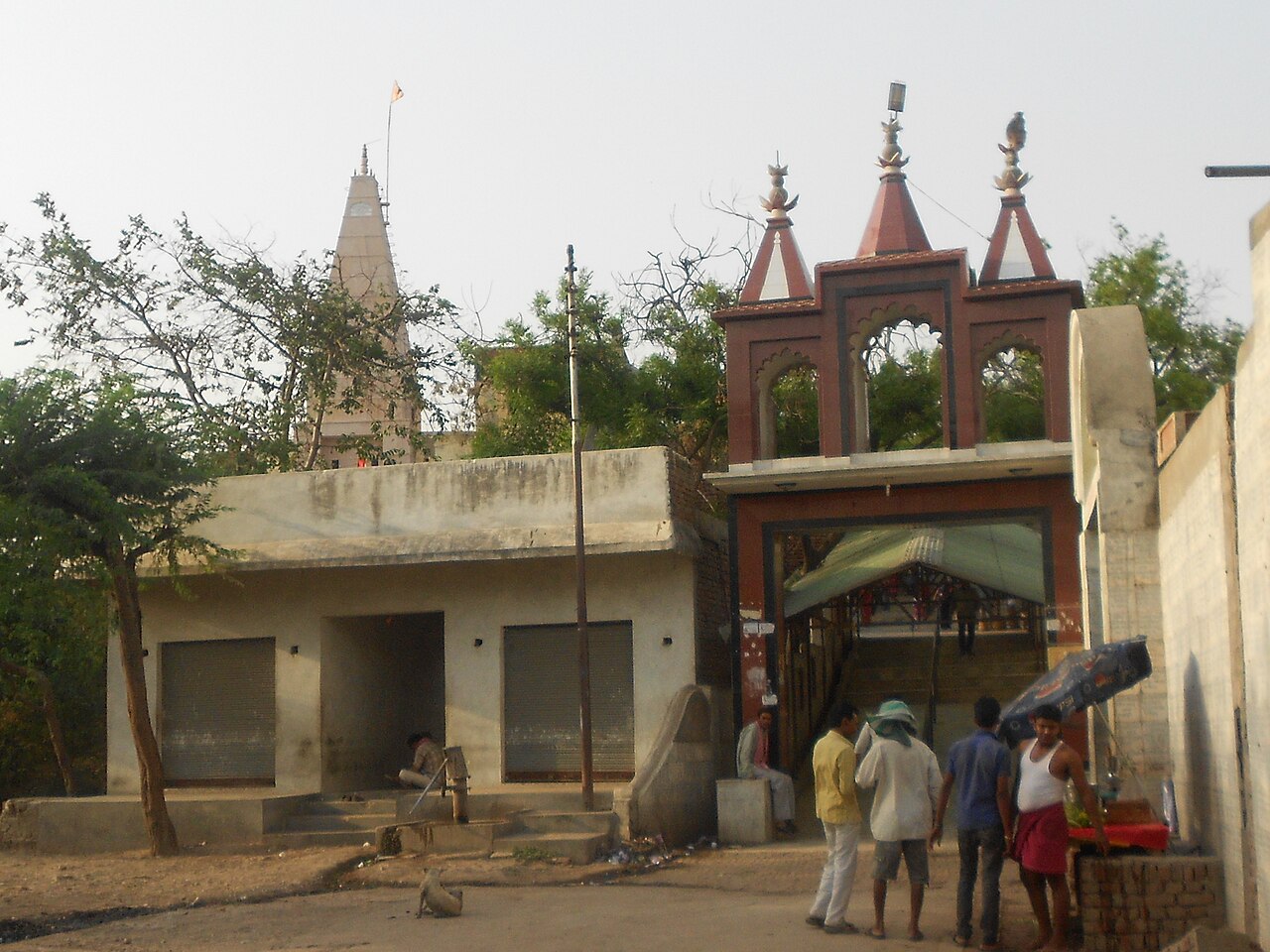
Gokul is the scene of the baby's early lilas, as our guide records: the witch Putana, the whirlwind demon Trinavarta, the cart he kicked over and the Damodar lila (10.6 to 10.10). Mahavan, also called Old Gokul, claims a Putana site too. Local tradition points to a spot in the area, sometimes called Putana Udhar, which we could not verify, so ask locally.
Nand Bhawan with its cradle and Gokulnath ji are the places most visitors see. The exact spot where Putana fell is a matter of village memory.
A practical word: Gokul and Mahavan are small, and signs are few. Ask your driver or guide to say which places they follow for each story, and treat any spot pointed out at a roadside as local belief, to be enjoyed as such.
What the story means to the people who live here
In Braj, this tale is told with tenderness, not horror. The baby is not afraid, because he is never afraid. The woman is not only wicked, because she held him and fed him, and the mercy of God reaches even her. Grandmothers use it to teach that no one who touches the Lord in any way is beyond his grace.
It is also a story of mothers. Every protective rite that Yashoda and the gopis perform, the tilak of dust and the chanting of the holy names, is still done in Braj homes when a baby is born.
Put another way, the story is the first lesson about trust. A mother who trusted a beautiful stranger nearly lost her son. A Braj grandmother will say that you must guard the doors, and still leave the rest to the Lord.
How to read it before you go
Read chapter 6 of Canto 10 on Vedabase, which gives the Sanskrit and a translation. It is short and lively, and children can follow it. Follow with chapter 7 for Trinavarta and chapter 9 for the rope, and our post on the butter thief.
If you prefer to listen, ask a priest at Gokul to tell it in Hindi. Songs about Putana are part of the folk tradition of the Braj villages.
The Putana site, to verify
We could not confirm a documented Putana site in the sources we used. Our guide mentions Gokul and Mahavan for the infancy lilas in general. If a guide offers to show you the exact spot, ask whose tradition it follows and write it down. This is how a living tradition is kept honest.
Visiting hours and manners are the same as for Gokul and Mahavan in our other posts.
Visit the place
Nand Bhawan in Gokul is about 12 km from Mathura Junction and Mahavan about 11 km. Allow a morning for both, with Raman Reti and Brahmand Ghat. See our Gokul post for timings, parking and manners. lala:Cab can bring a guide who tells the story at the cradle.
Takeaway: carry the story, not the worry
A parent travelling with a small child may find an echo here. Danger comes in beautiful forms, and care means attention and prayer. Leave the worry at the door of Nand Bhawan, and carry the calm of the baby who was never frightened.
Questions, answered
Where is the Putana story in the scriptures?
Canto 10, chapter 6 of the Bhagavata Purana.
Where did it happen?
In Gokul by the Bhagavatam. Mahavan and local tradition point to specific sites that we could not verify.
Why is Putana shown a mother's end?
Because she nursed the Lord, the Purana says she reached a mother's destination despite her purpose.
Is there a Putana shrine?
None is confirmed. Ask locally.
Timings, entry rules and fees change. Please confirm on the day with the temple or your driver.
- Any Putana site in Gokul or Mahavan
- Putana Udhar tradition
- Protective rites as practised today
Walking this path soon?
If you would like a driver who knows the lanes and the timings, the lala:Cab app is there when you are ready. No advance, no pressure.